Aluminum vs. Vinyl Soffit and Fascia: Durability, Cost, and Pest Resistance
If birds have found a gap under your roofline, the scratching in the ceiling will not stop until the material itself gets fixed. Choosing between aluminum vs vinyl soffit and fascia is the decision that determines whether that gap stays sealed for twenty years or opens back up after two Florida summers. This guide walks you through the comparison step by step: how each material holds up, what drives the cost, and how to pick the right one before anyone climbs a ladder.
Most homeowners discover this choice the hard way. A woodpecker hole, a sagging panel, or a squirrel-chewed corner sends you searching for "soffit and fascia repair near me," and suddenly you are reading about materials you never thought about before. That is fine. By the end of this article you will know more than most people who get three bids and pick the middle one.
Step 1: Figure Out Why Your Soffit Failed in the First Place
Before you compare materials, find the cause. A new panel installed over the same problem fails the same way. Walk the perimeter of your house and look up at the roofline with these questions in mind:
- Is there a visible hole, gap, or sagging section where animals are getting in?
- Do you see water stains, peeling paint, or soft spots on the fascia board behind the gutter?
- Are the gutters overflowing and dumping water onto the fascia during storms?
- Does the damage sit near a corner, a gutter end cap, or a roof valley?
Here in Orlando, the usual suspects are moisture and wildlife, often in that order. Summer thunderstorms overload clogged or undersized gutters, water rots the wooden fascia behind them, and the softened wood becomes an easy entry point. Birds and squirrels do not usually break into solid material; they widen an opening that rot or a sloppy original installation already started. Many repair calls trace back to installation shortcuts, not storms at all.
If the wood framing behind the soffit is rotted, that has to be cut out and replaced before any new covering goes on. No aluminum or vinyl panel fixes rot underneath it; it just hides the problem while the animals keep their back door.
Step 2: Compare How Aluminum and Vinyl Soffit and Fascia Hold Up
Durability is where the two materials separate, and the answer depends on what you are defending against. Here is the honest comparison.
Where aluminum wins
Aluminum fascia and soffit are rigid, non-combustible, and hard for pests to chew through. For a homeowner dealing with squirrels or rats, that rigidity matters; a determined squirrel can gnaw through vinyl at a seam, but aluminum gives it almost nothing to work with. Aluminum also takes paint well, holds a crisp, flat look on long fascia runs, and does not get brittle with age.
The trade-offs: aluminum dents. A ladder leaned carelessly against it, or a falling branch, leaves a mark that stays. Cheaper pre-bent aluminum fascia from a big box store also tends to wrinkle or "oil-can" during installation, and the stock profiles often do not match what is already on your house. Quality of the metal and the installer's technique matter more with aluminum than with vinyl.
Where vinyl wins
Vinyl soffit costs less in material, never needs paint, and will never corrode or dent. In Central Florida humidity, vinyl shrugs off moisture that would eventually work on painted aluminum edges. Vented vinyl soffit panels also move air into the attic well, which matters in a climate where attic heat and trapped humidity feed mold and rot.
The trade-offs: vinyl expands and contracts more with heat, so it can look wavy on long fascia runs, and it gets brittle under years of direct Florida sun. It is also the easier of the two for a motivated animal to chew or push through at a weak seam. Against imperfect rafter tails, vinyl is hard to get perfectly straight; a realistic standard is straight enough to look right from the ground, not laser-perfect.
The combination most homes end up with
In practice, many Orlando homes get vinyl soffit with aluminum fascia. The vented vinyl panels handle airflow under the eaves, while the aluminum fascia gives the gutter a rigid, chew-resistant board to hang from. You get the strengths of each material where each one works hardest.
Step 3: Price Out Aluminum vs. Vinyl Soffit and Fascia
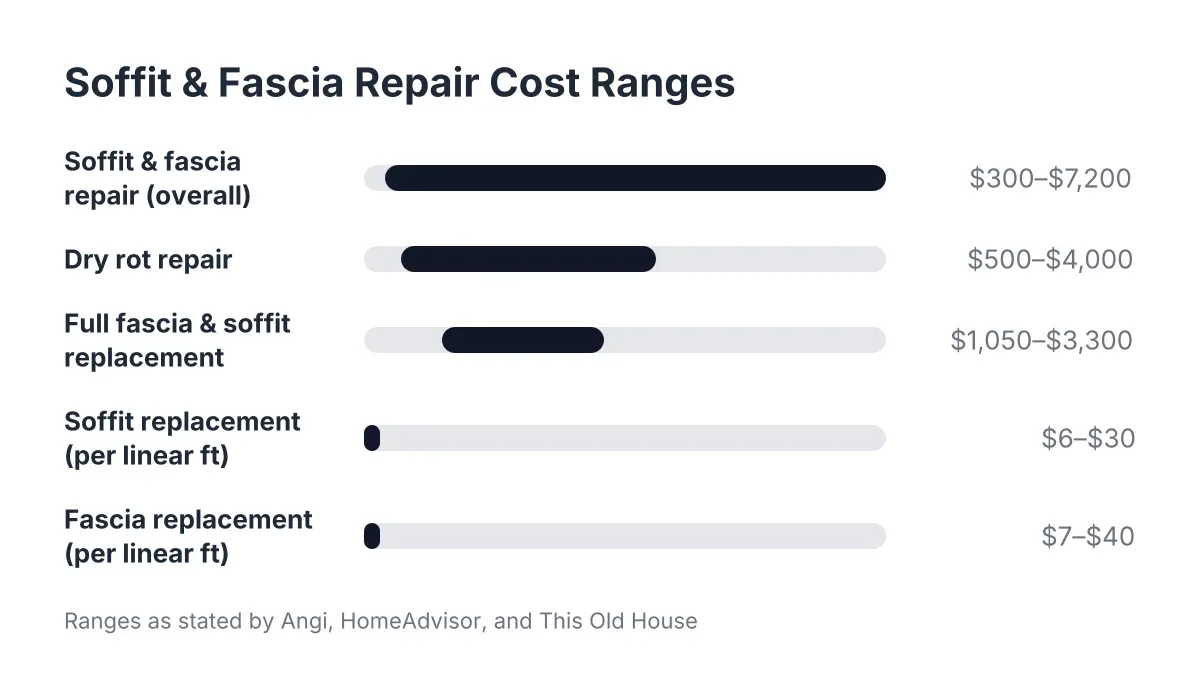
Soffit and fascia repair costs run from $300 to $7,200 depending on materials and how far the damage has spread, with dry rot repairs landing between $500 and $4,000, according to Angi. For full replacement work, HomeAdvisor puts professional fascia and soffit jobs between $1,050 and $3,300 for a home, averaging near $2,500.
Broken down by the foot, soffit replacement runs $6 to $30 per linear foot with an average near $17, and fascia board replacement runs $7 to $40 per linear foot, according to This Old House. Vinyl sits at the low end of those ranges; aluminum sits in the middle. As of 2026, the material gap between the two on a typical single-story roofline is usually smaller than homeowners expect, because labor and prep drive more of the total than the panels themselves.
What moves your price up or down:
- Hidden rot. Replacing water-damaged wood framing behind the panels adds labor and lumber.
- Roofline complexity. Hips, dormers, and second-story eaves take more time than a straight ranch roofline.
- Length of the run. Both materials price by the linear foot, so a 4,000 square foot home with a wraparound roofline costs more than a compact one.
- Pest cleanup. Nests, droppings, and chewed insulation sometimes need removal before repair can start.
- Fasteners and trim. Aluminum fascia should be hung with painted ring shank nails in aluminum or stainless steel. They cost more than standard nails, but they resist corrosion and will not react with the metal and streak your fascia.
Suppose a homeowner near Orlando hears chirping over the back porch and finds a fist-sized hole where the soffit meets the fascia. In that scenario, the visible fix might be one panel and two feet of fascia. But if overflowing gutters rotted six feet of the wooden fascia board behind it, the job grows from a patch into a section replacement, and the material choice starts to matter for the whole run.
Step 4: Close the Entry Points, Not Just the Hole
This step is where fascia and soffit repair either solves your animal problem or postpones it. New panels only keep wildlife out if the whole roofline edge is tight. A proper repair includes details you can ask any contractor about by name:
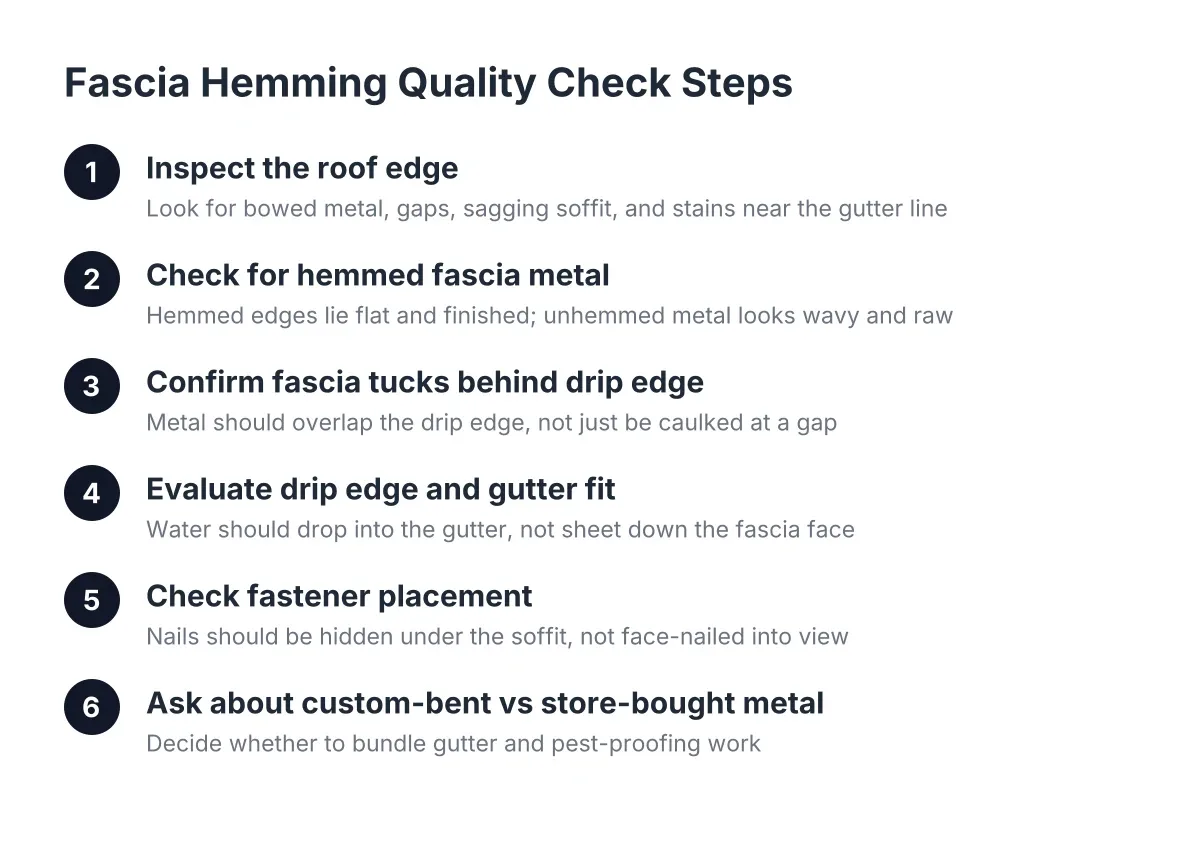
- Fascia metal tucked under the drip edge. The aluminum should extend up behind the roof's drip edge beneath the shingles. The drip edge is designed to hold it there, which blocks water intrusion and keeps the fascia tight to the framing. Fascia that is face-nailed below the drip edge leaves a water path and a pry point for squirrels.
- Soffit panels locked into J-channel. Panels slide into a channel at the fascia and get secured from above, not face-nailed. Loose, face-fastened panels are exactly the kind birds push aside.
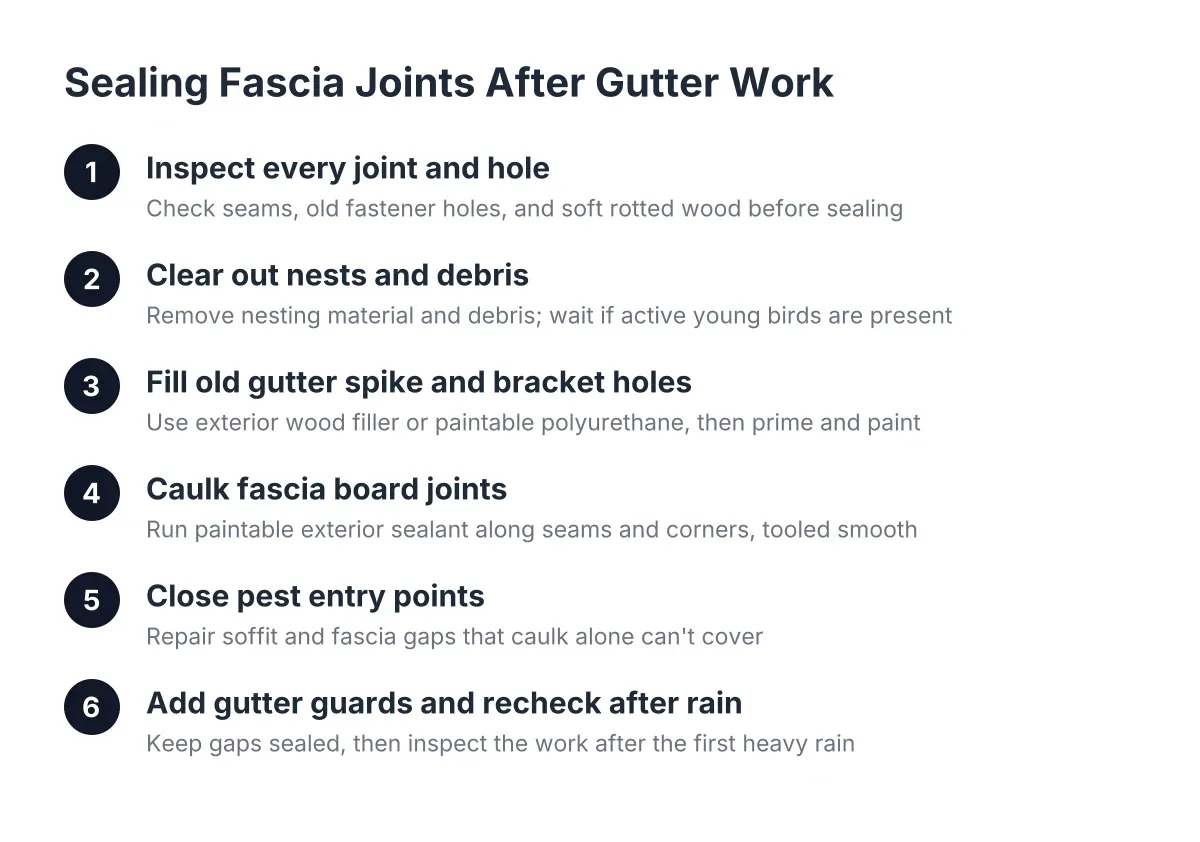
- Sealed gaps at gutter ends and corners. Open gutter end caps and mitered corners are favorite nesting spots. Gutter screens or gutter guards over the top close off the open trough that invites nests in the first place.
DIY mesh stapled over a hole rarely holds, because the animal attacks the edges where the mesh meets soft or loose material. Rigid panels locked into channel and metal tucked under the drip edge give nothing to grab.
Step 5: Bundle the Gutter Work Into the Same Visit
Soffit, fascia, and gutters fail together because they live together. The same storm water, sun, and humidity that wore out one usually wore on all three. Replacing fascia while leaving a leaking, undersized gutter hanging on it means paying to rot the new board all over again.
Therefore, if your fascia needs work, have the gutters evaluated in the same visit. Gutter installation runs $4 to $40 per linear foot depending on material and gutter type, according to Angi, and hanging seamless gutters on brand-new fascia is faster and cleaner than retrofitting them later. One crew, one ladder setup, one roofline fixed end to end. That also answers the question a lot of homeowners with nesting birds ask: is this a pest control job or a construction job? Once the animals are out, it is a construction job, and the right contractor handles the soffit, the fascia, the gutters, and the screens in one pass.
One honest caveat: if you currently have animals living in the soffit, especially raccoons or an active bee colony, have them removed before the repair. Sealing an animal inside creates a worse problem, and bees in particular call for a specialist. A soffit and fascia contractor seals the structure; removing live wildlife is a separate skill.
The Bottom Line on Aluminum vs. Vinyl
For most Orlando homes with pest and moisture problems at the roofline, aluminum fascia with vented vinyl soffit is the practical answer. Aluminum gives the gutter line rigidity and chew resistance where animals attack; vinyl handles ventilation and humidity under the eaves at a lower material cost. All-aluminum is worth the step up on homes with aggressive squirrel pressure or long, visible fascia runs where a crisp painted line matters. All-vinyl makes sense when budget leads and the pest pressure is light.
Whichever way you go, insist on three things: rotted wood replaced, fascia tucked under the drip edge, and gutters and screens handled in the same job. Get those right and the scratching in the ceiling stays gone.
If you need soffit and fascia repair, Orlando Gutter Installers can help.
Prefer to talk it through? Call (689) 399-8982 — a quick call is usually the fastest way to get a straight answer for your situation.