Pre Bent Aluminum Fascia vs Custom-Fit: What Orlando Homeowners Should Know
If birds are getting into a gap under your roofline, the fascia behind it is usually the real problem. Many homeowners grab pre bent aluminum fascia from a big box store, nail it over the damage, and hope the noise in the ceiling stops. Sometimes it holds for a season. More often, the store-bought piece does not match the profile of the existing fascia, water keeps getting behind it, and the birds find the gap again. This guide walks through the repair step by step, compares off-the-shelf fascia with custom-bent metal, and shows homeowners in Orlando, FL what a proper fix looks like before anyone climbs a ladder.
The short version: pre bent aluminum fascia is a stock product made in a few standard sizes. Your roofline was not built to a stock size. The quality of the repair comes down to whether the metal fits your fascia board, tucks behind the drip edge, and seals the entry point for good.
Step 1: Find the Real Entry Point Before You Buy Anything
Start at the spot where you see birds flying in and out, then work outward. A hole in the soffit panel is the visible symptom. The cause is usually behind it: a rotted fascia board, a gap at the drip edge, or a gutter that pulled loose and opened a seam.
Press on the fascia board with your thumb along the gutter line. Soft or spongy wood means rot, and rot means the board needs replacement, not a metal cover. Check the soffit panels nearby too. Birds and squirrels widen small gaps fast, so one visible hole often means two or three weak spots along the same run.
In addition, look at the gutters themselves. Open gutter ends and loose hangers give animals a ledge to work from. A complete fix usually pairs fascia and soffit repair with gutter repair or gutter screens, which is why bundling the work with one contractor saves a second service call.
Step 2: Understand What Pre Bent Aluminum Fascia Actually Is
Pre bent aluminum fascia is factory-formed trim sold in standard widths, usually 12-foot lengths, in a handful of colors. Big box stores stock it for DIY roofline projects. It covers a wood fascia board so the wood stays dry and the roofline looks clean. The same stores sell pre bent aluminum trim for doors and windows on the same principle.
The appeal is obvious. It is cheap, it is on the shelf today, and it looks close enough to what is on your house. For a simple shed or a garage with standard framing, it can work fine.
However, stock pieces have known problems on an existing home:
- The width rarely matches your fascia board exactly, so the metal either falls short or has to be forced, leaving gaps animals exploit.
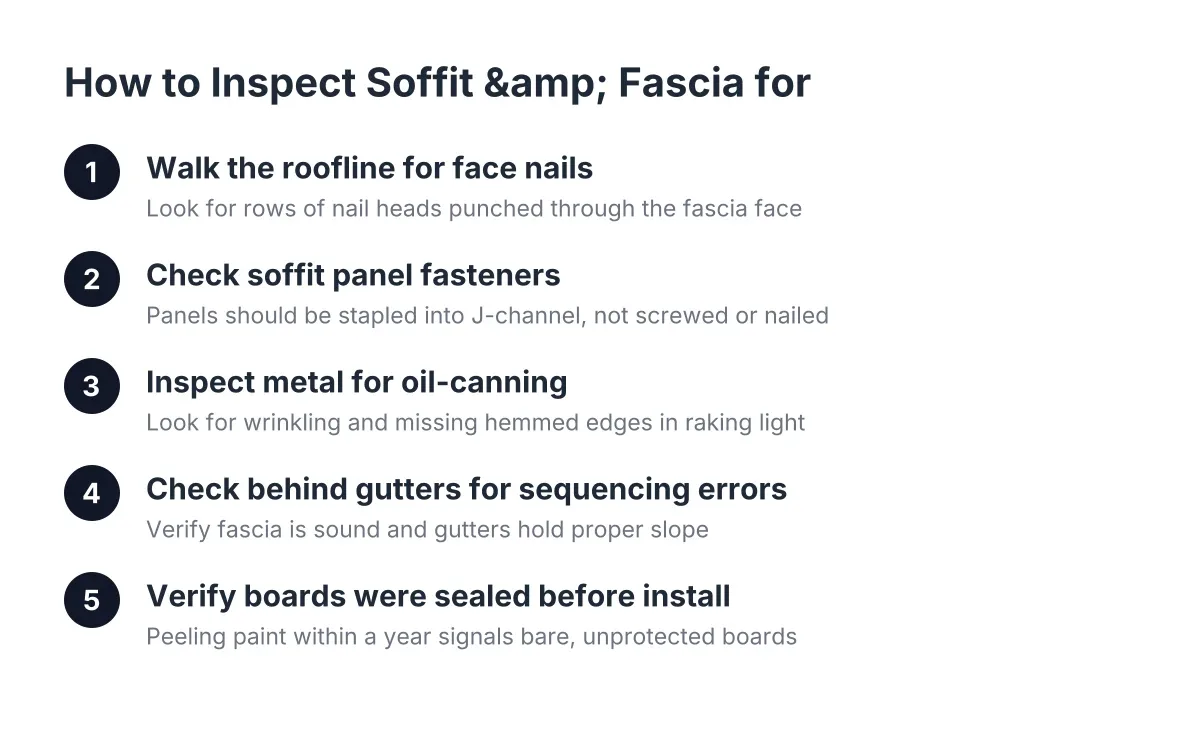
- Thinner stock metal tends to oil-can, meaning it wrinkles and waves during installation, which looks bad and leaves loose edges.
- The profile may not match the rest of your roofline, so one repaired section stands out from the street.
- Standard lengths still need accurate cuts at gables and corners, which is where most DIY repairs open up.
Step 3: Compare Pre Bent Fascia With Custom-Bent Metal
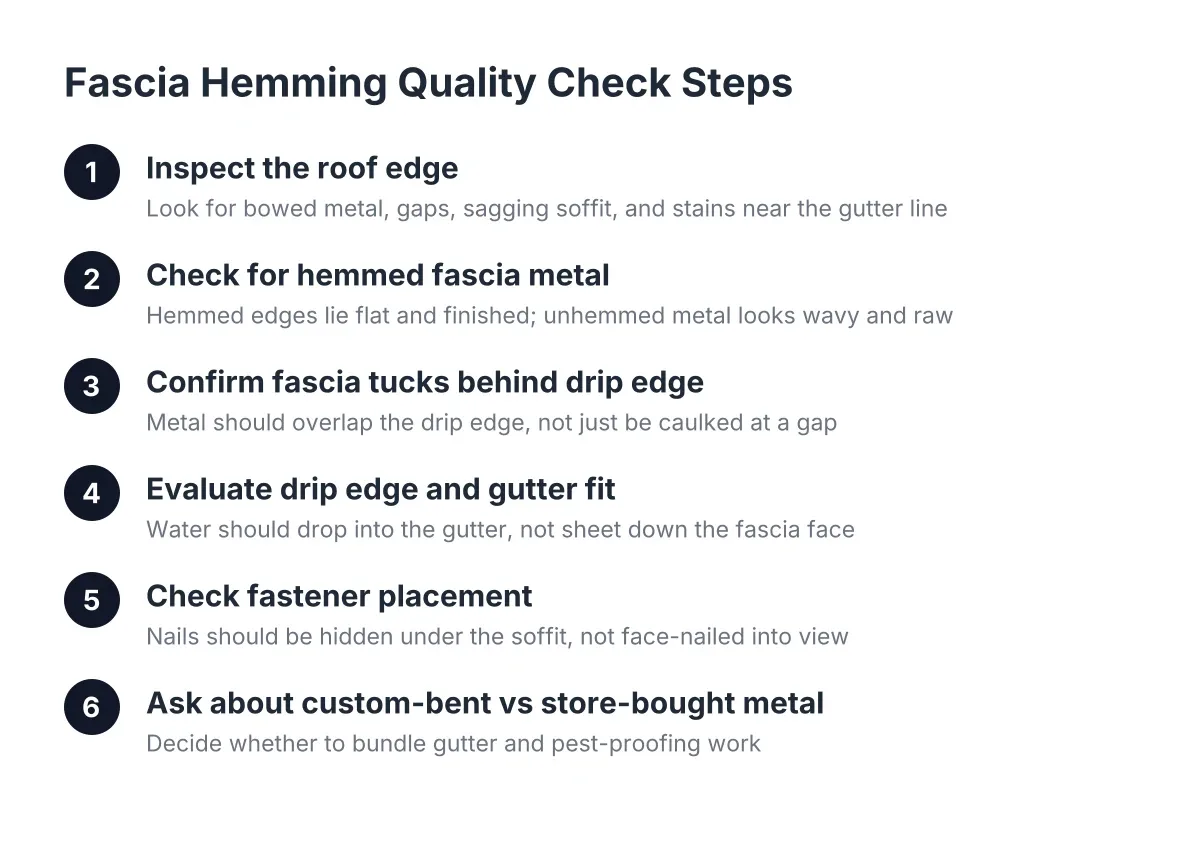
Custom fascia metal starts as trim coil, a roll of aluminum that a contractor bends on a metal brake to the exact width and profile of your fascia board. The difference shows up in three places.
First, fit. A custom piece is bent to your board, measured in place against the installed gable trim, and marked on the back before cutting. There is no gap at the top or bottom edge for a bird to pry open.
Second, strength. A good installer hems the top and bottom edges of the bent metal, folding the edge back on itself. The hem adds rigidity, resists wrinkling, and gives a cleaner line. Many installers skip this step to save time, and stock pieces from the store never have it.
Third, water handling. Fascia metal should extend up behind the roof drip edge, beneath the shingles. The drip edge is designed to tuck the fascia underneath it, which sheds water away from the wood and holds the metal tight to the framing. A stock piece that is an inch too short cannot tuck behind anything, so water runs behind it and the rot continues under a fresh-looking cover.
If you are set on doing the work yourself, you do not have to buy a metal brake. Contractors who own one will often bend custom pieces for a small fee when they are not busy. That gets you properly sized metal without renting equipment.
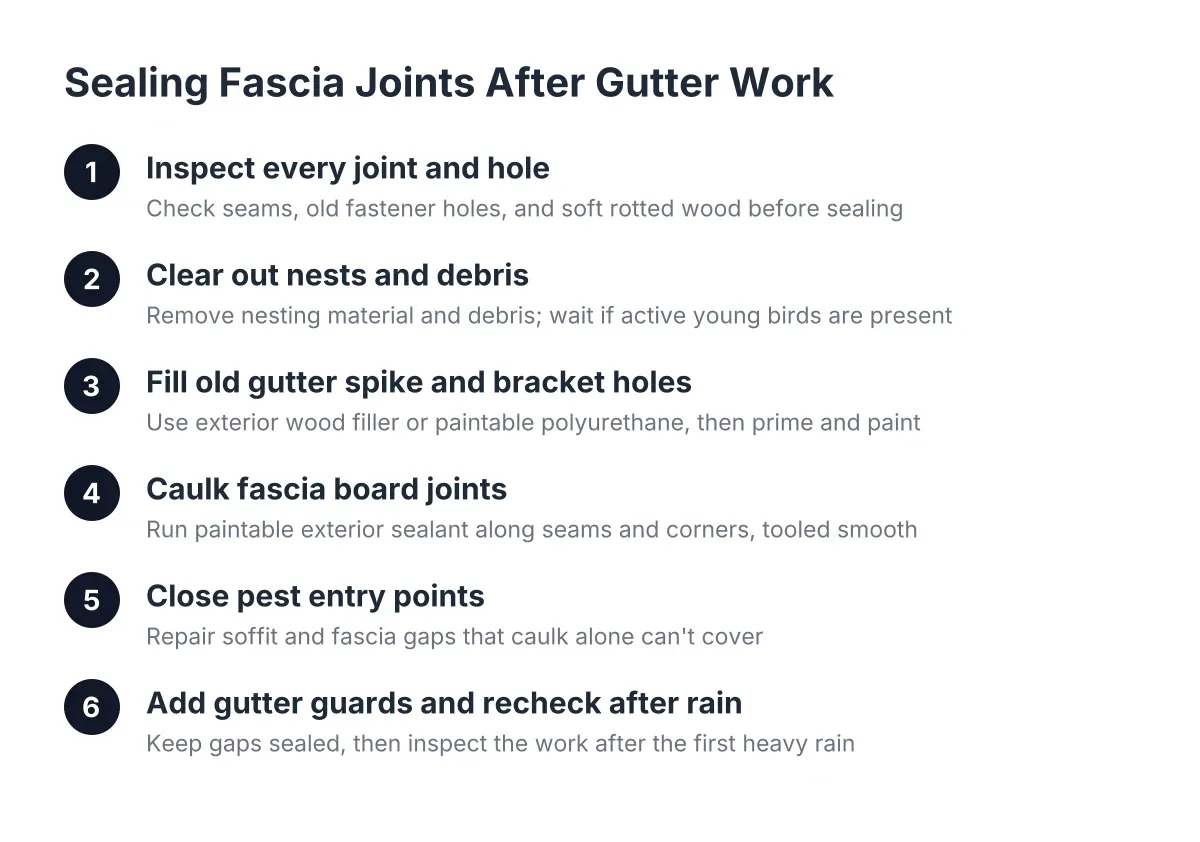
Step 4: Replace Rotted Wood Before Covering Anything
This is the step that separates a repair from a cover-up. If the fascia board is rotted, wrapping it in aluminum traps the moisture and hides the problem while it spreads toward the rafter tails. For a pest problem specifically, soft wood is the whole reason the animal got in.
A proper repair removes the gutter section, pulls the damaged board, and checks the rafter ends behind it. New fascia board gets cut to match, and tracing the angle from an intact section onto the new stock keeps the roof pitch correct. Only then does the metal go on.
Fastener choice matters more than most homeowners expect. Aluminum fascia should be fastened with painted ring shank nails in aluminum or stainless steel. They cost more than standard nails, but regular steel nails corrode and react with the aluminum, which stains the metal and loosens the hold. In Central Florida humidity, that failure comes early.
Step 5: Close the Soffit and Seal the Pest Entry
With solid fascia in place, the soffit side gets rebuilt. Soffit panels slide into a J-channel at the fascia board and get secured with staples rather than face nails, which keeps the panels tight and the finished look clean. End pieces of fascia can take face staples near the top edge because the soffit channel cover hides that area later.
This matters for the pest problem directly. A homeowner's mesh patch over a soffit hole fails because it attaches to the damaged material around the hole. New panels locked into channel have no loose edge to pull on. For example, suppose a homeowner near downtown Orlando hears scratching above the back bedroom and finds starlings using a two-inch soffit gap. In that scenario, the fix is not the gap. It is the eight feet of soft fascia board that let the gap open, plus new soffit panels and gutter screens along that run so nothing nests in the open gutter next spring.
One honest caveat: if you have an active nest with young birds, or bees in the soffit cavity, deal with the animals first. Sealing them inside creates a worse problem, and some species and bee removals need a wildlife or bee specialist before construction work starts.
Step 6: Price the Job With Real Cost Factors, Not Guesses
Nobody can quote your roofline sight unseen, but the national ranges give you a sanity check. Professional fascia and soffit work runs $1,050 to $3,300 for a home, averaging near $2,500, according to HomeAdvisor. Angi puts the wider range at $300 to $7,200 depending on materials and damage, with dry rot repairs at $500 to $4,000. Per foot, fascia board replacement typically costs $7 to $40 per linear foot, and soffit replacement averages about $17 per linear foot, according to This Old House.
What moves your number up or down:
- Linear feet of damage, since one eight-foot section prices differently than three sides of the house
- Rot depth, because damage reaching rafter tails adds carpentry
- Roofline complexity, where gables, hips, and corners add cuts and labor
- Whether gutters come down and go back up, or get replaced with new seamless gutters at the same time
- Material choice, since custom-bent coil, stock pre bent pieces, and wood-only repairs price differently
As of 2026, bundling makes sense on cost and on results. If the gutter has to come off to replace the fascia anyway, adding seamless gutter installation or gutter guards in the same visit means one crew, one setup, and one sealed roofline. That answers the common worry about paying a wildlife company and a repair company separately: the construction fix is the permanent part, and one roofline contractor can handle it.
Step 7: Choose Who Does the Work in Orlando, FL
Most two-sided fascia jobs take a day or two once materials are on site; heavy rot or full-perimeter work takes longer. Summer thunderstorm season in Central Florida compresses schedules, so lining up the work before the daily storms return is easier on everyone.
Ask any contractor three questions before you hire:
- Will you bend custom fascia metal on a brake, or install stock pre bent pieces from a supplier? Listen for the brake.
- How do you handle rotted wood behind the metal, and does your quote for gutters and fascia include wood replacement or price it as a separate line?
- Will the new metal tuck behind the drip edge, and do you hem the edges?
A fair quote itemizes the fascia replacement, soffit replacement, any gutter repair or gutter screens, and the wood contingency in plain language. Vague lump sums hide shortcuts. This applies to builders too; a remodeler finishing an addition needs fascia metal that matches the existing roofline profile, which is exactly what custom bending delivers and stock pieces do not.
If birds are in your soffit right now, or you are weighing store-bought pre bent aluminum fascia against having it done right, get an estimate from a local soffit and fascia contractor who will walk the roofline with you and explain the cost factors before any work starts. Orlando Gutter Installers handles fascia replacement, soffit replacement, seamless gutters, and gutter screens as one job, with the price drivers laid out plainly up front.
If you need soffit and fascia replacement, Orlando Gutter Installers can help.
Prefer to talk it through? Call (689) 399-8982 — a quick call is usually the fastest way to get a straight answer for your situation.