How Central Florida Humidity and Storms Damage Soffit and Fascia (Repair Steps)
Central Florida humidity and storms are rough on the edge of your roof. The soffit and fascia take water from above when gutters overflow, and moisture from below when humid air sits under the eaves for months. Add a summer of near-daily thunderstorms, and soft spots, peeling paint, and rotted board ends show up fast. If your gutters pour over the sides every time it rains hard, the fascia behind them has probably been soaking up that water for a while. Understanding how humidity, storm cycles, and soffit damage develop is the first step to fixing it right.
This guide walks you through fixing humidity, storm, and soffit damage the right way, step by step. The goal is one roofline fix: sound soffit and fascia, plus gutters that actually handle a Central Florida downpour, so you stop paying someone to come back every season.
Step 1: Confirm the Damage Before Anyone Quotes a Repair
Start on the ground with your eyes, not on a ladder with a pry bar. Walk the house after a storm and look for these signs along the roofline:
- Paint peeling or bubbling on the fascia board, especially behind the gutter
- Dark streaks or water stains on the soffit panels
- Soffit panels that sag, pull away, or show daylight at the seams
- Gutters pulling loose because the fascia behind them is too soft to hold screws
- Pest activity at the eaves; squirrels and wasps find rotted openings quickly
Next, press gently on suspect boards with a screwdriver handle if you can reach them safely. Solid wood resists. Rotted wood gives way or crumbles. Note every spot, because humidity-driven rot rarely stays in one place. Boards exposed to the same Central Florida humidity, storms, and sun tend to fail together, which matters when you plan the scope in Step 3.
One honest caution: if the gutter is detaching or the soffit is sagging over a second-story edge, stop there and let a pro inspect it. Ladder work against compromised fascia is where homeowners get hurt.
Step 2: Identify Water Damage Sources Before Beginning Repairs
Rot is the symptom. Water is the cause. If you replace boards without fixing the water path, you will repeat this project in a few years. In Orlando, the usual suspects are:
- Overflowing gutters. Undersized, clogged, or poorly sloped gutters send sheets of water over the back edge, straight onto the fascia. If your gutters waterfall in every heavy rain, this is likely your source.
- Water sneaking behind the gutter. Old or deteriorated gutters can let water slip between the gutter and the fascia board. That water can rot the fascia and soffit, and depending on how the wall is built, it can migrate into the wall itself. This one needs attention promptly.
- No gutters at all. On sections without gutters, roof runoff rides down the edge and saturates the fascia over time.
- Trapped humid air. Blocked or painted-over soffit vents stop airflow under the eaves. In our climate, that trapped moisture feeds rot and mold even without a leak.
A good contractor diagnoses this before quoting. If someone offers to swap boards without explaining where the water came from, keep asking questions.
Step 3: Scope the Job as One Roofline Fix, Not Patchwork
Soffit, fascia, and gutters face the same weather, so they wear out together. Patching one piece while the parts around it keep failing is how homeowners end up paying for the same repair three times. Scoping the whole edge at once usually costs less over time than hiring trades separately.
A complete fascia and soffit repair scope in this area typically includes:
- Removing the gutters along the damaged runs
- Pulling rotted fascia boards and damaged soffit panels
- Checking the rafter tails and sub-fascia behind them for hidden rot
- Installing new fascia and soffit, with proper venting
- Rehanging or replacing the gutters, resetting the slope so water actually reaches the downspouts
What is usually extra: structural repairs to rafter tails, painting beyond the new boards, and roofing work at the drip edge. Ask for those as line items so the quote stays clear.
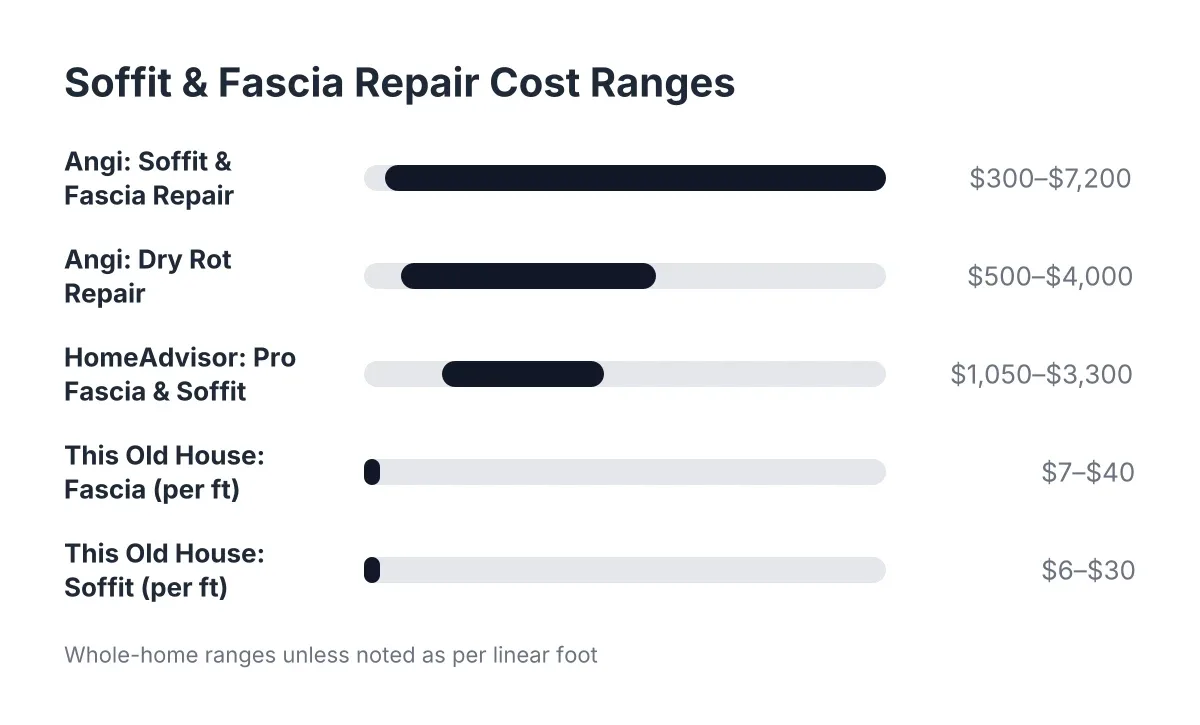
For cost context in 2026, Angi puts soffit and fascia repairs at $300 to $7,200 depending on materials and damage, with dry rot repairs running $500 to $4,000. HomeAdvisor reports professional fascia and soffit work between $1,050 and $3,300 for a home, averaging near $2,500. Per foot, This Old House lists fascia replacement at $7 to $40 per linear foot and soffit at $6 to $30, averaging about $17. Your number depends on linear footage, material, roofline complexity, and how far the rot spread.
Step 4: Choose Materials Built for Humidity, Storm Weather, and Soffit Damage Prevention
Material choice matters more here than in a dry climate. Bare pine fascia in Orlando is a short-term fix. Better options include primed or pre-finished wood, aluminum-wrapped fascia, and vented aluminum or vinyl soffit panels that resist moisture outright.
Two installation details separate a lasting job from a repeat call:
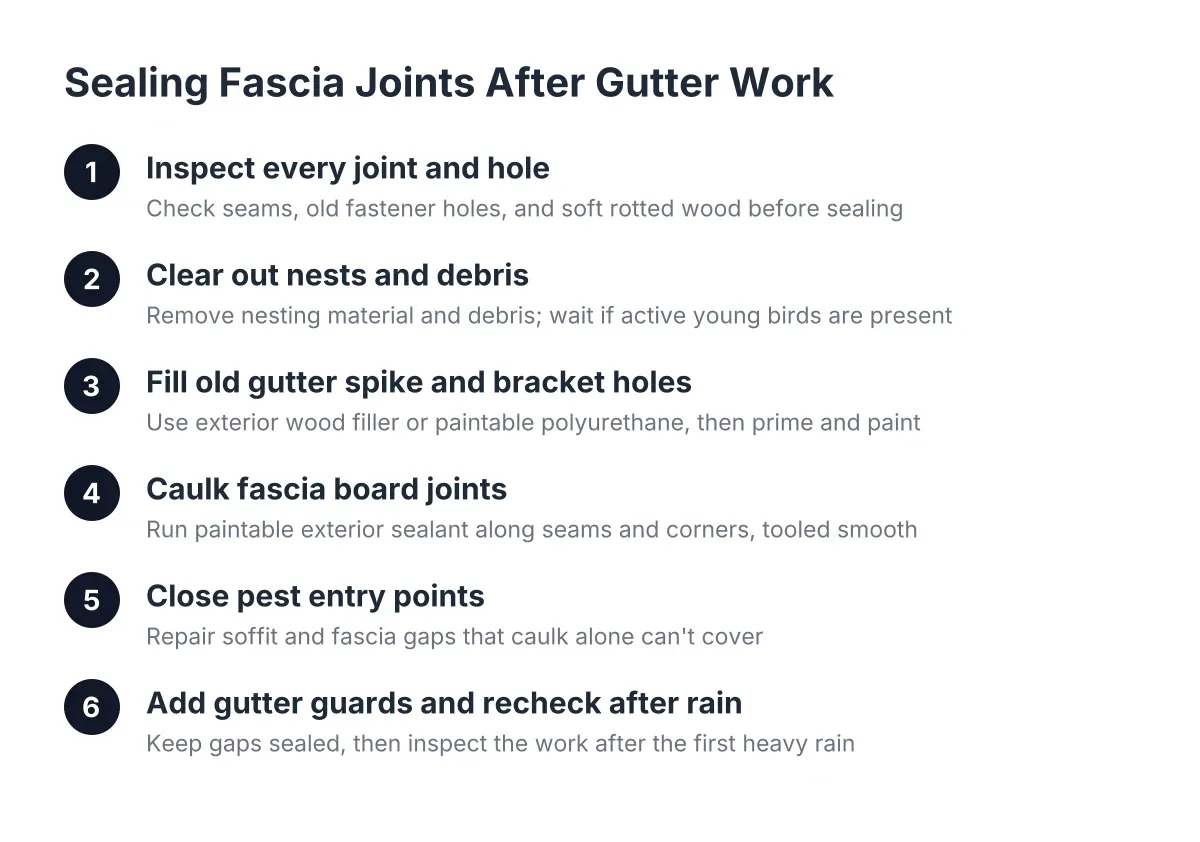
- Seal before, not after. A fascia board painted or sealed on all sides before it goes up resists moisture better than one painted on the face after mounting. The unpainted back of a board is exactly where humid air does its damage.
- Keep the vents open. Soffit panels should be vented where attic airflow needs them. Blocked eave ventilation traps the humid air that started this problem.
For example, suppose a homeowner near downtown Orlando has 24 feet of rotted fascia on the back of a 1998 block home, with sagging soffit under it. In that scenario, replacing both with aluminum-wrapped fascia and vented soffit, then rehanging the gutter, is one day of work for a typical crew and one visit instead of three separate patch jobs.
Step 5: Make Sure the Installation Details Are Done Right
You do not need to swing the hammer, but you should know what correct work looks like. These details decide whether the repair survives the next storm season:
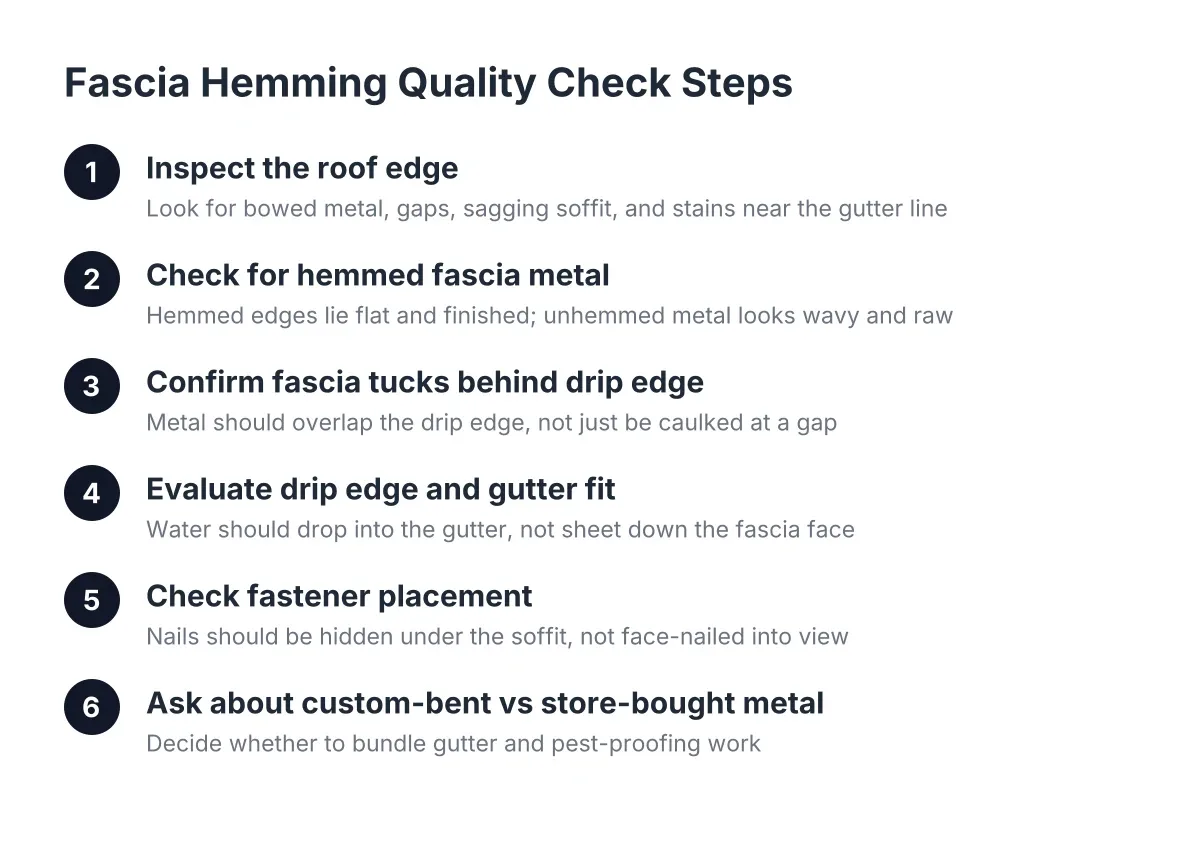
- Fascia laps shed water downhill. Installers should start with the bottom piece and work up, so upper pieces overlap lower ones the same way water runs. Joints lapped the wrong way funnel storm water into the seam.
- No face nailing except at seams. Nails through the face of the fascia are only appropriate at seam locations where boards overlap. Everywhere else, fasteners belong underneath, driven up through the soffit. Face nails in the field create entry points for water and are a common shortcut, even among contractors.
- Soffit slides into J-channel. Soffit panels should slide into the channel at the fascia and be secured from behind, not face-fastened through the panel.
In fact, many soffit and fascia problems trace back to sloppy original installation rather than storms alone. Central Florida humidity and storm cycles just expose those shortcuts faster than a milder climate would.
Step 6: Fix the Gutters So the Rot Does Not Come Back
New boards behind failing gutters is a half-finished job. If your gutters overflowed before, resolve why before the project closes. Have the installer check:
- Size. Gutters too small for your roof area will overflow in a summer downpour no matter how clean they are. This is often the real answer for homeowners who keep paying for gutter cleaning with no improvement.
- Slope and hangers. Seamless gutters hung with the correct pitch, anchored into the new solid fascia, move water to the downspouts instead of pooling.
- Downspout placement and extensions. Water should discharge away from the foundation, not into a flower bed at the corner. Downspout extensions are a cheap add while the crew is already there.
- Gutter screens. Gutter guards or gutter screens cut down on the clog-and-overflow cycle under oak and pine trees. According to This Old House, a 2025 survey found 70% of homeowners cited preventing clogs or flooding as their main reason for installing gutter guards.
Bundling the gutter installation with the fascia work means one crew, one setup, and gutters anchored into fresh wood instead of screws sunk into rot.
Step 7: Hire One Contractor for the Whole Edge, and Ask These Questions
Fascia and soffit repair sits between trades, which is why homeowners searching "who repairs soffit and fascia near me" get confusing results. Gutter companies that handle soffit and fascia work cover this exact scope, since the three components fail together and get repaired together.
Before you sign, ask three questions:
- What caused the rot, and how does this scope fix the cause? You want a water-path answer, not just a board count.
- What drives the price up or down on my house? A fair answer covers linear footage, material choice, roofline complexity, and hidden damage found after removal, explained before work starts.
- How will the gutters be handled? Removal, rehanging, slope correction, and any gutter repair or replacement should appear in writing.
A fair quote for gutters and fascia work lists each run, the materials, and what counts as an extra if the crew finds more rot behind the boards. Vague lump sums invite disputes later.
One more boundary: if your roof itself needs replacement, do that first. Fascia, soffit, and gutter work installed before a roof tear-off often gets damaged during the roofing job.
If your roofline is showing rot, sagging soffit, or gutters pulling loose after another round of storms, Orlando Gutter Installers can look at the whole edge, explain what is driving the damage and the cost in plain language, and give you a clear estimate before anyone sets foot on the roof.
If you need soffit and fascia repair, Orlando Gutter Installers can help.
Prefer to talk it through? Call (689) 399-8982 — a quick call is usually the fastest way to get a straight answer for your situation.