How to Prepare Your Home for Soffit and Fascia Repair Before Closing Day
If an inspection report just flagged rotted fascia or sagging soffit, the fastest way to keep your closing on track is to prepare for soffit repair in advance. A crew that shows up to a ready house finishes faster, finds fewer surprises, and hands you a clean invoice for the closing package. This guide walks through the steps, in order, so the repair day goes smoothly whether you are fixing storm damage or clearing an inspection objection.
Most of this prep takes one afternoon. None of it requires getting on the roof yourself.
Step 1: Pull the Exact Defects From the Inspection Report
Start with the paperwork, not the ladder. If a buyer's inspector flagged the roofline, the report usually names specific locations: "rotted fascia at rear left corner" or "soffit panel detached above garage." Those line items define the scope of the repair, and the scope defines the cost.
Copy each roofline defect into a short list and share it with the contractor before anyone visits. This matters for two reasons. First, it keeps the quote tied to what the buyer's agent is actually negotiating over, so you do not pay for work nobody asked about. Second, the repair invoice can mirror the report language, which makes the re-inspection walk much cleaner.
For storm damage, do the same thing with photos. Shoot the detached gutter run, the hanging soffit panel, or the stained fascia board from the ground. If an insurance adjuster is involved, date-stamped photos taken before any repair protect your claim.
Step 2: Walk the Roofline and Note What the Report Missed
Inspectors work fast, and soffit and fascia problems hide behind gutters. Before the crew arrives, walk the full perimeter of the house and look up. You are checking whether the flagged section is the whole problem or just the visible part of it.
Look for these signs from the ground:
- Dark streaks or peeling paint on fascia boards, which usually means water is getting behind them
- Soffit panels that sag, bow, or show gaps at the seams
- Gutters pulling away from the fascia, a sign the board behind the hangers has softened
- Wasp nests, bird activity, or squirrel damage at soffit vents
- Stains on exterior walls directly below the roofline
Here is why this step pays off. Siding, soffit, fascia, and gutters all face the same sun, rain, and humidity, so they tend to fail together. If three sections are soft, repairing all three in one visit costs less than three separate service calls. A flipper on a tight timeline would rather hear about section two and three before the crew arrives, not during the re-inspection.
That said, know the trade-off. If only one eight-foot run is rotted and the rest of the roofline is sound, a targeted repair is the right call for a house you are selling. You are not obligated to replace everything; you are obligated to fix what the report flagged, correctly.
Step 3: Decide Whether Gutters Come Down, and Who Rehangs Them
This is the decision most sellers get wrong. Fascia boards sit directly behind the gutters. In most cases, the gutter run along a damaged section has to come down before the fascia can be replaced, then go back up afterward.
Therefore, sort out before repair day who handles the gutters. You have three realistic options:
- Bundle it. Hire one company that does both soffit and fascia repair and gutter work. One crew removes the gutters, replaces the boards, and rehangs or replaces the gutters in a single visit. One invoice for the closing file.
- Split it. Hire a carpenter for the wood and a separate gutter company to rehang. This can work, but you now manage two schedules against one closing date, and each trade can blame the other if something leaks later.
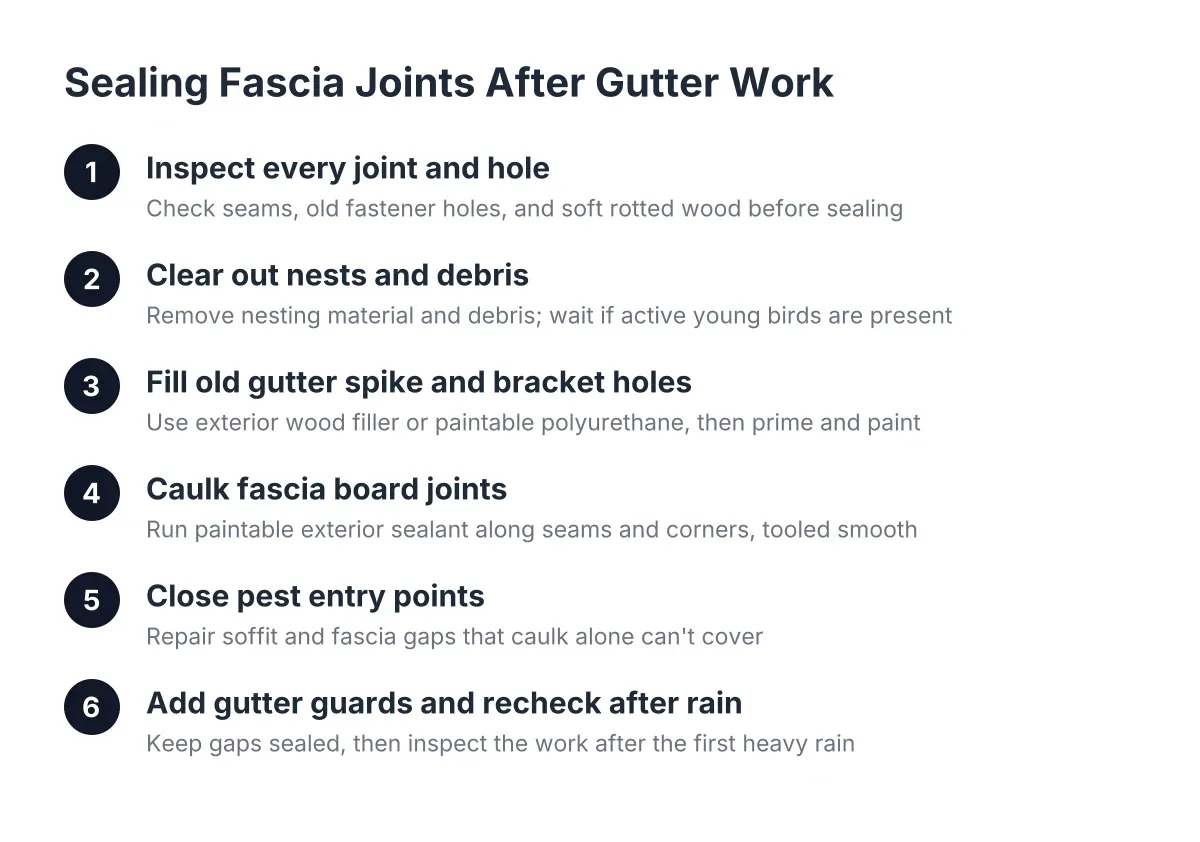
- Rehang old gutters on new fascia. If the existing seamless gutters are in decent shape, reusing them keeps cost down. Just confirm the crew will fill and paint the old bracket holes in the fascia, because open holes let water behind the new board and can get flagged again.
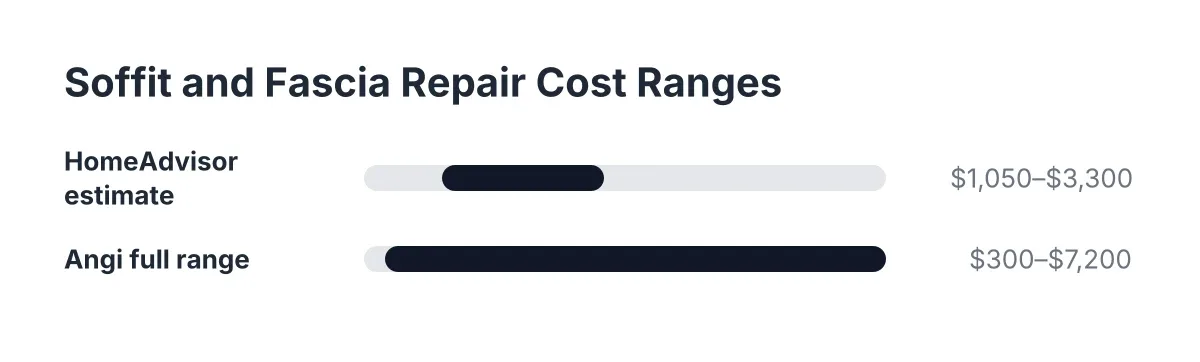
For context on cost expectations, professional fascia and soffit work typically runs between $1,050 and $3,300 for a home according to HomeAdvisor, though small targeted repairs can land well under that and heavy rot can push above it. Angi puts the full range at $300 to $7,200 depending on materials and damage level. The spread is wide because linear footage, material choice, and how much hidden rot the crew finds all move the number.
How to Prepare for Soffit Repair Work
Next, clear the ground under every section being repaired. The crew needs ladder space along the roofline and a clear path from the driveway to each work area. This is the step that most directly speeds up the job.
The afternoon before, handle this checklist:
- Move cars out of the garage and driveway so panels and ladders have staging room
- Pull patio furniture, grills, planters, and hoses at least a few feet away from the house
- Trim back shrubs or branches touching the roofline where you can do it safely from the ground
- Unlock gates so the crew can reach the back and sides of the house
- Flag sprinkler heads near the foundation so ladder feet do not crush them
- Plan for pets to stay inside; soffit removal is loud and gates stay open
In addition, tell the crew about anything living in the soffit. Central Florida soffits host wasps, bees, and the occasional squirrel. A crew that knows about an active nest comes prepared; one that discovers it twenty feet up loses an hour, or reschedules.
Step 5: Ask the Contractor How the Boards Will Be Installed
You do not need to supervise the work, but two or three pointed questions separate a crew that does this right from one that creates your next inspection problem. Poor installation technique causes a surprising share of soffit and fascia failures, not just storms and age.
Ask these before work starts:
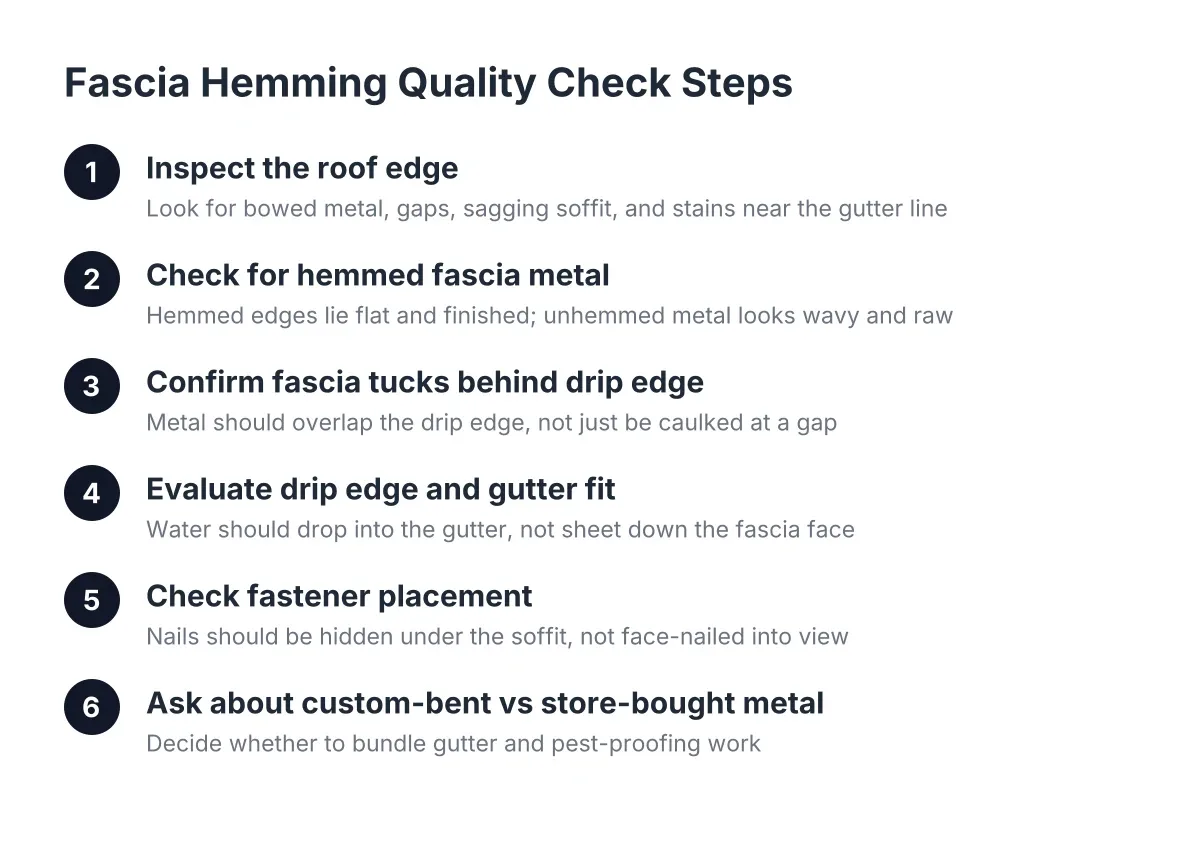
- Will the fascia be face-nailed? Fasteners should go up underneath the fascia through the soffit, with face fastening only at seams where overlapping joints need securing. A fascia board peppered with face nails invites water intrusion and looks like a patch job to the next inspector.
- Will wood fascia be painted or sealed before it goes up? Coating the board before installation protects the back side and cut ends, the exact spots where rot starts. Painting after mounting leaves raw wood against the roofline.
- How do the soffit panels attach? Panels should slide into the channel at the fascia and fasten from underneath, not through the face.
- What happens if you find more rot behind the board? Agree in advance on how change orders work, so a surprise does not stall your timeline.
As a result of asking, you also get useful signal. A contractor who answers these plainly is one who will also explain the quote for gutters and soffit work without padding it.
Step 6: Prepare the Home Soffit Paper Trail for Closing
For a pre-listing repair, the documentation is half the job. Suppose a seller in Orlando has a buyer's inspection flagging rotted fascia over the lanai and a detached soffit panel on the gable end, with a closing date three weeks out. When you prepare for soffit repair in a sale scenario, the repair itself might take a day; the paper trail is what satisfies the buyer's agent.
Before the crew leaves, make sure you have:
- An itemized invoice naming each repaired location in language matching the inspection report
- Before and after photos of each section
- A note of the materials used, such as aluminum fascia over new wood or vinyl soffit panels
- Written confirmation that gutters were rehung and old fastener holes in the fascia were sealed and painted
Keep the full packet with your closing documents. When the buyer's inspector does the re-walk, matching the invoice line to the report line closes the item fast. For a storm-damage repair, the same packet supports an insurance claim, though the claim itself stays between you and your insurer; a gutter company documents the work, it does not run the claim.
Step 7: Schedule Around Weather and Your Closing Date
Finally, build slack into the calendar. Orlando summer afternoons bring frequent thunderstorms, and crews cannot safely work a roofline in lightning. A one-day job scheduled in June can slip to a second morning. If your closing is in three weeks, book the repair for week one, not week three, so a rain delay and the re-inspection both fit.
Morning starts beat afternoon starts from roughly June through September. If you are also adding gutter guards or downspout extensions while the crew is there, mention it when booking so the visit is planned for the full scope.
One honest caution: if your roof itself needs replacement, do that first. Fascia, soffit, and gutters attach at the roof edge, and a roofing crew will disturb all three. Paying for fascia and gutter work before a roof tear-off means paying for some of it twice. When you are unsure whether damage is roof-deep or roofline-deep, have a professional look before you commit either way.
The Short Version
To prepare your home soffit and fascia repair, work the list in order: pull the defects from the report, walk the roofline for anything it missed, settle the gutter question, clear the work zone, ask how the boards will be fastened and sealed, line up the paperwork, and schedule with weather room before closing. A prepared house turns a flagged inspection item into a one-day fix with a clean receipt, which is exactly what a buyer's agent, or an insurance adjuster, wants to see.
If you need soffit and fascia repair, Orlando Gutter Installers can help.
Related guide: fascia and soffit repair — Complete Guide
Prefer to talk it through? Call (689) 399-8982 — a quick call is usually the fastest way to get a straight answer for your situation.