Questions to Ask a Soffit and Fascia Contractor Before You Hire Anyone in Orlando
A storm rips through Orlando, your gutters end up in the yard, and the wood behind them looks chewed up. Now you need help fast, but every company says the same thing: "we'll come take a look." Before anyone climbs a ladder, you deserve straight answers. Knowing which questions to ask a contractor about soffit and fascia work is how you avoid hiring the wrong crew twice. Here are the ones that matter, with the answers a good contractor should give you.
First, What Are Soffit and Fascia, and Why Do They Fail Together?
Fascia is the vertical board that runs along your roof edge; your gutters hang on it. Soffit is the panel underneath the roof overhang, and it usually vents air into your attic. They sit side by side, catch the same rain, and bake in the same Florida sun, so when one rots or tears loose, the other often follows.
This matters for how you hire. Gutters, soffit, and fascia weather as a unit. Patching one piece while ignoring the rotted board next to it means you pay a trip charge twice. A contractor who only looks at the part you called about is not doing you a favor.
Why It Matters to Ask the Right Questions Before Hiring a Contractor
The questions you ask a soffit and fascia contractor matter most right after a storm because that is when you are easiest to rush. Water is pouring down your siding, rain is in the forecast, and you want someone, anyone, out there today. Pressure like that is exactly when bad hires happen.
A straight-talking contractor slows that moment down. They explain what failed, what drives the cost, and what order the work should happen in. If someone pushes you to sign before explaining any of that, keep calling.
Which Questions Should You Ask a Soffit and Fascia Contractor Before Hiring?
Ask about scope, cost drivers, gutter coordination, fastening methods, and documentation before you hire anyone for soffit and fascia work. The answers tell you whether you are talking to a roofline professional or someone who patches and runs. Here is the short list to keep by the phone:
- Will you inspect the fascia behind my gutters, or just the visible damage?
- What drives the price up or down on my specific roofline?
- Can you handle the gutters and the soffit and fascia in one job?
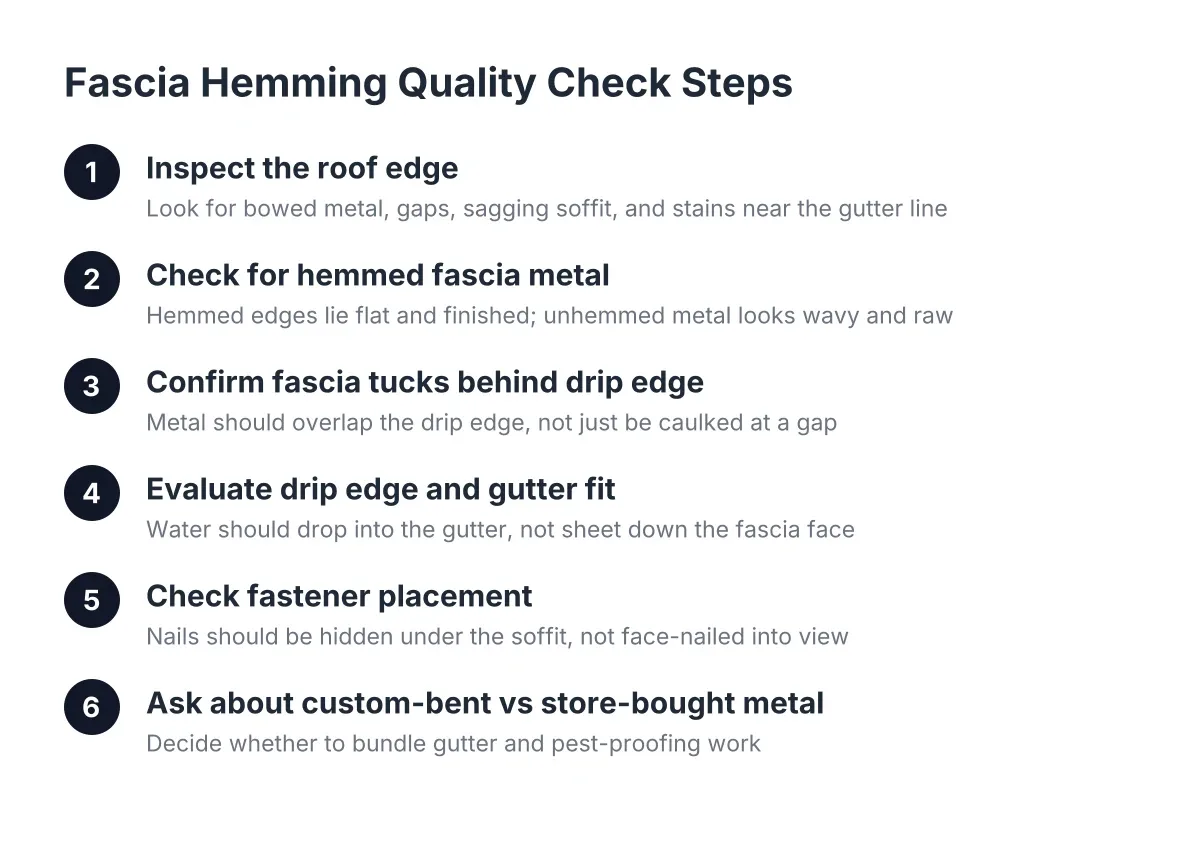
- How do you fasten fascia, and will the nails show?
- Will you give me photos and a written scope I can use for insurance?
- Is this a repair or a replacement, and why?
The rest of this article walks through what good answers to each sound like.
Will You Inspect Behind the Gutters, Not Just the Damage I Can See?
A thorough contractor pulls back or removes the gutter section to check the fascia board behind it, because that board is where hidden rot lives. Gutters bolt directly into fascia. If the wood is soft, new gutters will sag or tear loose in the next thunderstorm.
Many repair calls that look like storm damage trace back to problems that were already there: poor original installation, slow leaks, or fascia that was never sealed. A storm just finishes the job. So ask directly: what are you checking, and what happens if the wood behind the gutter is bad?
What Actually Drives the Cost of Soffit and Fascia Repair?
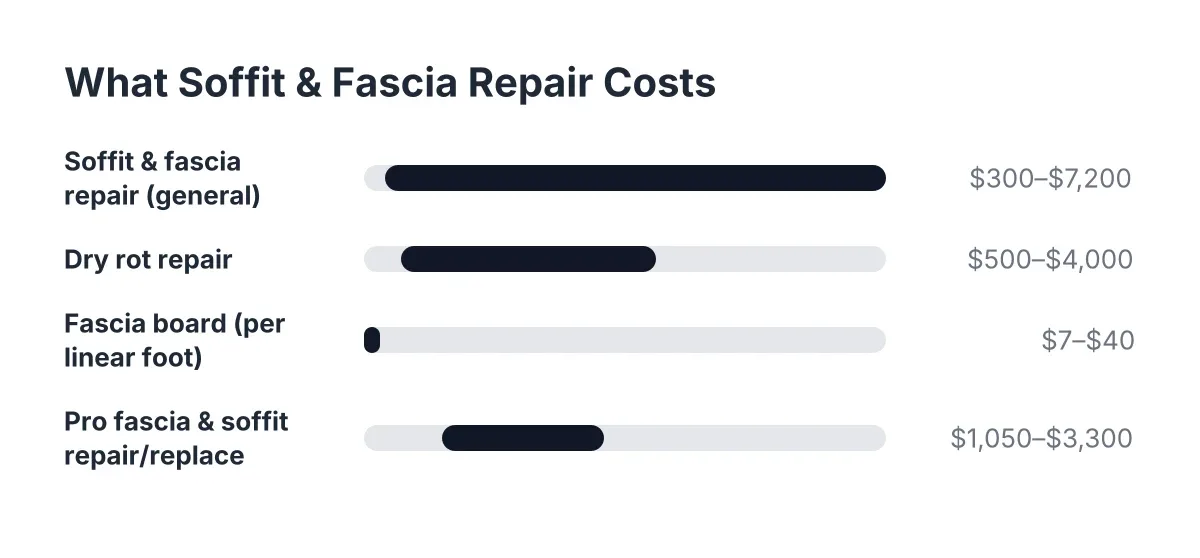
The cost of soffit and fascia repair depends on how much roofline is damaged, what material you choose, how complex the roofline is, and whether the wood underneath is rotted. For reference, Angi reports soffit and fascia repairs run from $300 to $7,200 depending on materials and damage level, with dry rot repairs costing $500 to $4,000.
Per-foot numbers help you sanity-check a bid. According to This Old House, fascia board replacement typically runs $7 to $40 per linear foot, and soffit replacement averages about $17 per linear foot. Your actual price depends on your house, but a contractor should walk you through these cost drivers in plain language before work starts, not after.
Be wary of anyone who quotes a firm price over the phone without seeing the roofline, and equally wary of anyone who refuses to explain what moves the number at all.
Can One Company Handle the Gutters, Soffit, and Fascia Together?
Yes, and bundling the work with one company is usually the smarter move, because the three parts depend on each other. The fascia must be solid before gutters go back up. If you hire a carpenter for the wood and a separate gutter crew later, you risk finger-pointing when something leaks.
Suppose a landlord with three rentals near Orlando gets a tenant call after a July thunderstorm: gutters hanging, soffit panel dangling, water staining the siding. In that scenario, one crew that does fascia and soffit repair alongside seamless gutter installation can fix the roofline in a single visit. Two separate trades means two schedules, two bills, and a tenant calling twice.
As a budget check, HomeAdvisor puts professional fascia and soffit repair or replacement between $1,050 and $3,300 for a home, averaging near $2,500. That is reference data, not a quote; your roofline sets your price.
How Will You Fasten the Fascia? (A Question Most People Never Ask)
Ask whether the crew face-nails the fascia or fastens it from underneath through the soffit. Face nailing across the whole run, meaning nails driven straight through the visible face of the board, is common but sloppy. It leaves nail heads exposed to rain and sun, and in Florida weather those spots become entry points for moisture.
The better practice fastens from underneath, with face fastening reserved for seam locations where overlapping joints need it. A few more detail questions separate careful crews from fast ones:
- Do you hem the edges of bent aluminum fascia for strength and a cleaner look, or skip that step to save time?
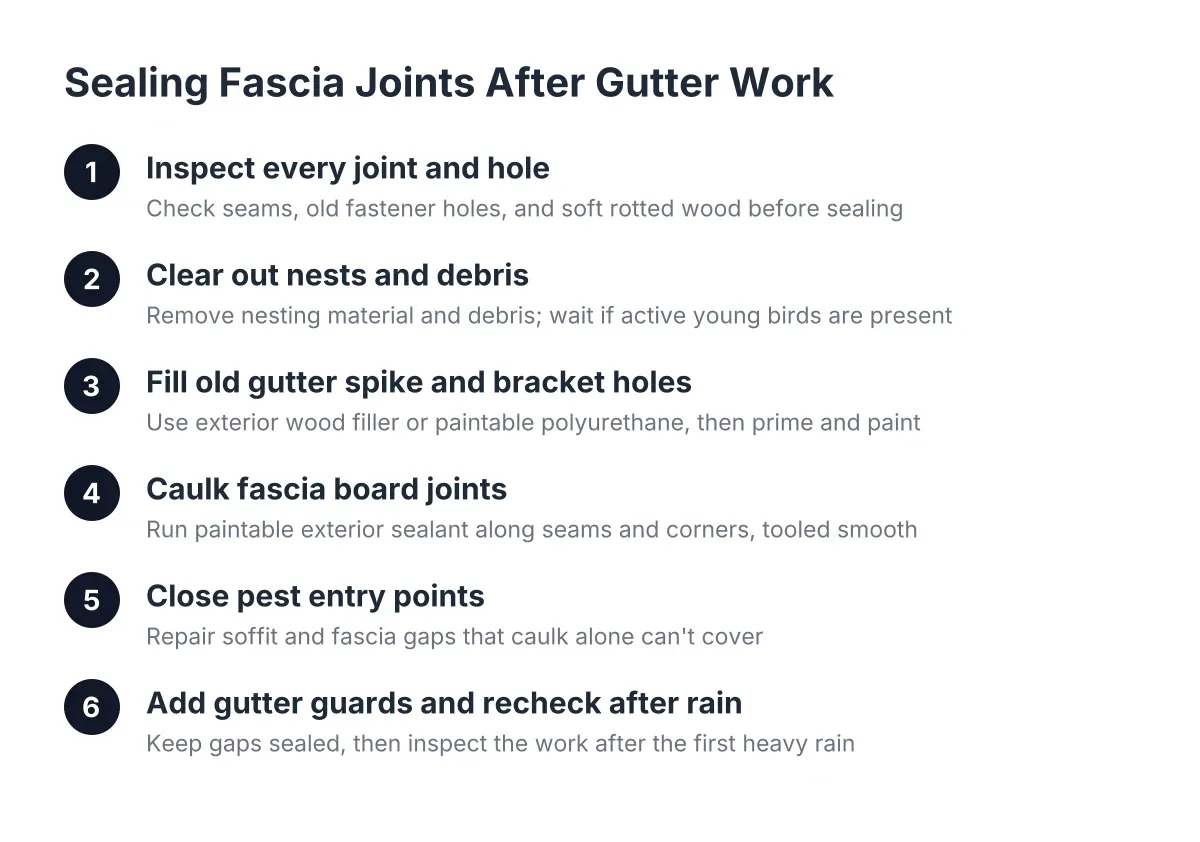
- Do you seal or paint wood fascia before installing it, when moisture protection is strongest?
- How do you protect the drip edge finish during installation?
You do not need to know how to do any of this yourself. You just need to hear a specific answer instead of "we do it the standard way."
What Documentation Will I Get for an Insurance Claim?
Ask for dated photos of the damage before work starts, a written scope describing what failed and why, and an itemized description of the repair. Insurance adjusters want evidence, and the window to file after a storm is not endless. A contractor who documents as they go makes your claim easier.
One honest caveat: a gutter and soffit contractor can document damage, but they cannot tell you what your policy covers. For coverage questions, deadlines, or a disputed claim, talk to your insurance agent or a licensed adjuster.
Should I Repair the Damaged Section or Replace the Whole Run?
Repair the section when damage is isolated and the surrounding wood is sound; replace the run when rot or sun damage shows up in multiple spots. Because soffit, fascia, and gutters weather together, scattered damage on a 20-year-old roofline usually means the rest is close behind. Replacing it once is often cheaper than patching it three times over five years.
For a landlord, this is a straight math question. Say a turnover inspection in 2026 flags soft fascia on two sides of a rental. Patching one side now and the other at the next tenant complaint means two mobilizations, two vacancy headaches. A good contractor will lay out both paths and let you decide; be skeptical of anyone who only ever recommends the biggest job.
What Should I Do Before the Contractor Arrives?
While you wait for the visit, take your own dated photos of the damage from the ground, move vehicles away from the roofline, and note where water pours during rain. Do not climb up to pull hanging gutters or soffit panels yourself; wind-loosened aluminum has sharp edges, and the wood behind it may not hold your ladder.
In addition, write down your list of questions before the call. When you ask a soffit and fascia contractor these things up front, scope, cost drivers, fastening, bundling, and paperwork, you turn a panicked scramble into a hiring decision. The contractor worth hiring will welcome every one of them.
If you need soffit and fascia repair, Orlando Gutter Installers can help.
Prefer to talk it through? Call (689) 399-8982 — a quick call is usually the fastest way to get a straight answer for your situation.