Soffit Fascia Repair Cost: The Size, Material, and Complexity Factors That Set Your Price
If birds are nesting in your soffit or you can see rotted fascia behind a sagging gutter, your next question is probably about soffit fascia repair cost. The honest answer is that no two rooflines price out the same. Three things control most of the number: how many feet of damage you have, what material you choose, and how hard the roofline is to work on. This guide walks through each factor in plain language, so when you call for quotes in Orlando, you can tell a fair price from a padded one.
We will also cover the question most homeowners with a pest problem ask first: is this a construction job or a pest control job? And for landlords comparing bids across two or three rental properties, we will explain why bundling soffit, fascia, and gutter work into one visit usually beats hiring separate trades.
What Soffit and Fascia Repair Typically Costs
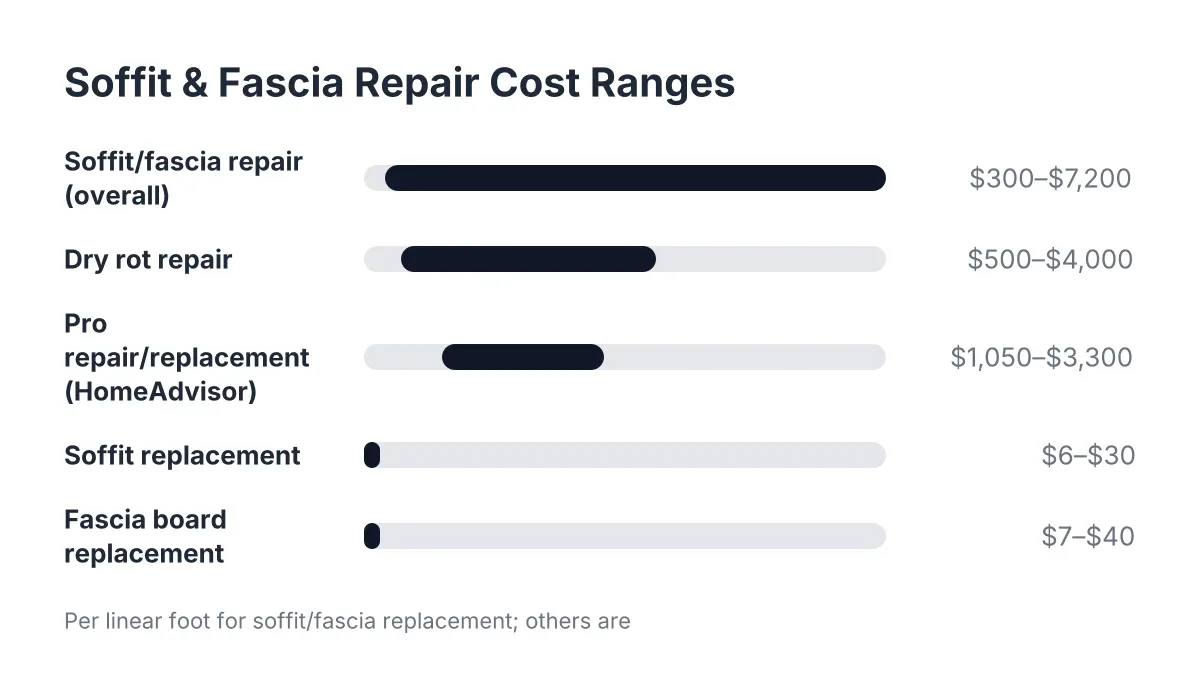
Soffit and fascia repairs cost $300 to $7,200 depending on materials and damage level, with dry rot repairs running $500 to $4,000, according to Angi. HomeAdvisor puts professional fascia and soffit repair or replacement between $1,050 and $3,300 for a home, averaging near $2,500. The spread is wide because the job itself varies that much.
A small repair, say one eight-foot section of fascia where a bird pecked through soft wood, sits at the bottom of that range. A full-perimeter replacement on a two-story house with rot in the rafter tails sits at the top. Most Orlando homes land somewhere in the middle.
Per-foot numbers help you sanity-check a bid. Soffit replacement can range from $6 to $30 per linear foot, with an average of $17 per linear foot, according to This Old House. The same source puts fascia board replacement at $7 to $40 per linear foot depending on materials, length, and local labor rates. If a contractor quotes you a lump sum, divide it by the footage being replaced. If the per-foot number lands far outside those ranges, ask why. Sometimes there is a good reason, like hidden rot or difficult access. Sometimes there is not.
One caution on published averages: they blend prices from across the country. Central Florida labor rates, humidity-driven rot, and storm season demand all shift local pricing. Treat national figures as a reference point, not a promise.
The Three Cost Drivers: Size, Material, and Complexity
Every soffit fascia repair cost estimate comes down to the same three inputs. Understanding them before you call lets you compare quotes on equal footing instead of just comparing bottom-line numbers.
Size: How Many Linear Feet Are Damaged
Fascia and soffit are measured in linear feet along the roofline. A repair quoted per linear foot tells you two things: the scope the contractor sees, and the rate they charge for labor and material combined.
Here is the catch with size. Rot and pest damage rarely stop where the visible hole stops. Birds and squirrels pick the softest spot to break through, and the wood is soft because moisture got in first. So the six-inch hole you can see often sits in the middle of four or six feet of compromised board. A good estimator probes the surrounding wood before quoting, not after demolition starts.
Small jobs also carry a minimum. Mobilizing a crew, setting up ladders, and matching materials takes the same setup time whether they replace three feet or thirty. That is why a tiny patch can look expensive per foot while a longer run looks cheaper per foot. For a landlord with two or three rentals in the Orlando area, this is the strongest argument for grouping work: one mobilization, several repairs, better per-foot math.
Material: Wood, Aluminum, and Vinyl
Material choice moves the price per foot more than any other single decision. The common options:
- Wood fascia and soffit. Lowest material cost up front, but it needs paint and it rots in Central Florida humidity. If moisture or pests caused your damage, replacing wood with wood restarts the same clock.
- Aluminum fascia wrap and vented aluminum soffit. A step up in price. Aluminum shrugs off moisture, never needs paint, and gives birds and squirrels nothing soft to chew or peck through. For pest-driven damage, this is usually the smarter long-term spend.
- Vinyl soffit. Often the budget pick for soffit panels. It resists moisture well, though it can become brittle with age and sun exposure, and determined squirrels can still gnaw through it more easily than aluminum.
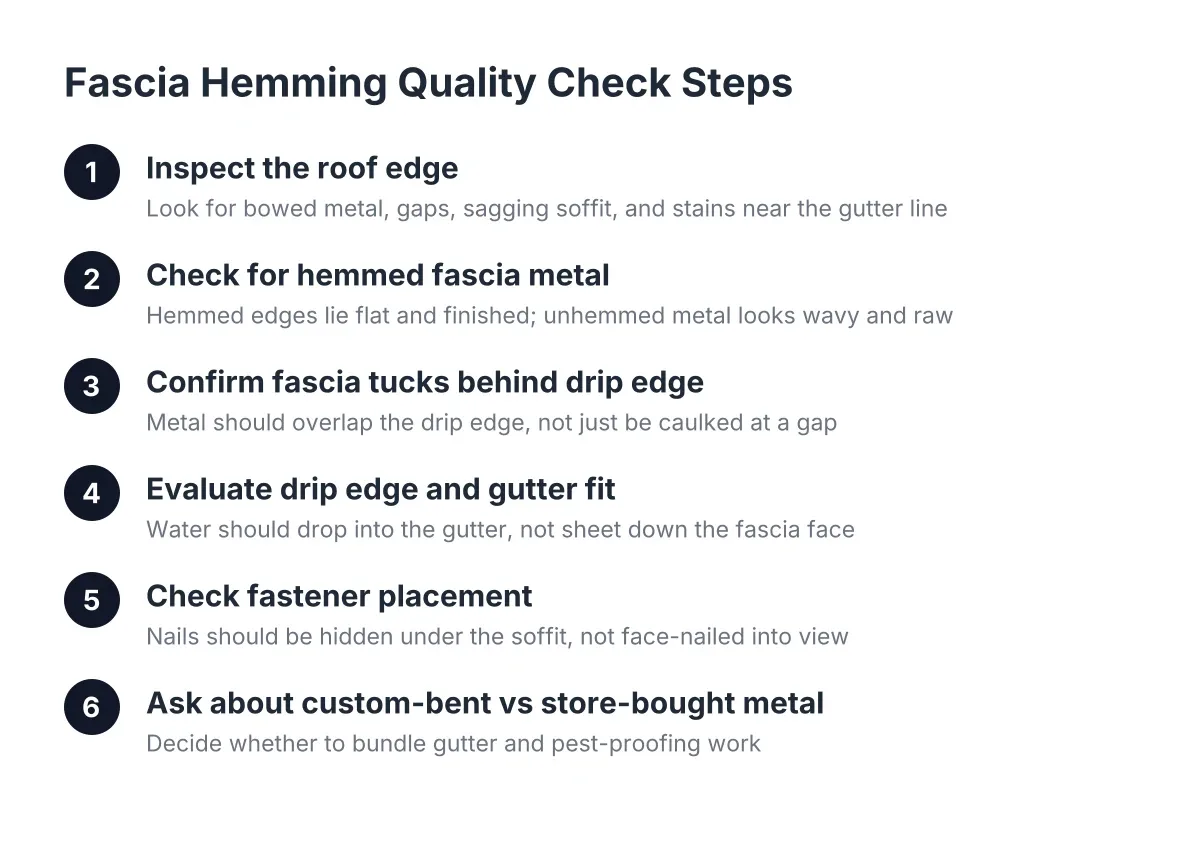
Quality within a material matters too. Pre-bent aluminum fascia off the shelf at a big box store often fails to match the profile of the existing fascia on your house, and thinner stock tends to wrinkle or ripple during installation. Custom-bent fascia from a brake, with hemmed edges on the top and bottom for rigidity, costs more in labor but holds its shape and looks right against the roofline. Many contractors skip the hemming step to save time. It is worth asking whether yours does it.
Complexity: Height, Rooflines, and Access
Two houses with identical footage and identical materials can still get different quotes. The difference is complexity, and it shows up in labor hours.
The factors that push complexity up:
- Height. Second-story fascia means taller ladders or scaffolding, slower work, and more safety setup. Expect two-story work to cost more per foot than single-story work.
- Roofline shape. A simple rectangular ranch has long, straight runs. A house with multiple gables, hips, and dormers has many short runs, corners, and seams. Every corner and seam adds cutting, fitting, and fastening time.
- What is attached. Gutters and downspouts usually have to come off before fascia work and go back on after. If the gutters are old, they may not survive removal, which raises the question of replacing them in the same visit.
- Hidden structure damage. If rot has moved from the fascia into the rafter tails or sub-fascia behind it, the job shifts from trim replacement to structural repair. No honest contractor can price that from the ground; they can only flag the risk and price it once the board comes off.
- Obstacles. Pool screen enclosures, landscaping against the house, and tight lot lines all slow access and add time.
In addition, installation quality hides inside the labor number. A surprising share of soffit and fascia problems trace back to how the original work was done, not just storms or age. Fascia face-nailed across its whole length, for example, puts visible nail heads where water can enter; proper practice fastens up underneath through the soffit, with face fastening only at seams where boards overlap. Soffit panels held by staples that wrap the nailing flange stay put in high winds better than panels hung on nails, which can slip loose without the panel ever breaking. These details cost a little more labor and are exactly where cheap bids cut corners.
Repair or Replace: How to Make the Call
Patching makes sense when damage is isolated: one section of pecked fascia, a few soffit panels knocked loose in a storm, a single pest entry hole with sound wood around it. Replacement makes sense when rot or damage runs along multiple sides of the house, when the material is failing everywhere at once, or when you are already paying for new gutters and the fascia behind them is questionable.
There is a structural reason these decisions overlap. Siding, soffit, fascia, and gutters all face the same sun, rain, and humidity, so they tend to wear out on the same schedule. When one fails, the others are often close behind. Replacing them together in one project usually costs less than patching each one as it fails over three or four separate service calls, each with its own setup and minimum charge.
Suppose a landlord owns a 1980s block home near Orlando and a tenant reports birds flying in and out under the roofline. Say the estimator finds a fist-sized hole in the wood soffit on the back eave, soft fascia for about ten feet behind a leaking gutter seam, and sound material everywhere else. In that scenario, a targeted repair might run in the high hundreds to low thousands as an illustrative estimate: replace the rotted run, wrap it in aluminum, close the entry point, and reseat the gutter. Replacing the full perimeter would cost several times that. Neither answer is automatically right; the deciding question is whether the rest of the roofline will hold up for years or fail section by section.
This is also where soffit fascia replacement cost and repair cost get confused in quotes. Make sure every bid states, in writing, how many linear feet are being replaced, what material is going up, and whether gutter removal and reinstallation are included. Three quotes that each answer those questions are comparable. Three lump sums are not.
When Birds or Squirrels Caused the Damage
If an animal opened the hole, the repair has an extra job to do: keep the animal out for good. This is where many homeowners get stuck between trades. Pest control companies remove animals but do not rebuild rooflines. Many handymen will patch the hole without fixing the moisture problem that softened the wood in the first place, which is why DIY mesh patches so often fail within a season.
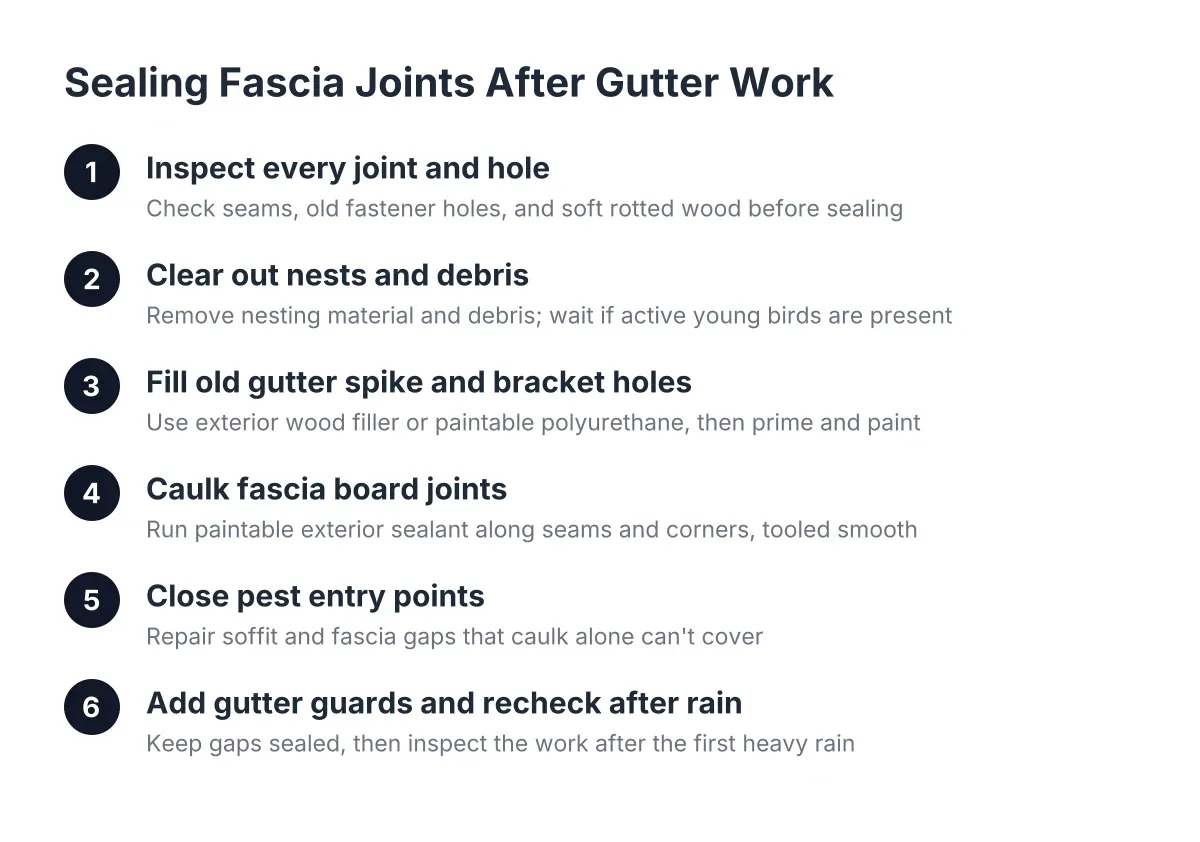
The construction side of the fix is a fascia and soffit repair done in materials pests cannot easily reopen. Solid aluminum fascia wrap and properly fastened vented soffit leave no soft wood to peck and no loose panel edges to pry. Pair that with gutter screens over the gutter run, and you close off the other favorite nesting spot: the open gutter trough packed with leaves and twigs.
One important limit here. If animals are still active inside the soffit or attic, sealing the opening can trap them, which creates a worse problem than the hole. Have the animals removed or confirmed gone first; a wildlife professional is the right call for raccoons, active bird nests with eggs, or anything protected by law. Then do the repair. The right sequence is removal, repair, and exclusion, in that order.
A few questions worth asking any contractor quoting pest-related soffit work:
- Will you probe for rot beyond the visible hole before finalizing the price?
- What material are you using to close the entry point, and why will it hold?
- How will the soffit panels be fastened so storm winds cannot work them loose?
- Can gutter screens or gutter guards go on in the same visit?
- What happens to the price if you find rot in the rafter tails once the fascia comes off?
A contractor who answers those plainly is pricing the actual job. One who waves them off is pricing a patch.
Why Bundling Gutters With Fascia Work Changes the Math
Gutters hang on the fascia. That one fact drives most of the bundling logic. If your fascia is rotted, the gutter attached to it is pulling on compromised wood, and the gutter has to come down before the fascia can be repaired anyway. Doing both in one visit means you pay for removal, repair, and reinstallation once instead of coordinating two trades and two schedules.
The math gets better when the old gutters are near the end of their life. Gutter installation costs an average of $4 to $40 per linear foot depending on material and gutter type, according to Angi. If your gutters are already sagging, leaking at seams, or undersized for Central Florida's summer thunderstorms, replacing them while the fascia is open and fresh costs less than taking new fascia apart later. Seamless gutters, formed in continuous runs on site, also eliminate most of the mid-run seams where leaks start and where the drips that rot fascia begin.
For landlords, bundling has a second benefit: fewer tenant disruptions. One crew, one day or two, one invoice covering soffit and fascia repair, seamless gutter installation, and gutter guards beats three separate appointments a tenant has to accommodate. It also creates one point of responsibility. If a leak shows up later, there is no debate about whether the gutter installer or the fascia installer caused it.
Small installation details matter at this handoff too. For example, careful crews protect the drip edge finish during fascia work so the gutter installation that follows goes on clean metal. Those touches do not show up as line items, but they show up in how the roofline looks and holds up five years later.
Getting a Soffit and Fascia Repair Cost Quote You Can Trust
Start with footage. Walk the house and note roughly how many feet of fascia look stained, peeling, sagging, or holed, and where soffit panels are loose or breached. You do not need to be exact; you need enough to notice if a quote covers far more or far less than what you saw.
Next, ask every estimator the same three questions: how many linear feet, what material, and what is included. Include means gutter removal and rehang, haul-away of old material, painting or wrapping, and any pest exclusion work like gutter screens. A quote that itemizes these is a quote you can compare.
Then compare per-foot math against the published ranges earlier in this guide, adjusted for your situation. Two-story work, complex rooflines, and hidden rot justify higher numbers. A high bid with a clear reason often beats a low bid with none; the low bid frequently grows once the fascia comes off, or it stays cheap by skipping the fastening and flashing details that keep water and animals out.
Finally, keep timing in mind. As of 2026, the pattern in Central Florida has not changed: demand for roofline work spikes after summer storm season, when everyone discovers the same leaks at once. Booking repairs in the drier months usually means easier scheduling and more estimator time on your roof instead of a rushed look from the driveway.
The cost of soffit and fascia repair is not a mystery once you break it into size, material, and complexity. Measure what you can see, insist on quotes that spell out all three, and fix the cause along with the symptom. Whether the trigger was a storm, slow rot, or a bird that found the one soft board on your eave, the roofline that gets repaired correctly once is the one you stop paying for.
Prefer to talk it through? Call (689) 399-8982 — a quick call is usually the fastest way to get a straight answer for your situation.