What to Expect During Soffit and Fascia Inspection and Repair in Orlando
If birds or squirrels have found a gap under your roofline, you want two things: the animals out and the hole closed for good. Knowing what to expect during the soffit fascia repair process helps you tell a real fix from a quick patch. This guide walks through the process step by step, from the first look at your roofline to the final gutter screen, so you know what a contractor should be doing and in what order.
One note before we start. If animals are actively living in the soffit, the repair happens after they are out. Sealing a nest inside the ceiling traps the animals, and that creates a worse problem. A good soffit and fascia contractor will time the work around removal, not ignore it.
Step 1: Walk the Roofline and Map Every Entry Point
The inspection starts on the ground with a slow walk around the house. The contractor looks up at the soffit (the flat panel under the roof overhang) and the fascia (the vertical board behind the gutters) for gaps, sagging panels, peeling paint, stains, and holes.
For a pest problem, this step matters more than anything else. Birds and rodents rarely use just one entry point. Suppose a homeowner near downtown Orlando hears chirping above the back porch. The obvious hole is at the corner over the patio, but the inspection also turns up a loose soffit panel on the opposite gable and a gap where the fascia pulled away from an old gutter bracket. Seal only the loud corner and the birds move twenty feet down the roofline.
Expect the inspector to note:
- Visible holes, gaps, or chewed openings in soffit panels
- Fascia boards pulling away from the rafter ends
- Nesting material, droppings, or grease marks near openings
- Soft or discolored wood that signals rot
- Gutter sections that overflow and soak the fascia behind them
You should get this list in plain language, with photos if the damage is above eye level. If a contractor quotes a price without walking the full roofline, that is a patch job waiting to happen.
Step 2: Probe for Rot and Find the Water Source
Next comes the part homeowners worry about most: how deep does the damage go? The contractor presses or probes the fascia and soffit with a screwdriver or awl. Solid wood resists. Rotted wood gives, and paint can hide a lot of it.
This step also answers the "why" question. Animals do not chew into healthy, dry wood very often. They exploit wood that moisture already softened. In Central Florida, the usual causes are clogged or undersized gutters overflowing onto the fascia, missing drip edge, or heavy summer thunderstorms driving rain into an unsealed seam. A fair number of problems also trace back to the original installation, such as fascia that was face nailed everywhere instead of fastened properly from underneath, which leaves holes for water to enter.
Therefore, expect the contractor to explain the moisture source, not just the hole. If the answer is "we'll just cover it with new material," keep asking questions. Cover rot without fixing the water path and both the rot and the animals come back.
Step 3: Review the Repair Plan and Cost Factors Before Work Starts
A clear scope comes before any ladder goes up. You should hear exactly which boards get repaired, which get replaced, what material is going up (wood, aluminum, or vinyl), and whether the gutters come down and go back up as part of the job.
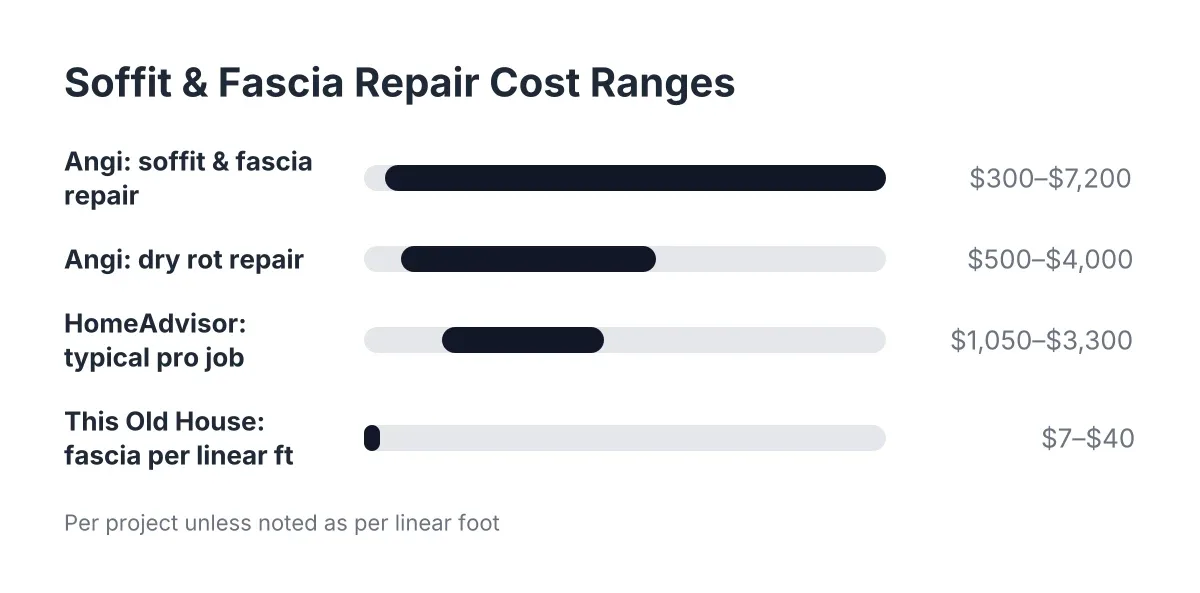
This is also where cost gets explained. No honest contractor quotes a firm number before probing for rot, but the factors are knowable. For reference, Angi puts soffit and fascia repairs at $300 to $7,200 depending on materials and damage level, with dry rot repairs running $500 to $4,000. HomeAdvisor reports professional fascia and soffit work typically lands between $1,050 and $3,300 for a home. Per-foot pricing varies too; This Old House lists fascia board replacement at $7 to $40 per linear foot and soffit replacement averaging $17 per linear foot.
What moves your price up or down:
- Linear feet of damaged soffit and fascia
- Material choice: wood costs less up front, aluminum and vinyl resist Florida moisture longer
- Roofline complexity: corners, gables, and second-story work take more time
- Whether gutters must be removed and reinstalled
- Extent of hidden rot found once old boards come off
In addition, this is where bundling pays off. If the fascia is rotted, the gutters attached to it are usually part of the problem or the next thing to fail. Handling fascia and soffit repair, gutter repair, and gutter screens as one job means one crew, one trip, and one roofline that works as a system. For the homeowner fighting nesting birds, it also means you are not hiring a carpenter, a gutter company, and a handyman for screens separately.
Step 4: Remove Damaged Boards and Expose What Is Behind Them
On repair day, expect gutters along the damaged run to come down first, since they mount to the fascia. Then the crew pulls the damaged soffit and fascia panels, a critical step in the soffit fascia repair process.
This is the moment of truth for pest jobs. Behind the soffit, crews commonly find nesting material packed into the overhang, droppings, and sometimes rot that extends into the rafter tails. Expect the scope to shift if hidden damage shows up; a good contractor flags it, shows you, and explains the added cost before continuing rather than covering it up.
All nesting debris should be cleared out, not sealed in. Old material holds moisture and scent, and scent is what draws the next round of animals to the same spot.
Step 5: How the Soffit Fascia Repair Process Unfolds During Installation
Here is what separates a lasting repair from the mesh patch that did not hold. During installation, expect a few specific practices.
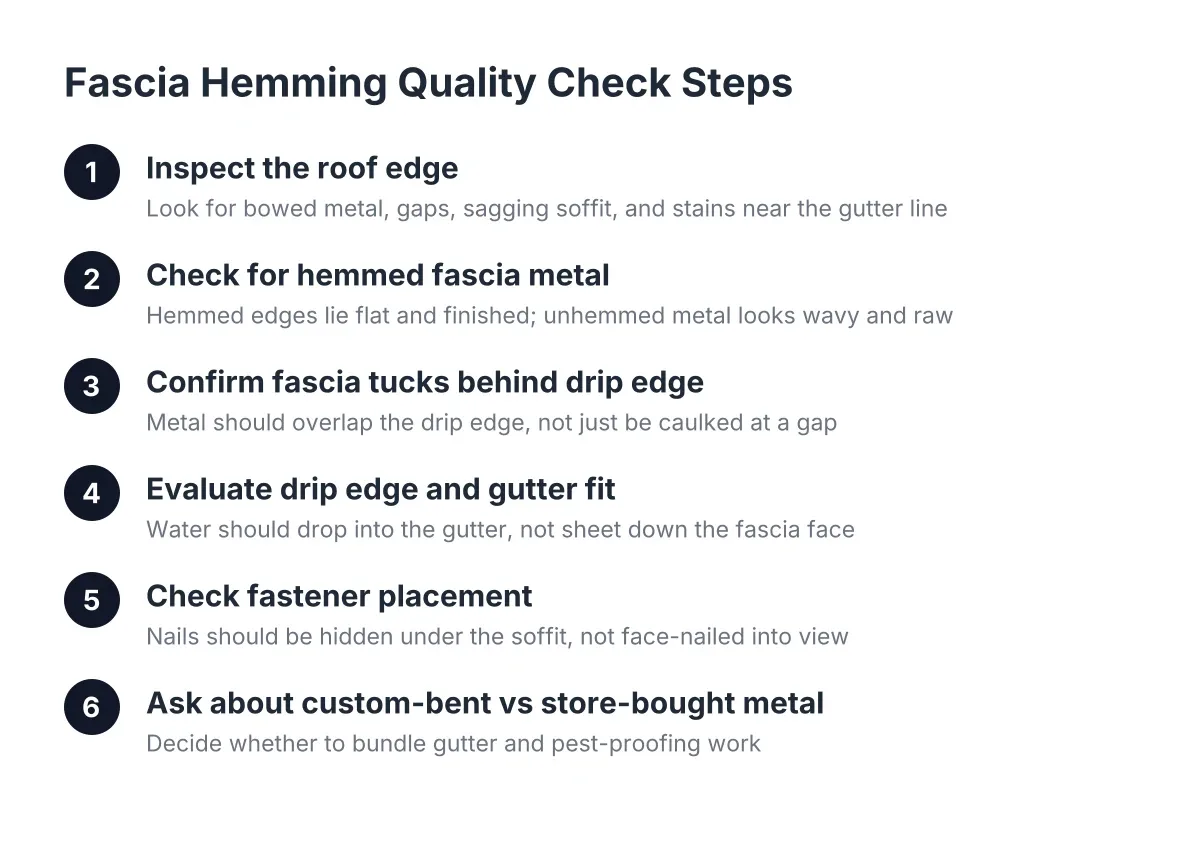
First, boards should be sealed or painted before they go up, not after. Pre-finishing protects every face of the board from moisture, including the back side you can never reach once it is mounted. Second, fascia should be fastened from underneath through the soffit, not face nailed across the front. Face nails belong only at seams, where they secure overlapping joints. Nail holes punched across the face of the board are future water entry points. Third, soffit panels slide into a channel (called J-channel) at the fascia and get secured there, so they sit tight with no gaps for a bird to work open.
However, expect some judgment calls. If only one short section rotted and the rest of the roofline is sound, a targeted repair makes sense. If soffit, fascia, and gutters are all failing along the same run, replacing them together usually costs less over time than patching one piece now and coming back for the next failure in a year. They weather together, so they tend to fail together.
Step 6: Rehang Gutters and Close the Entry Points With Screens
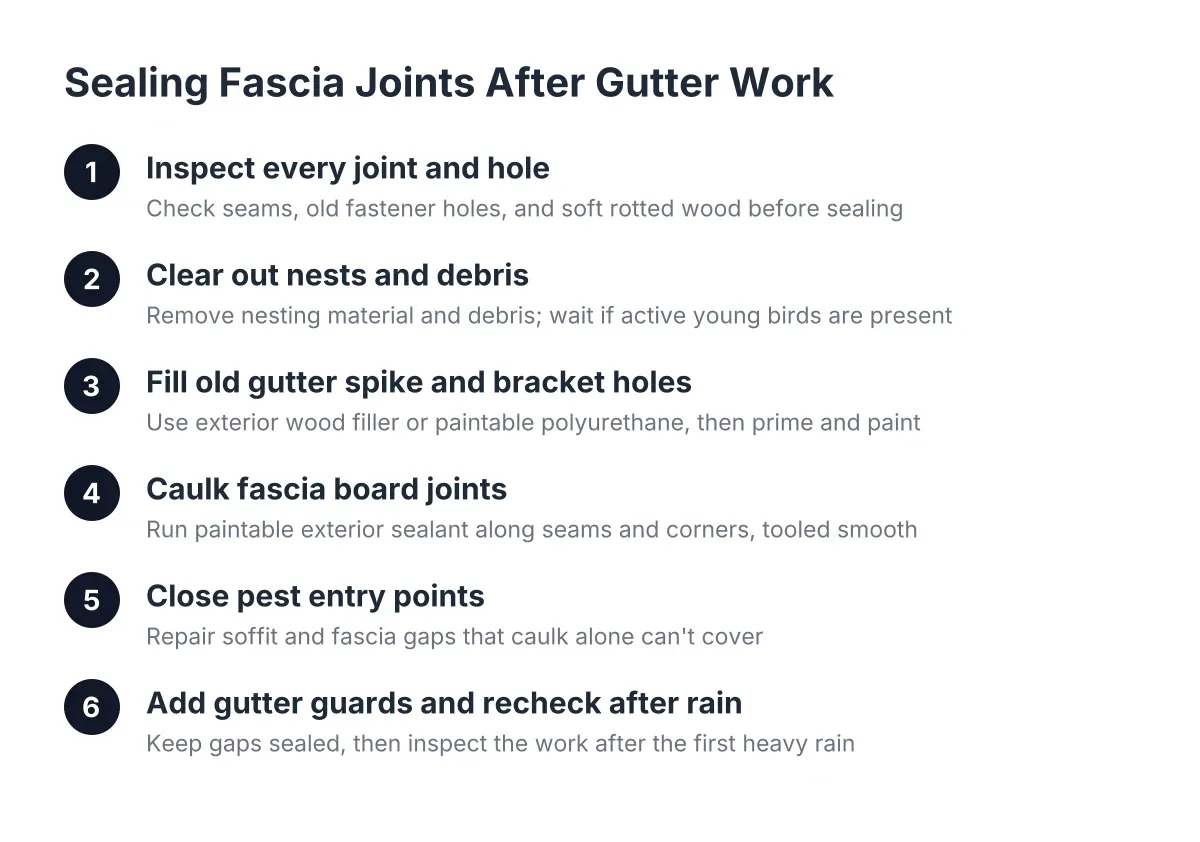
With new fascia in place, the gutters go back up on fresh wood. Expect any old bracket holes in reused fascia to be filled and painted; open holes invite water behind the board, which restarts the rot cycle.
For the pest problem, this is the sealing step. Gutter guards or gutter screens close off the open gutter trough where birds build nests, and tight soffit work removes the gaps they squeezed through. The goal is a continuous roofline with no openings wider than a fingertip. If downspouts dump water at the foundation or splash back onto the fascia, downspout extensions fix that at the same time.
Step 7: Do the Final Walkthrough and Know What to Watch
The job ends the way it started, with a walk around the house. Expect the contractor to show you each repaired section, the sealed entry points, and the new screens. Ask where water will go in the next heavy storm and watch the roofline during the first real Orlando downpour. Overflow at any point means something still needs adjusting.
Going forward, two habits keep animals out. Keep the gutters clear, since clogged gutters soak the fascia and restart the rot that opened the door in the first place. In fact, gutter screens cut that chore down; before installing guards, 41% of homeowners cleaned their gutters at least once a year, according to a This Old House survey. And walk the roofline each spring, when nesting season starts, to catch any new gap early.
Questions to Ask So You Know What to Expect During the Soffit Fascia Repair Process
Before you hire anyone, a short list of questions tells you whether you are getting a system fix or a patch:
- Will you walk the entire roofline, or just the section with the hole?
- What is causing the moisture damage, and how does the repair address it?
- Will boards be sealed before installation?
- How will the fascia be fastened, and where will nails show?
- Are gutter removal, reinstallation, and screens included in one scope?
- What happens to the price if you find hidden rot?
Clear answers to those six questions mean you know what to expect during soffit and fascia work before anyone climbs a ladder. That is the difference between paying once for a roofline that stays sealed and paying twice when the birds find the gap the patch missed.
If you need soffit and fascia repair, Orlando Gutter Installers can help.
Prefer to talk it through? Call (689) 399-8982 — a quick call is usually the fastest way to get a straight answer for your situation.