Soffit and Fascia Repair in Orlando: The Step-by-Step Process and Timeline
An inspector flags rotted fascia and a sagging soffit, the buyer's agent circles it on the report, and suddenly a cosmetic-looking strip of wood is holding up your closing. If you are selling a house or turning over a rental, soffit and fascia repair in Orlando is one of those jobs that looks small but can stall a deal if you handle it wrong. Understanding the soffit fascia repair timeline is key to coordinating the work with your closing. The good news is the process is predictable. This guide walks through it step by step, from the first look at the roofline to the invoice you hand your agent, so you know what the work includes, how long it takes, and where the money goes.
First, a quick refresher. The fascia is the vertical board along the roof edge that your gutters hang on. The soffit is the horizontal panel underneath the overhang that vents your attic. In Central Florida, humidity and summer thunderstorms work on both all year, so they tend to fail together, and often they take the gutters with them.
Step 1: Walk the Roofline and Map the Damage
Start on the ground with the inspection report in one hand and your phone camera in the other. Walk the full perimeter of the house and photograph every spot the inspector flagged, plus anything else that looks off. You are building two things at once: a scope of work for contractors to bid on, and documentation for the closing package.
Look for these specific signs:
- Peeling paint or dark staining on the fascia board, usually right behind the gutter
- Soffit panels that sag, bow, or have fallen out of their channel
- Soft or crumbling wood you can dent with a thumbnail
- Gaps or holes where squirrels, rats, or wasps could enter the attic
- Gutters pulling away from the house, which often means the fascia behind them has rotted
Press gently on suspect boards with a screwdriver handle. Solid wood resists; rotted wood gives. Do not climb on the roof for this. Everything you need to see is visible from a ladder at eye level or from the ground.
Step 2: Figure Out Why It Failed, Not Just Where
Rot is a symptom. If you repair the board without fixing the cause, the new wood fails the same way, sometimes before your buyer's one-year mark. That matters to a flipper, because a repair that fails fast invites a callback or a claim.
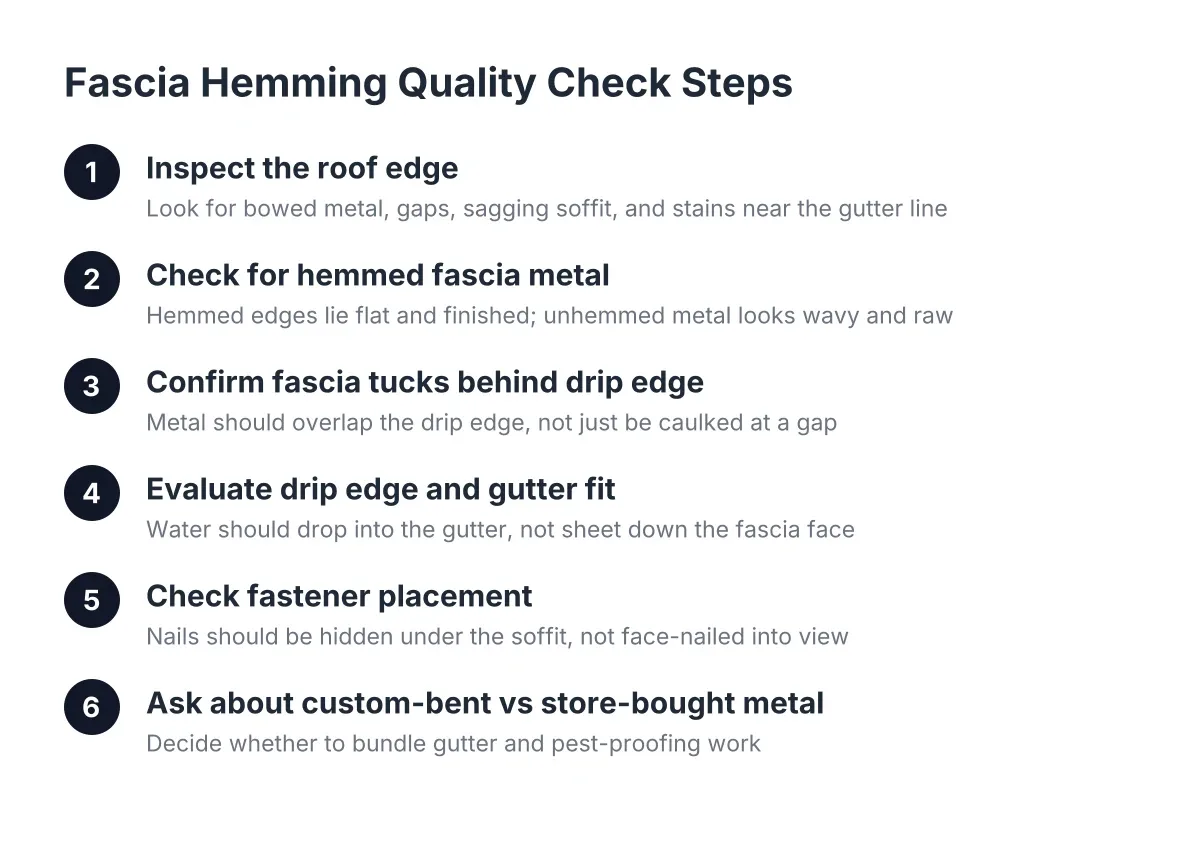
The usual causes in Orlando homes fall into a few buckets. Clogged or overflowing gutters dump water straight onto the fascia during summer storms. Missing or damaged drip edge lets water wick behind the gutter. In addition, a surprising number of failures trace back to the original installation, not storms at all; fascia that was face-nailed everywhere instead of fastened properly from underneath tends to let water in at every nail hole. A good contractor will tell you which of these is at work on your house before quoting the fix.
Step 3: Decide Between a Spot Repair and a Section Replacement
Here is where sellers either save money or waste it. A spot repair swaps one or two damaged boards and repaints to match. A section replacement redoes a full run of fascia and soffit along one side of the house. Full replacement redoes the whole roofline.
For a pre-listing fix, the honest rule is this: repair what is damaged, replace what is failing, and skip upgrades that do not move the inspection. You do not need copper fascia or premium gutter guards on a house you are selling next month. However, patching one board in the middle of a run that is rotting end to end is false economy. The inspector on the re-walk will find the next soft spot, and now you are paying for a second mobilization.
There is also a practical reason soffit, fascia, and gutters tend to get handled together. They share the same roof edge and the same moisture exposure, so they wear out on the same schedule. If the gutters have to come down to replace the fascia behind them anyway, that is the cheapest moment you will ever have to rehang them correctly or replace a failing run with seamless gutters.
Step 4: Get Quotes That Explain the Cost Drivers
Call two or three contractors and ask each one to break the price into its parts. A fair quote for soffit and fascia work explains what drives the number, not just the total. The main cost factors are the length of roofline affected, the material (wood, aluminum, or vinyl), how high and complex the roofline is, and whether the gutters need to come off and go back on.
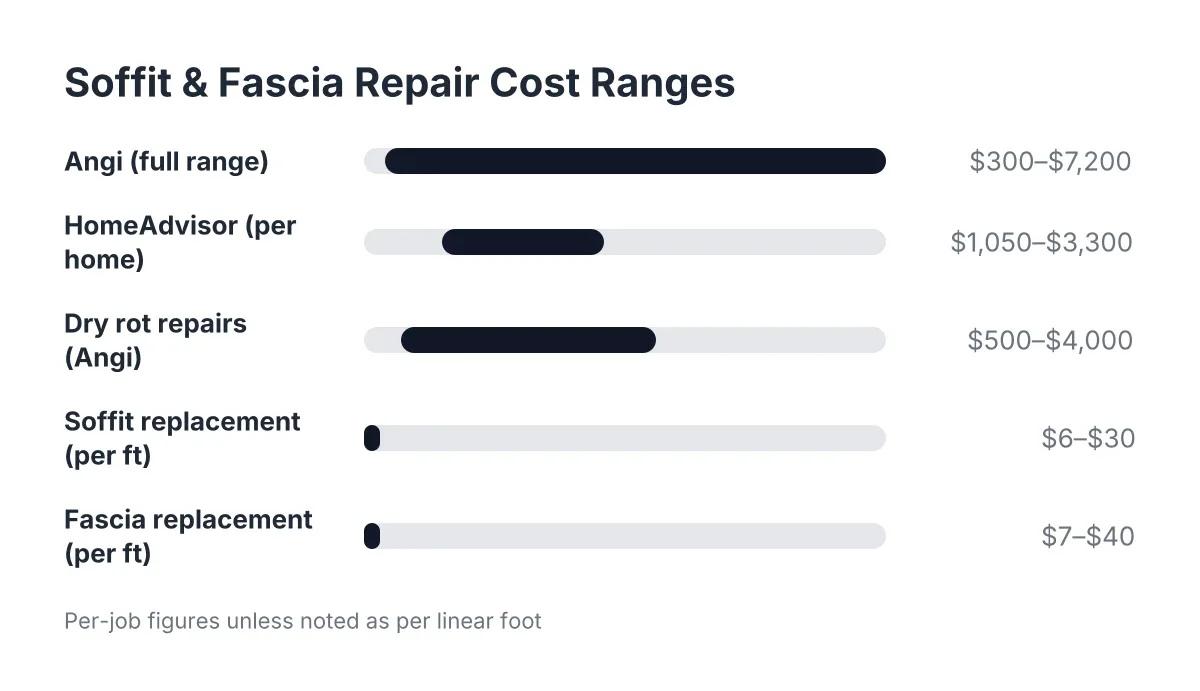
For context on the market, HomeAdvisor puts professional fascia and soffit repair or replacement between $1,050 and $3,300 for a home, averaging near $2,500. Angi reports a wider spread of $300 to $7,200 depending on materials and damage level, with dry rot repairs running $500 to $4,000. On a per-foot basis, This Old House lists soffit replacement at $6 to $30 per linear foot, averaging about $17, and fascia board replacement at $7 to $40 per linear foot. Your actual number depends on your roofline; use these figures to spot a quote that is wildly out of line, not to predict your invoice.
Ask every bidder these three questions:
- What caused the damage, and does your scope fix the cause or just the board?
- Will the gutters come down for this work, and is rehanging or replacing them included in the price?
- Will the invoice itemize the repair so I can attach it to my seller's disclosure or closing package?
That last question matters more than sellers expect. A dated, itemized invoice that matches the inspection findings is what satisfies a buyer's agent. A vague receipt for "exterior repairs" is what reopens negotiations.
Step 5: Know What Soffit Fascia Repair Timeline Looks Like in Practice
Fascia and soffit repair follows a set sequence, and knowing it helps you judge whether a crew is doing it right. First, the crew removes the gutter run in front of the damaged fascia. Next, they pull the rotted boards and check the rafter tails behind them, because rot sometimes travels into the framing. Sound rafter tails mean a straightforward board swap; damaged ones add framing repair to the job, which is the most common reason a quote grows mid-job.
New fascia goes on from the bottom up, so upper pieces lap over lower ones the same way water sheds downhill. Done right, fasteners go up underneath through the soffit rather than through the face of the board, with face fastening reserved for seam locations where overlapping joints need securing. Soffit panels slide into a channel at the fascia rather than being nailed through their face. These details sound fussy, but they are the difference between a repair that sheds water for years and one that leaks at every nail hole.
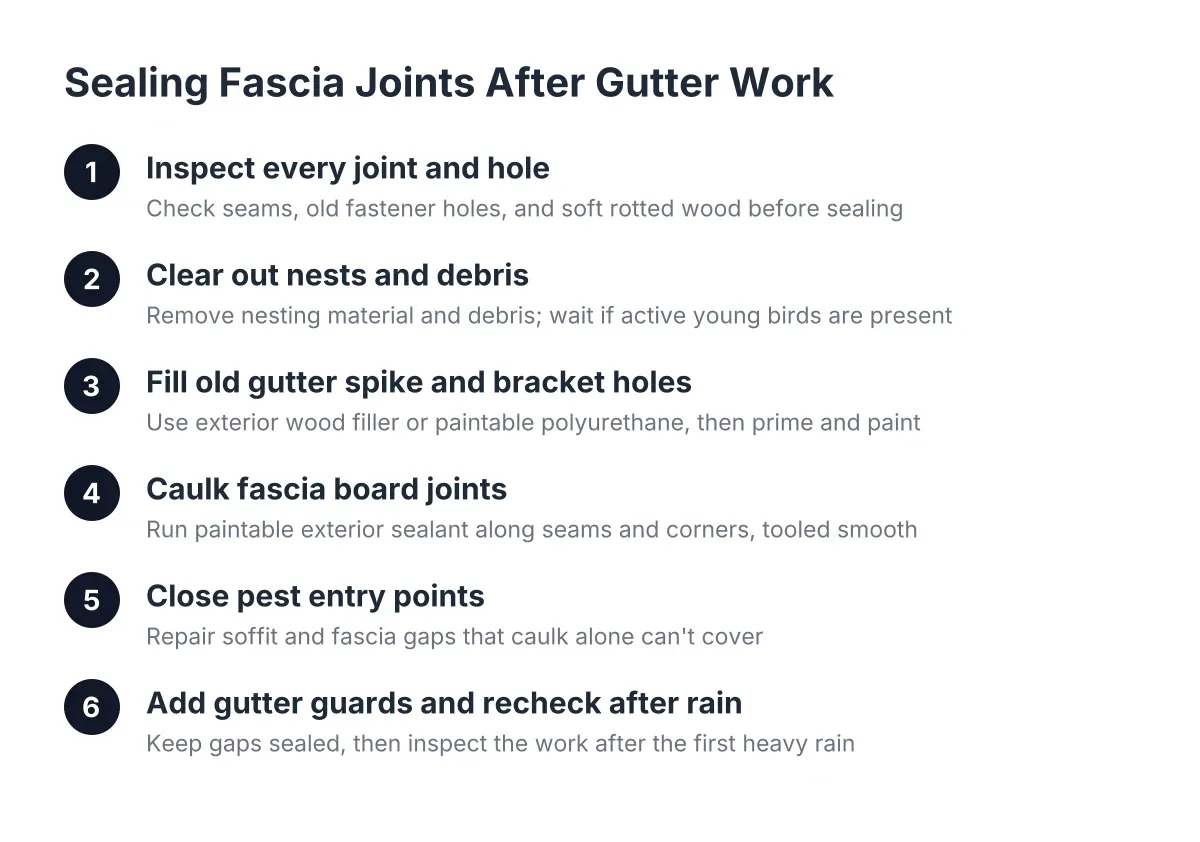
Finally, the gutters go back up on the new fascia, rehung at the correct pitch. If the old gutters were part of the problem, this is when a seamless gutter run or downspout extensions get installed in the same visit.
Step 6: Build the Timeline Backward From Your Closing Date
For a typical single-family home, the on-site work for a section of soffit and fascia usually takes a day or two; a full roofline with gutter replacement can take longer, and hidden framing rot adds time. The schedule risk is rarely the labor. It is the lead time: getting quotes, agreeing on scope, and waiting for a slot on the calendar, especially during Orlando's summer storm season when every contractor's phone rings at once.
Suppose a flipper in Orlando gets an inspection report on a Friday with rotted fascia on the back of the house and a closing set for four weeks out. In that scenario, a workable soffit fascia repair timeline plan looks like this: photos and quote requests over the weekend, bids back within the first week, work scheduled in week two, and the itemized invoice in the closing file with two weeks of cushion before the re-walk. Waiting until week three to make the first call is how sellers end up negotiating a credit instead of showing a receipt.
When Soffit Fascia Repair in Orlando Needs a Pro, and When It Does Not
Soffit and fascia repair in Orlando belongs with a professional whenever the damage involves second-story rooflines, gutters that must come down and go back up, suspected framing rot, or an inspection re-walk riding on the result. A homeowner can safely handle cleaning gutters at ground-floor height, repainting sound fascia, and sealing small gaps. Structural boards and anything requiring correct water lapping should go to a crew that does this weekly.
Two warning signs mean call now rather than later. Daylight visible through the soffit from inside the attic means the opening is big enough for pests, and a gutter run visibly separating from the house means the fascia behind it may no longer hold a fastener. Both get more expensive with every storm that passes through. If you suspect the rot has reached the roof decking or rafters, bring in a professional before anyone quotes a simple board swap; that is beyond what a visual estimate can scope honestly.
One more Orlando-specific note for 2026 planning: summer afternoon thunderstorms can push exterior work to morning hours and stretch multi-day jobs. Build a weather buffer into any timeline that touches a closing date.
The Takeaway for Sellers and Landlords
Fascia and soffit repair is a sequenced, predictable job: map the damage, find the cause, size the scope honestly, get itemized quotes, and schedule backward from your deadline. Whether you are clearing an inspection before listing or handling a tenant's complaint about an overflowing gutter, the same process applies, and bundling the gutter work into the same visit almost always beats hiring two trades two weeks apart.
If your inspection report flagged the roofline, Orlando Gutter Installers handles soffit and fascia repair and replacement alongside seamless gutter installation and gutter repair across Orlando, and we explain the cost factors in plain language before any work starts. Reach out to walk through your report and get an estimate scoped to what the house actually needs.
If you need soffit and fascia repair, Orlando Gutter Installers can help.
Prefer to talk it through? Call (689) 399-8982 — a quick call is usually the fastest way to get a straight answer for your situation.