8 Signs Your Soffit and Fascia Need Repair Before the Damage Spreads
If your gutters overflow every time a summer storm rolls through Orlando, the water has to go somewhere. Often it goes straight into the wood trim along your roofline. Knowing the soffit fascia warning signs can help you catch problems early, because rot that starts at the roof edge does not stay there. It moves into rafter tails, attic framing, and sometimes the wall itself.
Quick refresher before the list. The fascia is the vertical board that runs along your roof edge; your gutters hang on it. The soffit is the flat panel underneath the overhang, the part you see when you stand at your front door and look up. Together they close off the roof edge, keep pests out of the attic, and give your gutters something solid to attach to. When either one fails, the other usually is not far behind.
Here are eight signs worth checking, especially if you have been fighting overflowing gutters for a while or you own a rental where a tenant will not mention a problem until it is dripping into the carport.
Soffit Fascia Warning Signs: Paint and Staining Along the Roofline
Paint that bubbles, flakes, or peels on the fascia board is one of the earliest indications that soffit fascia warning signs are present. Wood swells as it absorbs moisture, and the paint film cracks and lets go. Dark streaks or tiger striping down the face of the fascia usually mean water is spilling over a clogged or undersized gutter and running down the board instead of into it. Catch it at this stage and you may only need gutter repair and a repaint rather than full fascia replacement.
2. Soft or Spongy Wood When You Press on It
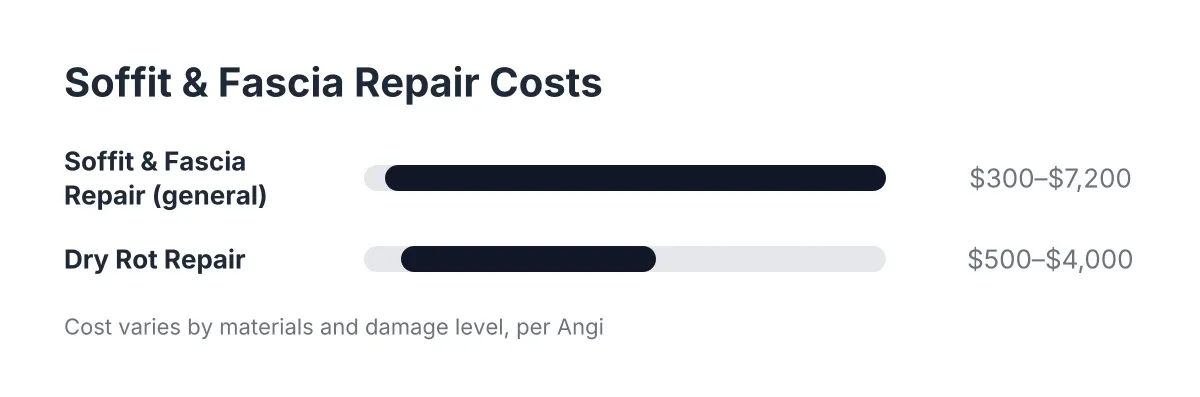
Paint can hide a lot, so the press test matters. Take a screwdriver handle or just your thumb and push on the fascia near the gutter and at the corners of the roofline. Solid wood pushes back; rotted wood feels soft, spongy, or crumbly. In Central Florida's humidity, dry rot and wet rot both move faster than most homeowners expect. According to Angi, soffit and fascia repairs run $300 to $7,200 depending on materials and damage level, with dry rot repairs specifically costing $500 to $4,000. The soft-spot stage is where you want to catch problems early, before the number climbs toward the top of that range.
3. Gutters Pulling Away From the House
Your gutters are fastened into the fascia board. When that board rots, the fasteners lose their grip and the gutter starts to sag, tilt, or pull away from the roofline. This is the sign chronic-overflow homeowners know best, and it creates a loop that feeds itself:
- The gutter sags and loses its slope, so water pools instead of draining.
- Pooled water overflows the back edge and soaks the fascia behind the gutter.
- The wet fascia softens further, the fasteners pull more, and the sag gets worse.
If you have had your gutters re-secured more than once and they keep coming loose, stop blaming the gutter. The board behind it is likely the real problem, and no amount of new screws will hold in rotten wood.
4. Water Stains or Sagging on the Soffit Panels
Look up at the underside of your overhangs after a hard rain. Brown rings, streaks, or dark patches on the soffit mean water is getting in above it, either from a roof leak at the edge or from water sneaking behind the gutter. Sagging or warped soffit panels are a later stage of the same problem. Water leaking behind a gutter can rot out both boards and, depending on how the house is built, migrate into the wall assembly. That is why a stained soffit deserves attention now, not next year.
5. Visible Gaps, Cracks, or Separating Joints
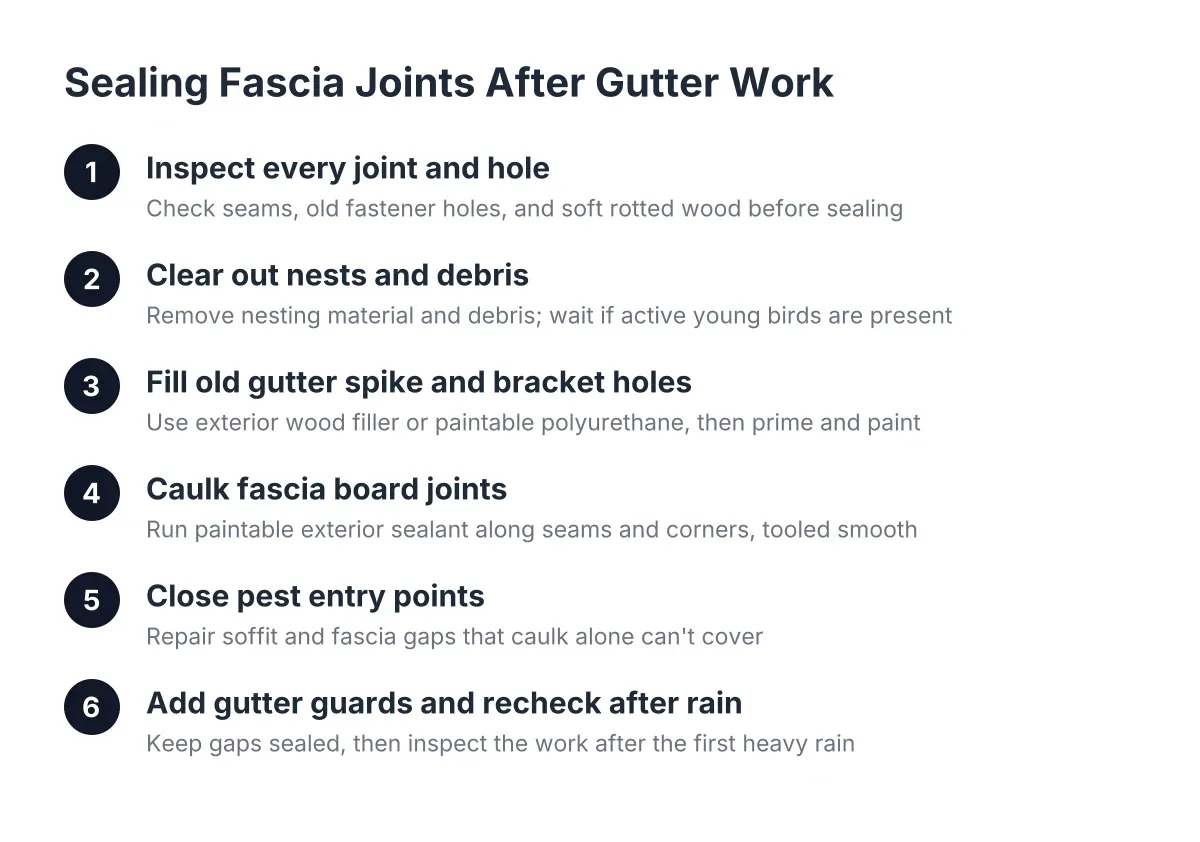
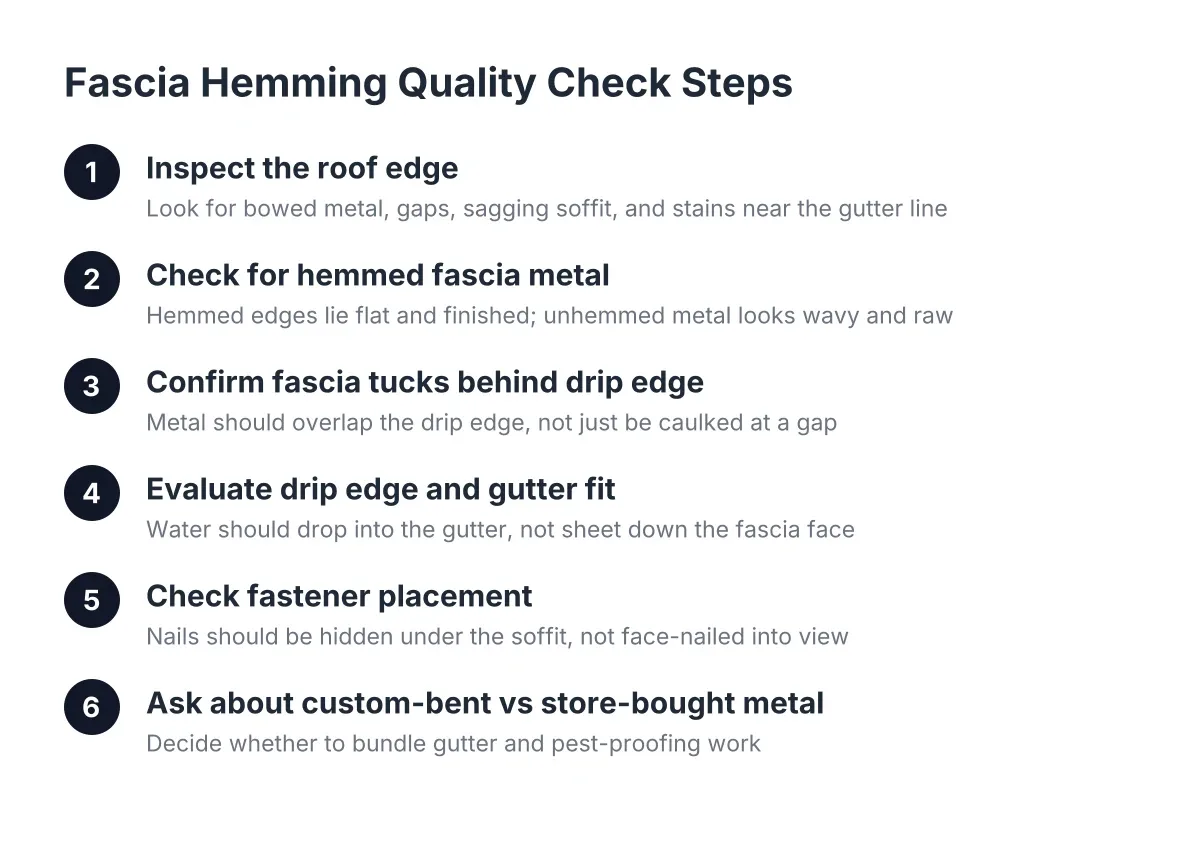
Fascia boards are installed in runs with joints where they meet. Over time, those joints can open up, especially if they were never caulked properly during the original install. Open joints let wind-driven rain reach the raw end grain of the wood, which soaks up water like a straw. A surprising number of soffit and fascia repair calls trace back to installation shortcuts rather than storm damage alone; boards that were face-nailed everywhere instead of fastened from underneath, or never sealed on the back side before mounting, fail years earlier than they should. Gaps also invite the next sign on this list.
6. Pests Moving Into the Attic
Squirrels, rats, wasps, and birds treat a damaged soffit like an open door. If you hear scratching in the attic, see wasps streaming in and out of the overhang, or spot chewed or pushed-in soffit panels, the trim has already failed enough to let them through. Pest entry is worth treating as urgent even when the wood damage looks minor, because animals widen the opening fast and the cleanup costs stack on top of the repair.
7. Mold, Mildew, or Algae Growth on the Overhang
Green or black growth on the soffit and fascia tells you the surface stays damp long after the rain stops. In Orlando that can simply be shade and humidity, but it often points to poor drainage overhead: a clogged gutter dripping constantly, a downspout dumping water where it splashes back onto the trim, or a missing downspout extension letting water mist up from the ground. Clean growth can be washed off. Growth that returns within weeks means a moisture source is still feeding it, and that source needs a diagnosis.
8. Your Gutters Overflow Constantly, Even After Cleaning
This one is the quiet warning sign, because nothing looks broken yet. If you have paid for gutter cleaning two or three times this year and water still waterfalls over the sides in a heavy storm, the problem is likely slope, undersized gutters, or badly placed downspouts rather than debris. Every one of those overflow events soaks the fascia behind the gutter. Therefore, chronic overflow is itself one of the early signs of fascia and soffit deterioration, even if the wood still feels solid today. Fixing the gutter sizing and drainage is how you stop paying for the same cleaning, and the same rot, on repeat.
What Soffit and Fascia Repair Costs in 2026
Soffit and fascia repair in 2026 typically runs from a few hundred dollars for a small section to several thousand for long runs of rotted board. According to HomeAdvisor, professional fascia and soffit repair or replacement work costs between $1,050 and $3,300 for a home, averaging near $2,500. Per-foot numbers help too: This Old House puts soffit replacement at $6 to $30 per linear foot with a $17 average, and fascia board replacement at $7 to $40 per linear foot depending on materials, length, and local labor rates.
What moves your number up or down:
- How many linear feet of board are damaged, and whether rot reached the rafter tails
- Material choice: primed wood, PVC, or aluminum-wrapped fascia
- Roofline complexity, since hips, valleys, and two-story edges take more time
- Whether gutters must come down and go back up as part of the job
When you search fascia and soffit repair near me and start calling for quotes, ask each contractor to separate the wood repair from any gutter work in writing. That makes a two-bid or three-bid comparison honest, which matters if you are a landlord pricing the same fix across more than one property.
Why Fixing the Roofline and the Gutters Together Makes Sense
Gutters, fascia, and soffit sit in the same weather and tend to fail together. Old, deteriorated gutters overflow or let water slip behind the fascia board, and that water is what rotted the wood in the first place. Replacing the board without fixing the gutter means paying for the same fascia repair again in a few years. Bundling fascia and soffit repair with seamless gutter installation fixes the cause and the symptom in one visit, with one crew and one quote instead of two trades pointing at each other.
Suppose a landlord owns a 1980s single-family rental near Orlando and a tenant reports water pouring over the gutter onto the front walk. In that scenario, an inspection might find 20 feet of soft fascia behind a sagging, undersized gutter. One illustrative path: replace the rotted fascia, install correctly sized seamless gutters with an added downspout, and run a downspout extension away from the slab. As a rough estimate, a repair like that often lands in the low four figures, inside the budget most small landlords set per property, and it ends the repeat service calls.
Adding gutter guards at the same time is worth weighing too. According to This Old House, a 2025 survey found 70 percent of homeowners cited preventing clogs or flooding as their main reason for installing gutter guards. Screens cost more up front but cut down the clogs that cause overflow in the first place. They are not maintenance-free, though; they still need an occasional check, especially under oak trees.
When to Call a Pro Instead of Patching It Yourself
A small section of peeling paint on solid wood is a fair weekend project. However, call a professional if the wood feels soft across more than a foot or two, if the damage sits on a second-story edge, or if the soffit sags near electrical service or the attic. Rot that has reached the rafter tails is a structural question, not a trim question, and ladder work at a two-story roofline is not worth the risk to save on labor.
A good contractor will also tell you which problem came first. Sometimes a homeowner searching fascia repair near me only needs a gutter re-slope and a downspout extension; sometimes the trim is fine but the gutters are too small for the roof. An honest diagnosis up front, with the cost factors explained before anyone climbs a ladder, is what separates a permanent fix from another season of patching.
The Bottom Line on Soffit and Fascia Warning Signs
Walk your house after the next hard rain. Check for peeling paint, soft wood, sagging gutters, stained soffits, open joints, pests, recurring mildew, and overflow that cleaning never fixes. Any one of these signs that your soffit and fascia need attention is cheaper to address now than after the rot spreads inward. In a climate with Orlando's storm seasons, the roof edge is where small water problems start, and it is also where they are easiest to stop.
If you need soffit and fascia repair, Orlando Gutter Installers can help.
Prefer to talk it through? Call (689) 399-8982 — a quick call is usually the fastest way to get a straight answer for your situation.