DIY Gutter Installation vs. Hiring a Pro in Orlando: Tools, Skills, and Risk
If a storm just pulled your gutters off the fascia, or you are planning to replace a tired system before the next rainy season, you are facing the same question: should you go with DIY vs professional gutters, or hire someone to do the work? Both paths can work. The right answer depends on your roofline, your comfort on a ladder, and how much risk you are willing to carry. This guide walks through the decision step by step, so you can compare the two honestly before you buy a single bracket or book a single estimate.
Step 1: Decide What Kind of Gutter Job You Actually Have
Start by sorting your situation into one of three buckets, because each one points to a different answer.
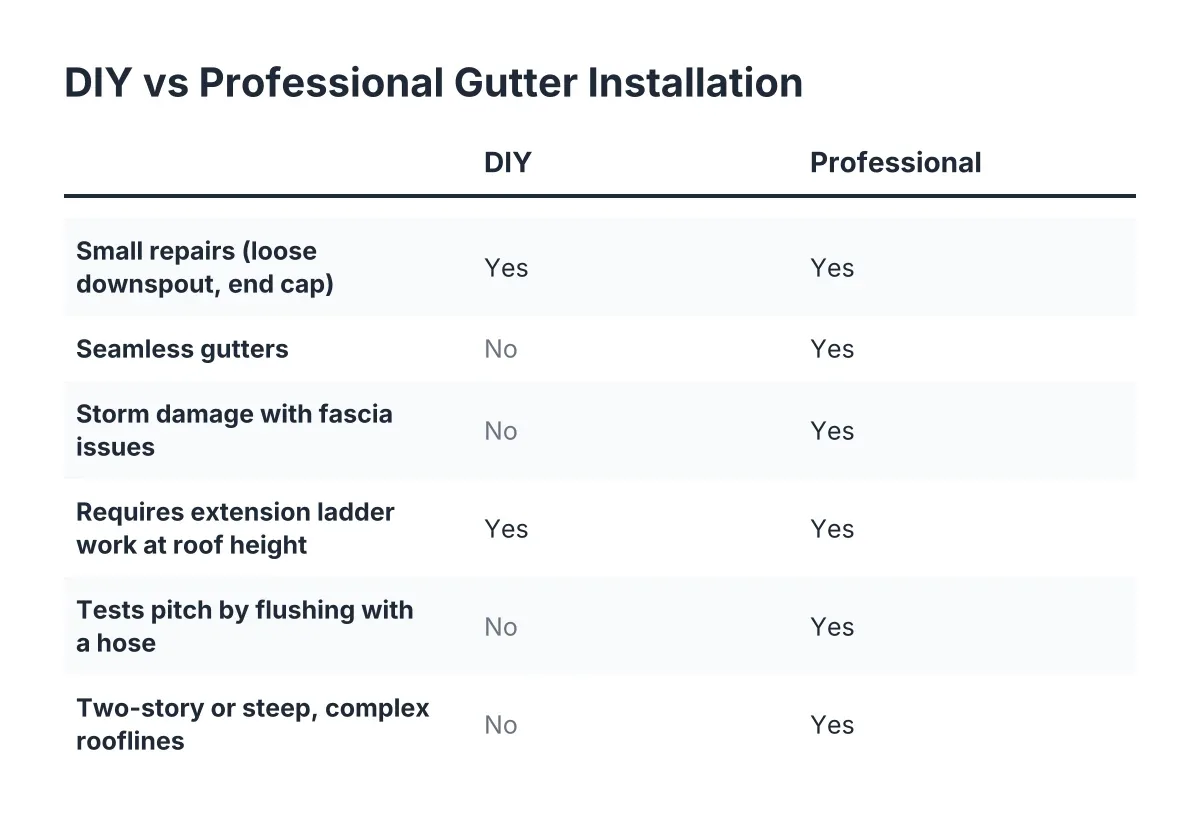
First, small repairs. A loose downspout, a leaking end cap, or one sagging section on a single-story home is a realistic weekend project for a careful homeowner.
Second, full replacement on a simple roofline. A single-story ranch with straight runs is the classic DIY candidate, but only with sectional gutters. Seamless gutters are formed on site from a coil by a machine you cannot rent at a hardware store, so seamless gutter installation is a professional job by definition.
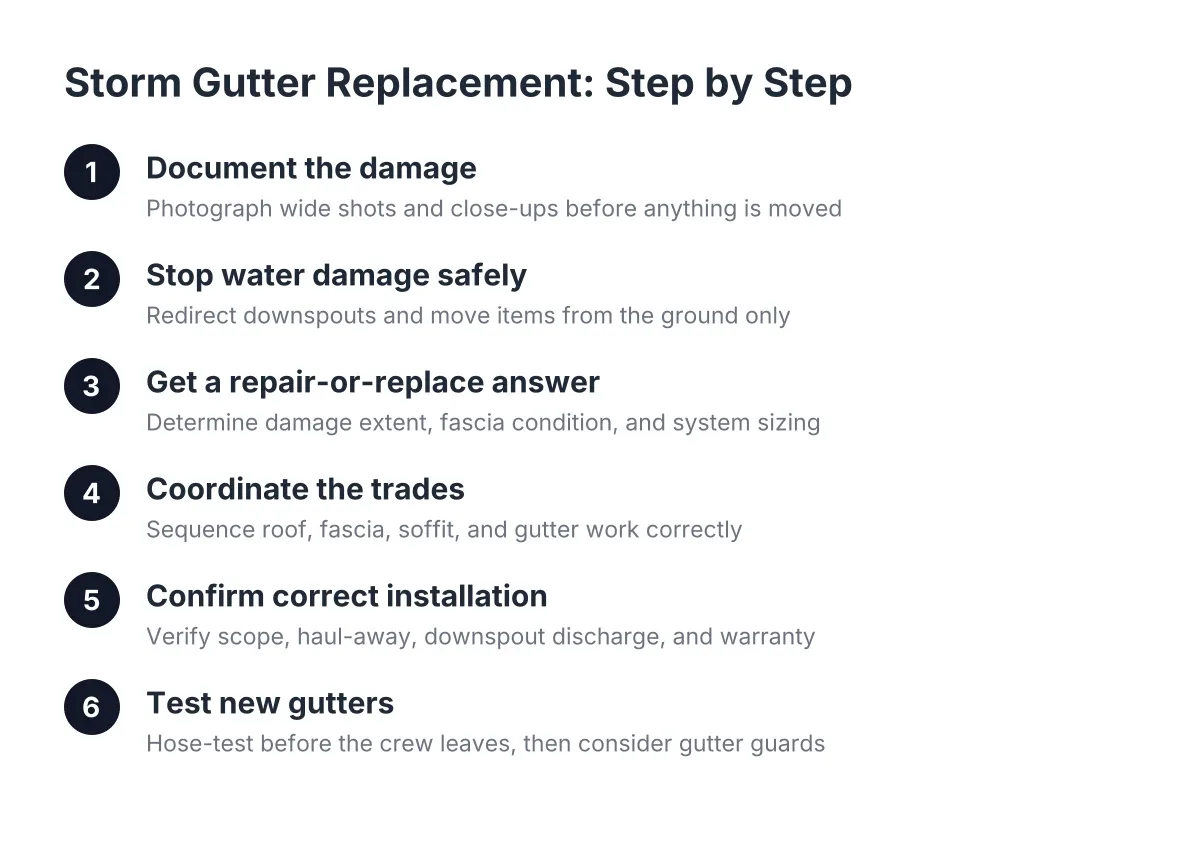
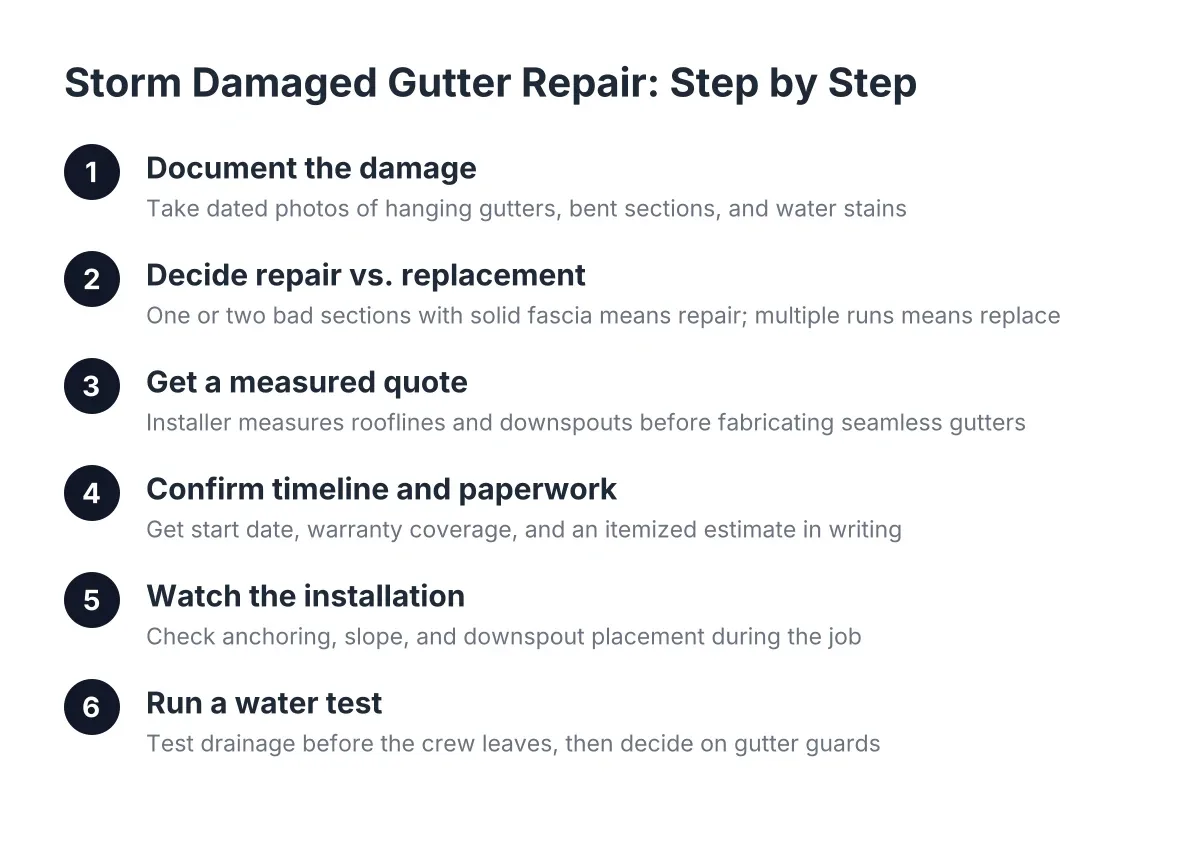
Third, storm damage. Suppose a summer thunderstorm tears twenty feet of gutter off the back of your house and bends the fascia behind it. In that scenario, you are not just rehanging metal. You need someone to check the fascia board for rot or splitting, document the damage with photos for a possible insurance claim, and get water moving away from the siding before the next storm. That combination of urgency, hidden damage, and paperwork makes this a choice between DIY and professional gutters an easy call: call the pro.
Step 2: Assessing DIY vs. Professional Gutters—Tools and Skills
Before you commit to the DIY route, list what the job demands. For a sectional gutter replacement, you will need:
- An extension ladder tall enough to work above the roofline, plus a stabilizer
- A drill, hex drivers, and a rivet gun for joining sections
- Tin snips or a hacksaw for cutting runs and downspouts
- A chalk line and a level for setting the slope
- Quality hidden hangers, sealant rated for gutters, end caps, and outlets
- A helper, because a ten-foot gutter section flexes and sags when one person lifts it
The skills matter more than the tools. You need to set a consistent slope toward the downspouts, usually a slight drop over a long run, and hold it across the whole house. You need to seal every joint so it survives Central Florida's pounding summer rain. And you need to place the gutter correctly against the drip edge. One of the most common handyman mistakes is hanging the gutter without tucking it behind, or bending, the drip edge. Water then runs down the gap behind the gutter and soaks the fascia, which is the exact problem gutters exist to prevent.
Step 3: Weighing Safety Risks in DIY vs. Professional Gutter Installation
The biggest risk is not a crooked gutter. It is the ladder. Gutter work means hours at roof height, leaning, reaching, and handling long awkward sections of metal. Falls from this kind of work cause serious injuries, which is a core reason the trade exists. On a two-story Orlando home, or any house with steep pitches and complex corners, the safety math alone favors hiring professional gutters instead.
Beyond safety, consider the failure modes that show up months later:
- Wrong slope, so water pools mid-run and breeds mosquitoes
- Joints sealed in a hurry that start dripping during the first heavy storm
- Too few hangers, or thin hangers, so runs sag under the weight of water and debris
- Undersized gutters or too few downspouts for Florida rainfall, so the system overflows exactly when you need it
A professional crew also tests its work. A standard practice after hanging a run is to flush it with a hose and watch for pooling, then adjust the pitch before final fastening. Most homeowners doing their first install do not know to do this, and the mistake does not announce itself until the next downpour.
Step 4: Compare the Costs Both Ways, Not Just the Sticker Price
DIY looks cheaper on paper because you skip labor. However, compare the full picture. According to Angi, gutter installation costs average $4 to $40 per linear foot depending on material and gutter type. For seamless gutters specifically, Modernize puts the typical range at $8 to $28 per linear foot in the U.S. as of recent data. Those are national figures, not Orlando quotes, but they show how wide the spread is based on material and complexity.
On the DIY side, add up sectional gutter stock, hangers, sealant, downspouts, outlets, a ladder stabilizer, and any tools you do not own. Then add the cost of your time. A simple single-story job might take a pro crew less than a day; the same job often eats a full DIY weekend or two.
What drives a professional quote for gutters up or down is straightforward:
- Total gutter length and the number of downspouts
- Material, with aluminum on the affordable end and copper at the premium end
- Roofline complexity, including stories, corners, and steep pitches
- The condition of the soffit and fascia the gutters attach to
- Add-ons like gutter guards, gutter screens, or downspout extensions
One timing note worth money: if you are also replacing your roof, schedule the gutter work alongside it. Installing new gutters at the same time avoids paying twice for removal and reinstallation. The same logic applies to gutter guards; relabeling and repositioning a hundred old guard sections during a roof job usually costs more in labor than installing new guards.
Step 5: Know What a Professional Installation Includes
When you hire seamless gutter installers, the scope should cover more than hanging metal. A complete job in 2026 typically includes:
- Removing and hauling away the old gutters and downspouts
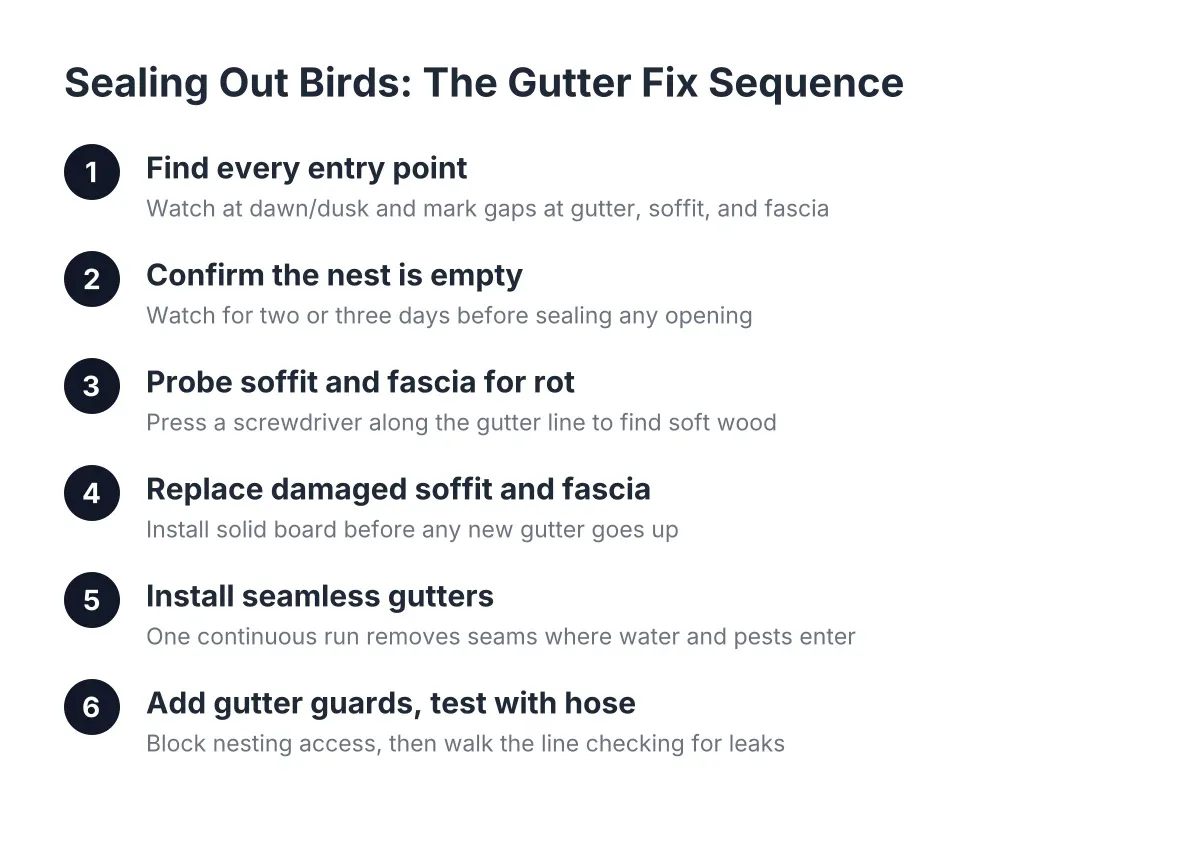
- Checking the fascia and soffit, and flagging any rot before installation
- Forming seamless gutters on site to the exact length of each run
- Setting the slope correctly, then securing the middle, the high end, and the low end before final fastening
- Placing downspouts where water can drain away from the foundation
- A warranty covering labor and materials, which reputable installers back their work with
Soffit replacement, fascia replacement, gutter guard installation, and downspout extensions are usually priced as separate line items. A fair estimate spells each one out so you are not guessing what is included.
Step 6: If You Hire, Ask These Questions Before Signing
Searching "seamless gutters near me within 20 mi" or "best gutter repair near me" produces a long list. Three questions separate the careful installers from the rest:
- What type and gauge of hanger will you use, and how far apart? Hanger quality varies widely between installers, and cheap hangers are why gutters sag in Florida heat and rain.
- How will you handle the drip edge and the fascia? You want the gutter positioned so water cannot run behind it, and you want rotten fascia replaced, not covered up.
- What exactly does the quote include? Tear-off, haul-away, downspout placement, gutter guards, and soffit and fascia work should each appear in writing.
For storm-damage situations, add one more: will you photograph and document the damage before removal? Those photos matter if you file an insurance claim, and a good contractor takes them without being asked.
Step 7: Match the Decision to Orlando Conditions
Central Florida is a hard environment for gutters. Summer thunderstorms dump heavy rain fast, and an undersized, poorly sloped, or clogged system overflows against your siding and foundation when it matters most. That raises the stakes on getting slope, capacity, and downspout placement right the first time, which tilts the DIY vs professional gutters decision toward a pro for anything beyond simple repairs.
Maintenance is part of the same equation. According to This Old House, 44% of homeowners never clean their gutters, and 70% of homeowners who install gutter guards do it mainly to prevent clogs or flooding. If climbing a ladder twice a year does not appeal to you, gutter screens or guards installed with the new system solve the problem once.
The Bottom Line on DIY Gutter Installation vs. Hiring a Pro
Handle the small stuff yourself if you are comfortable on a ladder: resealing a joint, reattaching a downspout, or adding downspout extensions at ground level. Hire a professional for seamless gutter installation, anything on a second story, storm-damage repair involving soffit and fascia, or any job where the slope and sizing have to stand up to a Florida summer. This article is general guidance; if your fascia shows rot or your roofline has storm damage, have a professional inspect it before deciding anything.
If you are in the Orlando area and want straight answers before anyone sets foot on your roof, Orlando Gutter Installers will walk you through the cost factors in plain language, explain what your roofline needs, and give you a clear quote for gutters, gutter guards, or soffit and fascia work. Reach out to schedule an estimate.
If you need gutter installation in Orlando, FL, Orlando Gutter Installers can help.
Prefer to talk it through? Call (689) 399-8982 — a quick call is usually the fastest way to get a straight answer for your situation.