Downspout Extension Solutions: Drainage Placement That Protects Your Foundation
After a hard Orlando thunderstorm, most homeowners look up at the gutters. The smarter move is to look down. Where your downspouts dump water decides whether your foundation stays dry or slowly takes on damage. The right downspout extension solutions move drainage away from the house before it can pool, soak in, and work against your slab. This guide walks you through the process of managing downspout extension foundation drainage step by step, so you know exactly what to check and what to do about it.
Here is the problem in plain terms. A gutter system collects hundreds of gallons of roof water in a single storm and funnels all of it to a few downspout outlets. If those outlets end right at the foundation, you have not solved anything. You have concentrated the water in the worst possible place.
For a landlord with a few rental properties around Orlando, this matters twice over. Tenants rarely report a downspout dumping at the slab. They report the stained wall, the musty smell, or the cracked walkway that shows up months later. By then the cheap fix has become an expensive one.
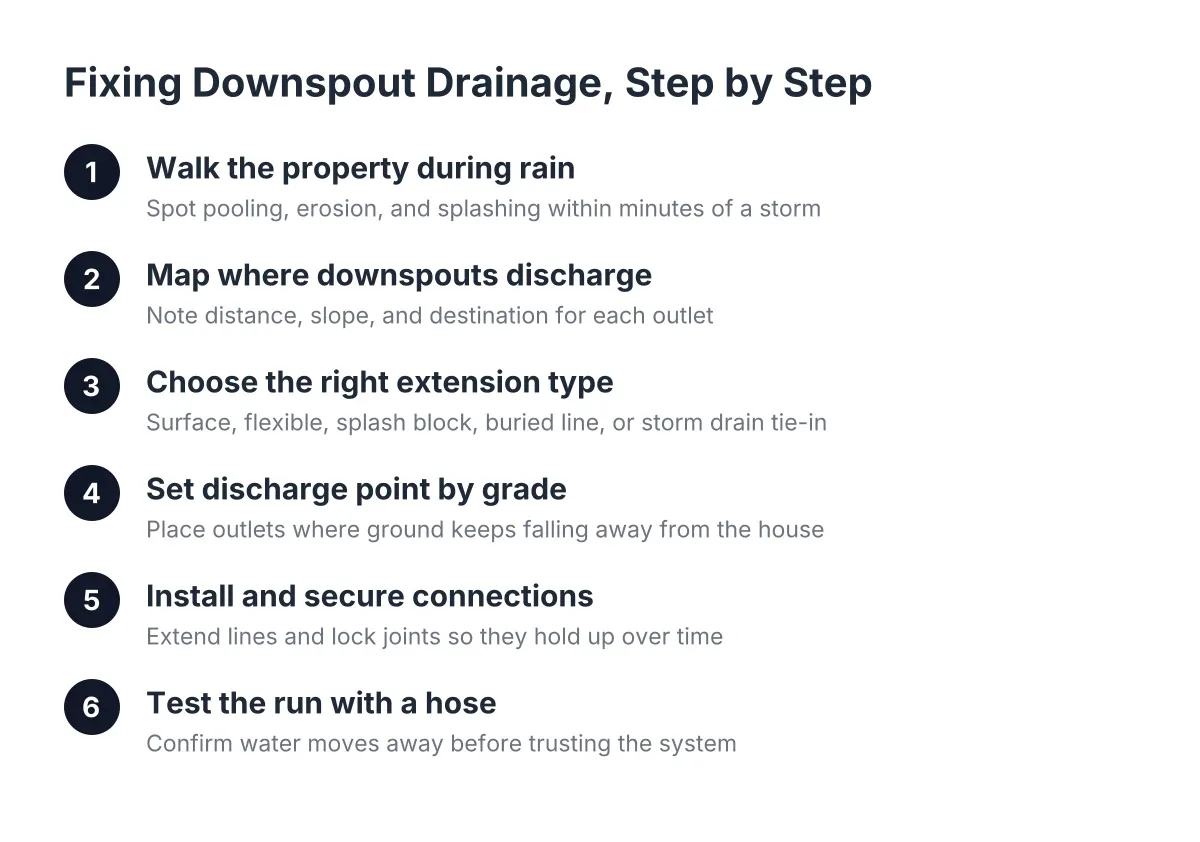
Step 1: Walk the Property During or Right After a Rain
Pick the next heavy rain and walk the perimeter of the house. You cannot judge drainage on a dry day. Water tells you the truth in about five minutes.
Look for these specific warning signs:
- Water pooling within a few feet of the foundation after the rain stops
- A trench or bare dirt line carved into the soil below a downspout
- Mulch or soil splashed up onto the siding or stucco
- Water sheeting across a walkway, patio, or driveway toward the house
- Downspouts that end in a short elbow dropping water straight at the slab
- Soggy, spongy ground along one wall while the rest of the yard drains fine
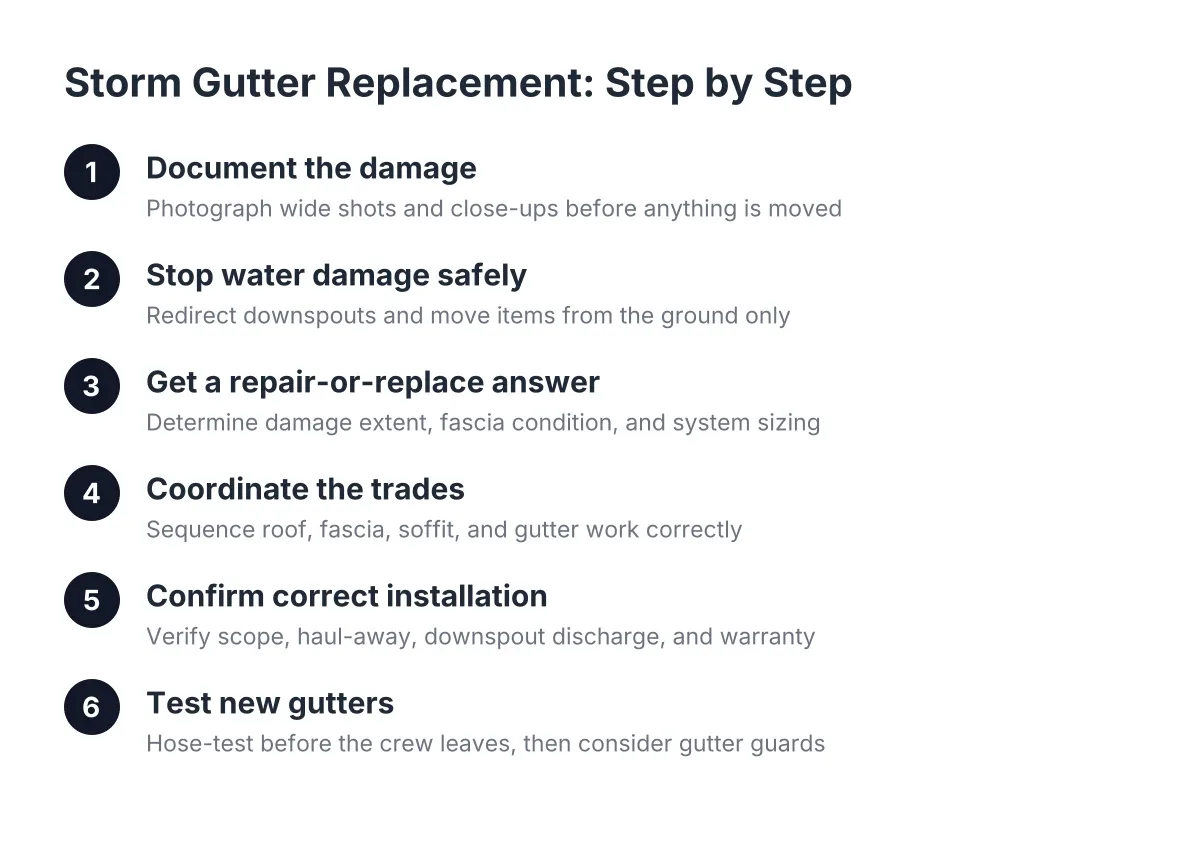
In addition, check the gutters themselves while you are out there. A failing gutter that overflows or no longer channels water properly causes the same foundation and slab problems a missing downspout extension does. If a storm ripped a section loose, water pouring down the siding is doing damage right now, and that repair comes first.
Step 2: Map Where Every Downspout Discharges
Next, count your downspouts and note where each one ends. Most single-story homes in Central Florida have four to six. Sketch a rough plan of the house and mark each outlet.
For each one, answer three questions. How far from the foundation does the water land? Which way does the ground slope from that spot? And where does the water go after it lands?
Grade is the piece most people miss. A downspout that discharges five feet out means nothing if the yard slopes back toward the house. The goal is not just distance. The goal is water that keeps moving away once it leaves the pipe.
For example, suppose a landlord owns a 1980s block home near Orlando where the back two downspouts dump beside the slab on a side yard that slopes toward the house. Every summer storm sends water back against the foundation. The front of the house looks fine, so the problem hides until a tenant mentions a damp interior wall. That is the pattern these extensions exist to break.
Step 3: Choosing the Right Downspout Extension for Foundation Drainage
Downspout extension solutions range from a simple surface pipe to a buried drain line, and the right drainage choice depends on grade, distance, and how the space gets used. There is no single best option. There is a best option for each downspout.
Surface extensions
A rigid aluminum or vinyl extension attaches to the downspout elbow and carries water several feet out. It is the cheapest fix and takes minutes to install. The trade-off is that it sits in the yard, gets kicked by kids, and gets caught by mowers. On a rental, assume it will get moved.
Flexible and roll-out extensions
Flexible corrugated extensions bend around landscaping, and roll-out sleeves unfurl when water flows. Both work where the discharge path is short and the ground already slopes away. However, they clog with debris and degrade in Florida sun faster than rigid options.
Splash blocks
A splash block spreads water at the outlet and limits soil erosion. Alone, it rarely moves water far enough on flat Orlando lots. Treat it as a helper, not a solution.
Buried drain lines
A buried extension connects the downspout to solid drainage pipe underground and carries water to a pop-up emitter in the yard, well away from the foundation. This is the cleanest long-term answer for walkways, tight side yards, and rentals where you do not want anything for tenants to trip over or move. It costs more because it involves trenching, pipe, and proper slope.
Tying into a storm drain connection
Some properties already have a municipal or storm drain connection the downspouts can route into. Where that exists and local rules allow it, it can remove the need for a separate extension entirely. A contractor can tell you whether your property has that option before you spend on anything else.
Step 4: Set the Discharge Point by Grade, Not by a Rule of Thumb
Now place each outlet. The common advice says extend downspouts a set number of feet from the house. Distance helps, but placement by grade is what protects the foundation.
Put the discharge point where the ground falls away from the house and keeps falling. Avoid sending water toward a neighbor's lot, a fence line that traps it, or a low spot that just creates a new pond. On the flat lots common around Orlando, a buried line with a pop-up emitter often beats a long surface pipe because you can choose the exit point instead of settling for whatever is a few feet out.
Also think about volume. Central Florida summer storms drop a lot of water fast, and an undersized or clogged system overflows before the extensions ever see it. If your gutters overflow in heavy rain, extensions alone will not fix the problem; the gutters and downspouts may need resizing or cleaning first.
Step 5: Install the Drainage Extensions and Secure Every Connection
With placement decided, the install itself is straightforward for surface options. Attach the extension to the downspout elbow with sheet metal screws, not just friction, so storm winds and mowers do not separate it. Make sure each joint overlaps in the direction of flow, with the upstream piece feeding over the downstream piece, so water passes over the seam instead of against it.
For buried lines, dig the trench with a continuous downward slope from the downspout to the emitter. Any flat or bellied section collects sediment and eventually clogs. Use solid pipe for downspout runs, seal the connection at the downspout so roots and debris stay out, and set the pop-up emitter where discharge will not wash out a bed or a walkway.
A buried run is where many homeowners should bring in a professional. Getting consistent slope, avoiding irrigation lines and utilities, and sizing the pipe for Florida storm volume is harder than it looks on a video. A bad buried line fails invisibly, underground, where you will not notice until water backs up at the foundation again.
Step 6: Test the Whole Run With a Hose Before You Trust It
Do not wait for a storm to find out whether the work holds up. Run a garden hose into the gutter above each downspout and watch the full path. Water should move through the gutter without pooling, drop cleanly through the downspout, travel the extension, and exit where you planned.
Installers use the same hose test after hanging gutters to confirm the slope drains toward the downspout. If you see pooling in the gutter, standing water at a joint, or a sluggish buried line, fix it now while the problem is obvious and dry weather makes the work easy.
Step 7: Put Extensions on Your Seasonal Checklist
Finally, treat drainage as maintenance, not a one-time project. Before the 2026 storm season ramps up, walk each property and check that surface extensions are still attached and aimed correctly, pop-up emitters open freely, and nothing is crushed or clogged. Pair that walk with gutter cleaning, since a clogged gutter defeats every extension downstream of it.
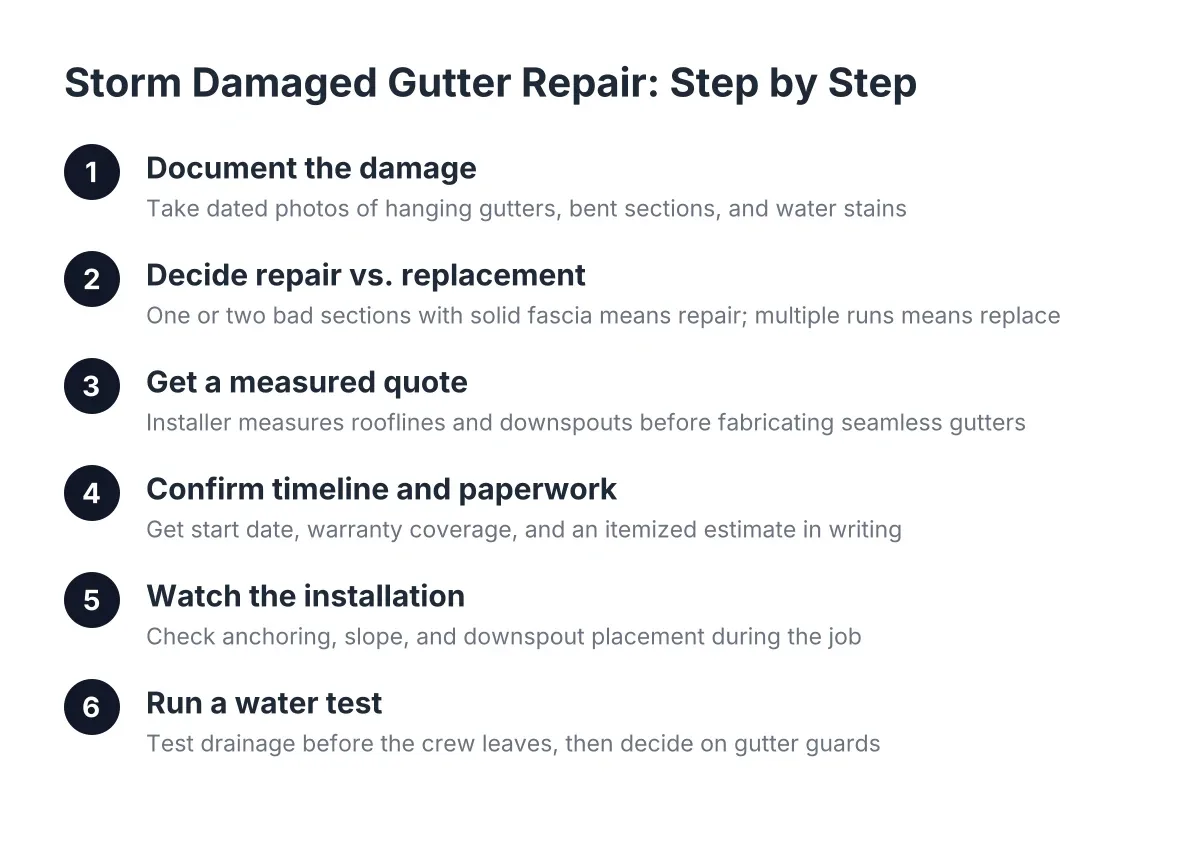
For a small landlord, this check takes ten minutes per property and prevents the slow, expensive kind of damage that never shows up on a tenant complaint until it is serious. If a storm has already torn gutters or soffit and fascia loose, photograph the damage before any repairs; clear photos help if an insurance claim is in play, and they help any contractor give you a straight repair-or-replace answer.
What Downspout Extension Foundation Drainage Work Costs, in Plain Terms
Costs vary with the solution. A surface extension is a small materials purchase. A buried line with an emitter involves trenching, pipe, fittings, and labor, so it runs meaningfully more per downspout. If the fix is part of a larger gutter installation or storm repair, the usual cost drivers apply: gutter length, material, roofline complexity, and the condition of the soffit and fascia behind the gutters. For broader context, Angi reports gutter installation averages $4 to $40 per linear foot depending on material and gutter type, with the drainage work priced on top of that.
Ask any contractor to walk you through those factors before work starts. A company that explains what drives the price up or down, in plain language, is telling you they have nothing to hide. In Orlando, where every summer brings storms that test the whole system from roofline to yard, the downspout extension is cheap insurance. The foundation it protects is not.
If you need gutter drainage and downspout extensions, Orlando Gutter Installers can help.
Prefer to talk it through? Call (689) 399-8982 — a quick call is usually the fastest way to get a straight answer for your situation.