Face Nailing Fascia Mistakes: Where Fasteners Belong on Your Orlando Roofline
If your gutters keep sagging, overflowing, or pulling away from the house, the problem often starts with how the fascia was fastened in the first place. Face nailing fascia mistakes are one of the most common reasons roofline repairs fail early in Orlando, FL. Nails driven through the visible face of the fascia rust, back out, and leave holes that let water in. This FAQ walks through where fasteners actually belong, why it matters for your gutters, and what a proper repair looks like before you hire anyone.
What Is Face Nailing, and Why Is It a Problem on Fascia?
Face nailing means driving nails straight through the front, visible surface of the fascia board or aluminum fascia cover. It is a problem because every face nail leaves an exposed fastener head that can rust, streak, and loosen over time. Once the nail backs out, the hole it leaves lets rain behind the fascia, which starts the rot cycle all over again.
Here is the part most homeowners never hear. Face nailing in the field, meaning across the open run of the fascia, is common but unnecessary. The correct spots for fasteners are underneath, driven up through the soffit area where they stay hidden and protected from weather.
In Central Florida, this matters more than in drier climates. Summer thunderstorms hit the roofline hard and often. An exposed nail head takes that beating every afternoon from June through September.
Where Do Fasteners Actually Belong on Fascia?
Fasteners belong underneath the fascia, driven up through the bottom edge near the soffit, not through the visible face. The main exception is at seam locations, where overlapping joints need a face fastener to keep the two pieces locked together. End pieces can also take staples near the top edge, because the soffit channel cover hides that area later.
Think of it as a simple rule:
- Open runs of fascia: fasten from underneath, never through the face
- Seams where two pieces overlap: a face fastener is acceptable here, because it secures the joint
- End pieces: staples near the top edge work, since trim covers them
- Everywhere else: if you can see the nail head from the ground, it is in the wrong place
Therefore, if you look up at your roofline and see rows of nail heads marching across the fascia, that is a sign of shortcut work, not standard practice.
Common Face Nailing and Fascia Mistakes to Avoid
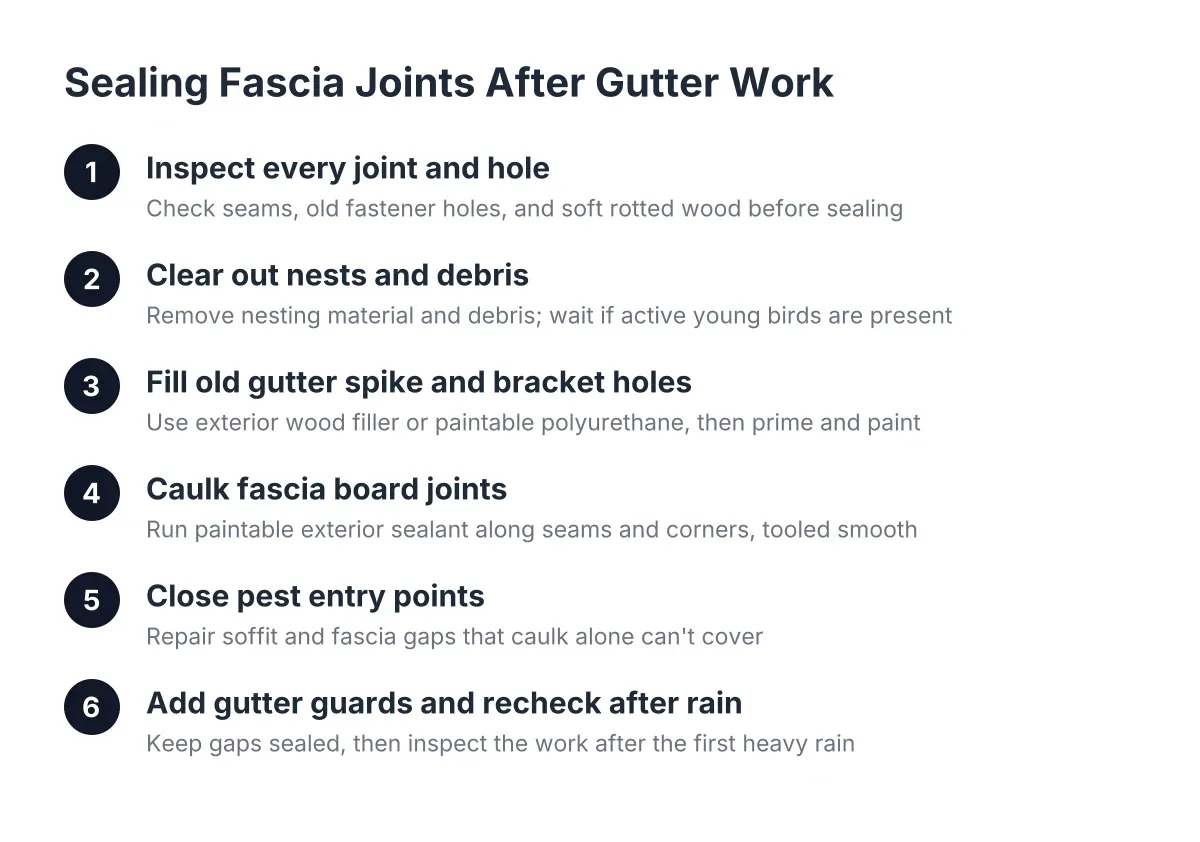
The most common face nailing fascia mistakes are nails driven across the open face of the fascia, rusting fastener heads that streak the metal, and old gutter spikes hammered back into enlarged holes. Each one weakens the fascia's hold and opens a path for water. In Orlando, FL, where heavy rain is routine, these small openings turn into rot faster than most homeowners expect.
Watch for these specific signs:
- Visible nail heads in long rows across the fascia face, away from any seam
- Rust streaks bleeding down from fastener locations
- Popped or proud nails that sit above the surface after a few seasons
- Gutter spikes re-hammered into the same holes, which enlarges the hole and weakens the grip each time
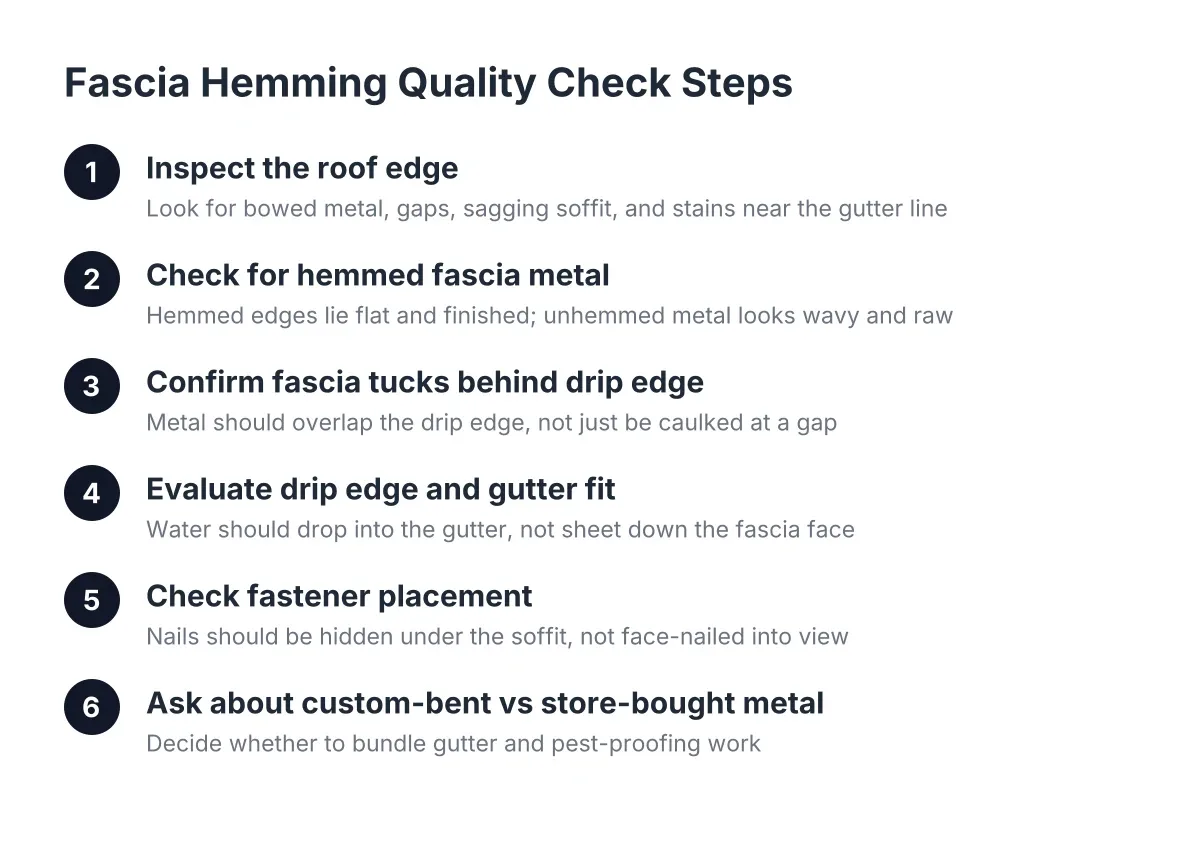
- Wavy or oil-canned fascia metal, often a sign the edges were never hemmed for rigidity
That last point deserves a word. Hemming, which means folding the top and bottom edges of the bent fascia metal, adds strength and a cleaner look. Many installers skip it to save time, and the fascia pays for it later.
How Do Face Nailing Mistakes Lead to Overflowing Gutters?
Face nailing mistakes lead to gutter problems because the fascia is what your gutters hang from. Loose or rusting fasteners let the fascia soften and rot, and rotted fascia cannot hold gutter hangers. The gutter then sags, loses its slope, and water pools or pours over the sides even when nothing is clogged.
This is why some homeowners clean their gutters three times a year and still watch water waterfall over the edge during a storm. The gutter is not clogged; it is tilting. A gutter that has dropped at one end cannot carry water to the downspout no matter how clean it is.
In addition, nails used as gutter hanger fasteners tend to back out of fascia over time, the same failure mode as old spike-and-ferrule systems. Re-tacking a popped spike feels like maintenance, but each reinsertion enlarges the hole and worsens the hold. The lasting fix is screws into solid fascia, which often means repairing the fascia first.
Should Soffit Panels Be Face Nailed Too?
No, soffit panels should not be face nailed either. Proper soffit installation slides each panel into a J-channel at the fascia board, then secures it through the nailing flange, not through the visible face. Fasteners through the face of a soffit panel leave the same rust and water-entry problems as face nailed fascia.
There is also a fastener detail worth knowing. Staples that fully surround the nailing flange hold soffit more securely than roofing nails, because the panel has to physically break to come loose. A nail can slip around the flange hole and release without the panel breaking at all.
That said, a homeowner replacing one or two soffit pieces can use hand-driven roofing nails without worry. The staple advantage matters most on full rooflines and volume work. For a whole-house soffit and fascia job, the fastening method across hundreds of feet is what separates a repair that lasts from one you redo in five years.
What Does Fascia and Soffit Repair Cost in 2026?
Fascia and soffit repair for a full home generally runs between $1,050 and $3,300, averaging near $2,500, according to HomeAdvisor. Angi reports a wider range of $300 to $7,200 depending on materials and damage level, with dry rot repairs between $500 and $4,000. By the foot, This Old House puts fascia board replacement at $7 to $40 per linear foot and soffit replacement at $6 to $30 per linear foot, with a $17 average.
Why such wide ranges? A few factors drive the number up or down:
- How many feet of roofline need work, and how much is rotted versus sound
- Material choice: wood, aluminum-wrapped wood, or PVC
- Roofline complexity, including gables, hips, and second-story sections
- Whether gutters come down and go back up as part of the job
An honest contractor should walk you through these factors before quoting, so the price makes sense instead of feeling pulled from the air.
Should I Bundle Fascia Repair With New Seamless Gutters?
Bundling fascia and soffit repair with seamless gutter installation usually makes sense, because both jobs happen on the same roofline and each depends on the other. New seamless gutters hung on rotted fascia will sag within a few seasons. Fixing the fascia and then hanging gutters with screw-in hidden hangers solves the whole edge at once.
For example, suppose a homeowner in Orlando, FL has dealt with overflowing gutters for two years. Say the diagnosis shows the fascia rotted behind three old face nail lines, the gutters lost slope as the wood softened, and the downspout sits at the wrong end of the run. In that scenario, patching any single piece just restarts the cycle. Repairing the fascia, installing correctly sloped seamless gutters, and moving the downspout fixes it in one visit instead of three service calls across three trades.
This bundled approach also matters for builders. A remodeler finishing an addition needs the fascia, soffit, and gutters to go on in the right order and match the new roofline, and one sub handling all three keeps the schedule clean.
Who Repairs Soffit and Fascia Near Me in Orlando, FL?
Gutter companies, roofers, and some handymen all take on soffit and fascia work in Orlando, FL, but the right choice depends on the fastening details they can explain. If you are searching "who repairs soffit and fascia near me," ask each candidate where they place fasteners on fascia and how they secure soffit panels. The answers tell you whether you are hiring craft or shortcuts.
A contractor who does this work properly should be able to tell you, in plain language:
- Why face fasteners belong only at seams, not across open runs
- How they fasten from underneath through the soffit area
- Whether they hem fascia edges for rigidity
- How they attach gutter hangers so they do not back out
However, know the limits of a visual check from the ground. Hidden rot behind fascia covers, damage near the roof deck, or structural issues at the rafter tails need a professional on a ladder to diagnose correctly. Many repair calls trace back to improper original installation rather than storm damage, and only an up-close look can tell which problem you actually have.
The Bottom Line on Fascia Fasteners
Avoiding face nailing fascia mistakes comes down to one habit: fasten where the weather cannot reach. Fasteners go underneath through the soffit on open runs, at seams where joints overlap, and near hidden top edges on end pieces. Everything visible from your driveway should be clean metal, no nail heads, no rust streaks.
If your roofline already shows the signs, rows of face nails, rust bleed, or gutters pulling loose, the fix is not another re-tacked spike. It is sound fascia, correct fastening, and gutters hung to drain. Done once, done right, your roofline stops being a recurring line item every rainy season.
If you need soffit and fascia replacement, Orlando Gutter Installers can help.
Prefer to talk it through? Call (689) 399-8982 — a quick call is usually the fastest way to get a straight answer for your situation.