Gutter Guard Types Compared: Mesh, Foam, and Micro-Mesh Pros and Cons
If birds keep slipping into your gutters, or you found a nest where water should flow, the right guard can close that gap for good. This guide walks through the main gutter guard types compared side by side: mesh screens, foam inserts, and micro-mesh systems. You will see what each one blocks, what each one misses, and which holds up under Orlando's heavy summer rain. By the end, you should know which option fits your roof, your trees, and your pest problem.
One note before we start. Gutter guards only solve half the problem if animals are getting in through damaged soffit or fascia. If you hear scratching in the ceiling or see birds flying in and out of a gap under the roofline, the entry point needs soffit and fascia repair along with the guards. We will cover how to check for that in Step 1.
Step 1: Figure Out What You Are Actually Blocking
Start by standing in your yard and watching the roofline for ten minutes. Note what you see: leaves collecting in the gutter, pine needles, shingle granules, or birds landing on the gutter edge. Each guard type handles these differently, so this short observation shapes the whole decision.
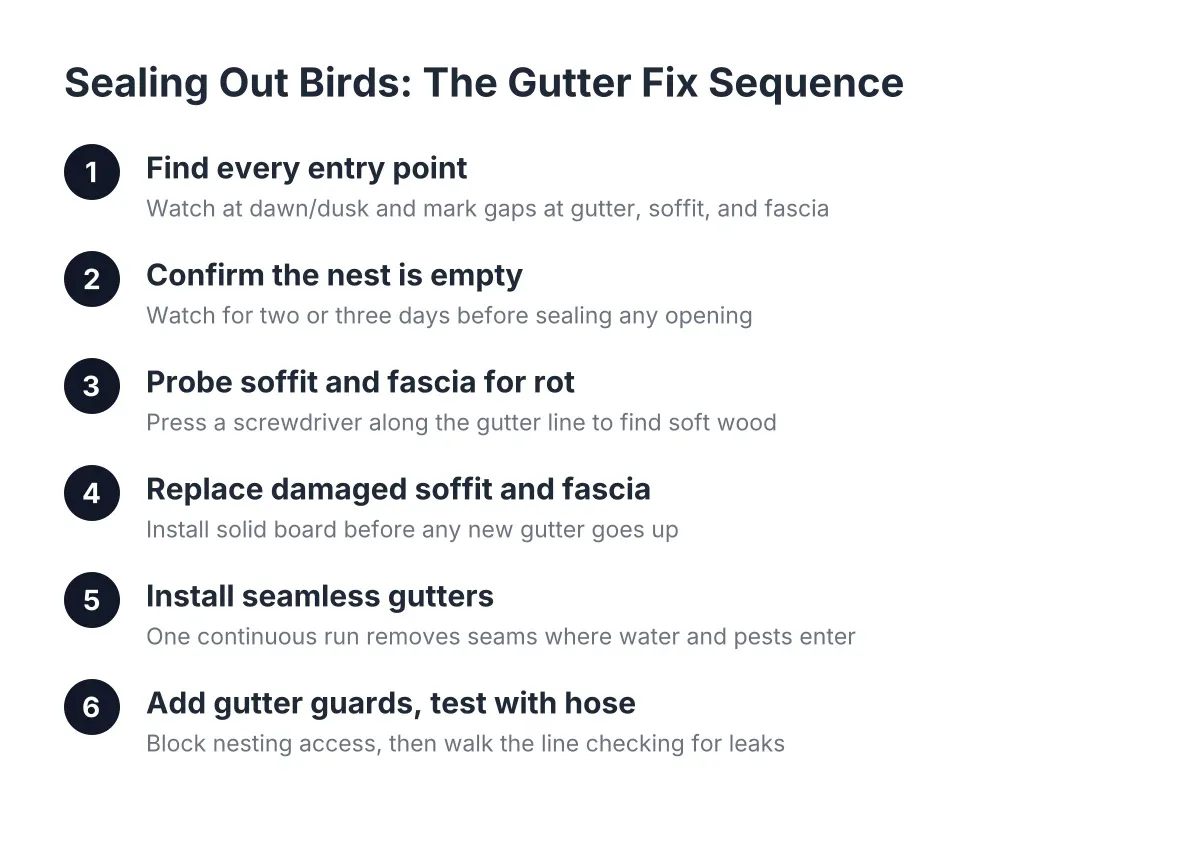
Next, check the soffit and fascia boards behind and below the gutters. Look for gaps, soft spots, peeling paint, or holes near the gutter line. Suppose a homeowner in Orlando hears chirping in the ceiling every morning and spots starlings ducking under the drip edge. In that scenario, a gutter guard alone will not stop them; the soffit gap has to be sealed first, and any rotted fascia replaced so the guard has solid wood to fasten near.
Here is what to list before you compare products:
- The main debris type: oak leaves, pine needles, palm fronds, or shingle grit
- Whether animals are nesting in the gutters, the soffit, or both
- How steep your roof is, since fast runoff can shoot over some guards
- Whether your gutters and downspouts are in good shape or need gutter repair first
Step 2: Compare the Three Main Gutter Guard Types
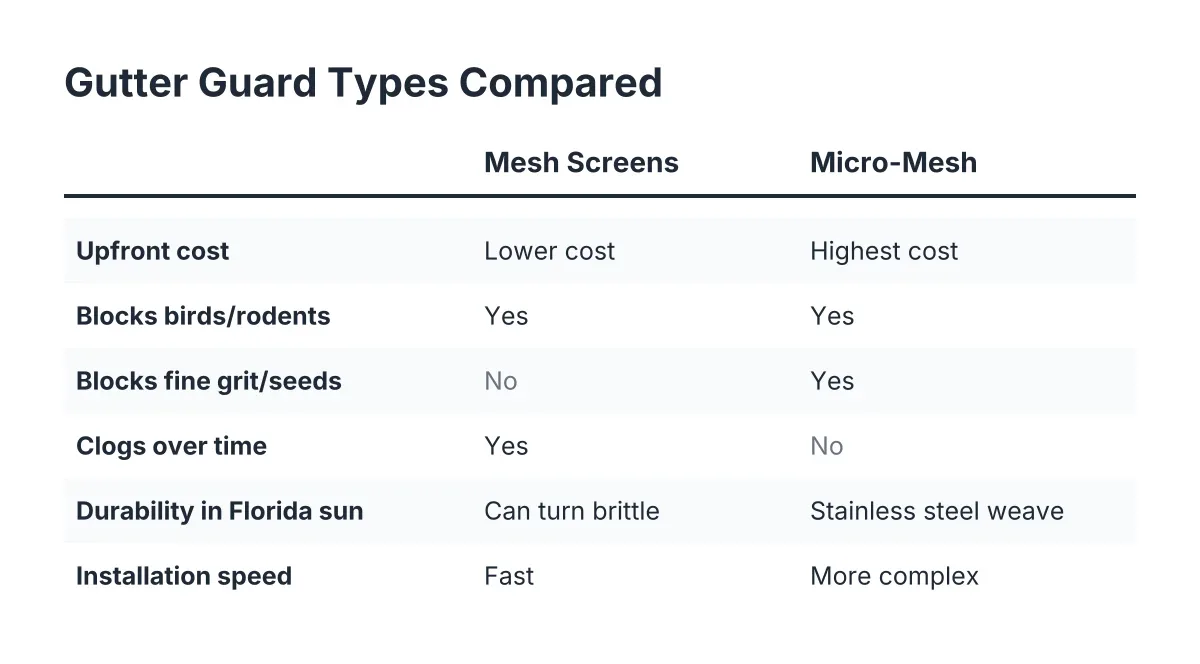
The three common gutter guard types, compared on protection and upkeep, break down like this: mesh screens are the budget option with a shorter life, foam inserts are easy to place but clog on top, and micro-mesh offers the finest filtering at the highest cost. No single type wins every category. Match the guard to your debris and your tolerance for maintenance.
Mesh and Perforated Screens
Mesh gutter screens are the familiar option: a metal or plastic sheet with holes or woven mesh that sits over the gutter opening. They block leaves, twigs, and birds, which makes them a common pick for homeowners dealing with nesting. They cost less than micro-mesh and install fast.
The drawbacks show up over time. Thin mesh screens turn brittle in Florida sun and can tear, and once torn, debris and birds get right back in. Screens with larger openings have their own problem: seeds and grit lodge in the holes, and in neglected gutters, small plants can take root. Plastic screens mounted flat on top of the gutter take direct UV exposure all day, which shortens their life compared to designs that keep the plastic shaded or angled.
If you go with screens, look for sturdier perforated designs with a fine mesh underlay. That combination keeps sticks and leaves from catching in the holes and stretches the time between cleanings.
Foam Inserts
Foam guards are porous blocks that sit inside the gutter. Water soaks through; debris stays on top. They are cheap, and anyone can press them into place in an afternoon, which is why they show up in every home improvement aisle.
However, foam has a real weakness in Central Florida. The top surface collects shingle granules and fine dirt, and over time that layer seals the foam like a clogged sponge. At that point the gutter overflows in a summer thunderstorm just as if there were no guard at all. Many homeowners find they clean foam inserts as often as they cleaned open gutters, which defeats the purpose.
Foam also does nothing for soffit entry points, and determined birds can pull at exposed foam edges. For a nesting problem, it is the weakest of the three options.
Micro-Mesh Systems
Micro-mesh guards use a fine stainless steel weave stretched over a rigid frame. The openings are small enough to block shingle grit, pine needles, and seeds, and no bird or rodent is getting through them. For pest exclusion plus debris protection, micro-mesh is the strongest performer.
The trade-offs are cost and installation. Quality micro-mesh costs more than screens or foam, and many systems tuck under the first row of shingles at the drip edge, which means installation matters. Done wrong, that can affect how water sheds off the roof. On steep roofs, fast-moving runoff can also shoot past any flat guard; designs with a raised ridge on the leading edge slow the water down so it drops into the gutter instead of over it.
One more honest caveat: premium micro-mesh does not always deliver more benefit in proportion to its price. If your roof sees light debris and no pests, a solid perforated screen may serve you fine at a lower cost.
Step 3: Weigh Cost Against How Often You Want to Clean
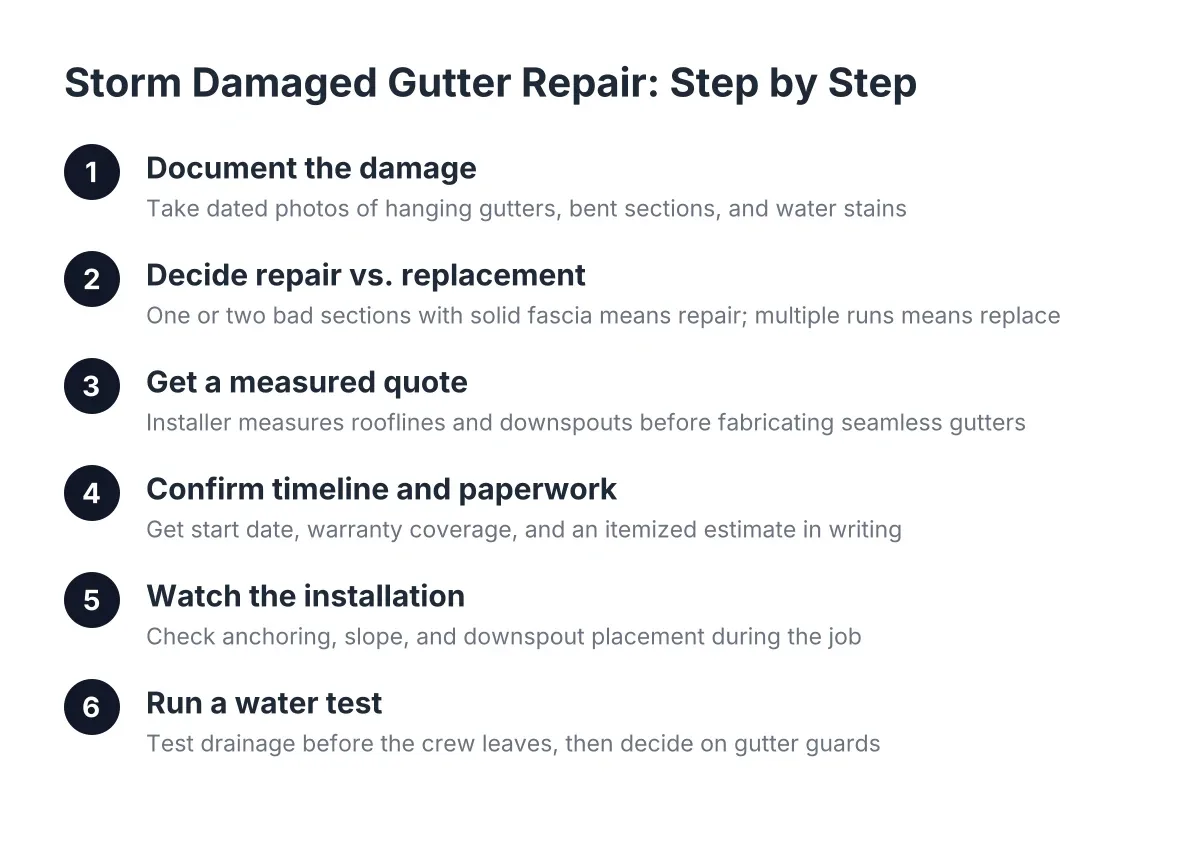
Gutter guard cost comes down to material, your total gutter length, and how complex your roofline is. A single-story ranch with straight runs costs less to protect than a two-story home with multiple valleys and hips. The labor cost to install gutters and guards rises with ladder height and roof complexity, which is why two similar-sized homes can get different quotes.
The payoff is time. According to This Old House, a 2025 survey found 70% of homeowners cited preventing clogs or flooding as their main reason for installing gutter guards, and nearly 43% save 4 to 8 hours per year thanks to them. For a two-story home where cleaning means a tall ladder twice a year, that saved time and risk is the real return on the upgrade.
If you are pricing new gutters and downspouts at the same time, plan both together. Seamless gutters typically cost $8 to $28 per linear foot on average in the U.S., according to Modernize, and gutter installation cost overall runs $4 to $40 per linear foot depending on material and gutter type, according to Angi. Adding guards during a gutter installation is cheaper than retrofitting them later, since the crew is already on the ladder and the guards can be sized to the new gutter profile.
Step 4: Close the Soffit Gaps Before the Guards Go On
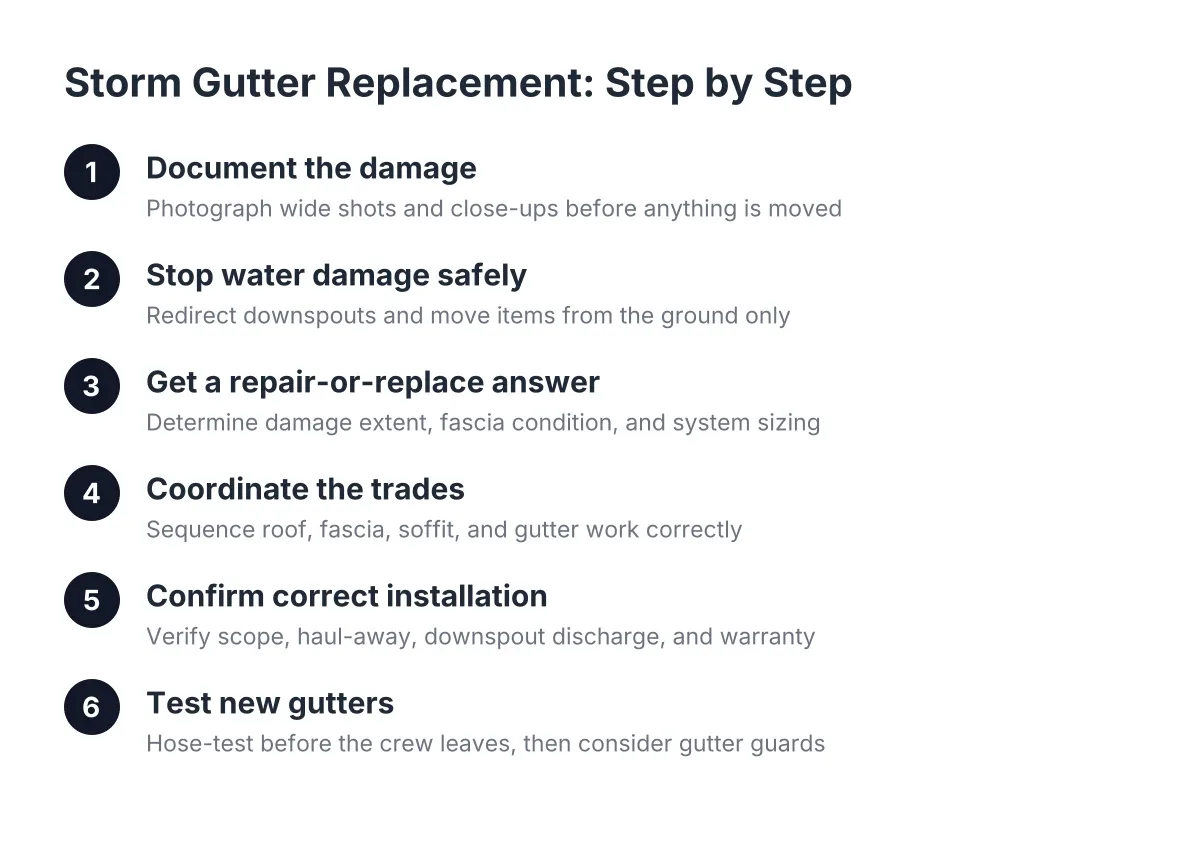
Order matters here, and skipping this step is the most common mistake. First, have any damaged soffit and fascia repaired or replaced, including rotted boards behind the gutter. Birds and rodents that lose gutter access will probe the soffit next, and a DIY mesh patch stapled over a hole rarely holds against a determined animal.
Then install the guards onto sound gutters fastened to solid fascia. If the fascia board is soft, the gutter will pull loose in a hard rain no matter what guard sits on top. A good installer checks soffit and fascia condition as part of the quote for gutters, because it changes both the scope and the price. This is also where it pays to consult a professional: if animals are already living in the attic, a wildlife removal step may need to happen before anything gets sealed.
Step 5: Check the Finished Work Against Orlando's Rain
Once the guards are on, wait for the next good thunderstorm and watch. Water should drop cleanly into the gutters with no sheeting over the front edge, no overflow at the valleys, and no dripping behind the gutter at the fascia. Downspouts should run full and clear, and downspout extensions should carry water away from the foundation.
In addition, walk the roofline every few months during the first year. Look for debris mats building on top of micro-mesh, torn spots on screens, and any new gaps at the soffit. Guards cut maintenance; they do not eliminate it. Even the best systems need the top surface brushed off occasionally, especially under oak trees.
How the Gutter Guard Types Compare at a Glance
Here is the short version for an Orlando roof with pest pressure and heavy summer rain:
- Micro-mesh: Best pest exclusion and finest filtering; highest cost; installation quality matters most
- Perforated screen with mesh underlay: Good middle ground; solid debris blocking at a moderate price; watch for UV wear on plastic versions
- Basic mesh screen: Cheapest; blocks birds at first but turns brittle and tears; plan on replacement
- Foam insert: Easiest to place; clogs on top with granules and dirt; weakest choice for nesting problems and storm-season overflow
For the nesting-bird problem specifically, micro-mesh paired with sound soffit and fascia is the combination that keeps animals out long term. For a home with light debris and no pests, a quality perforated screen covers the need at lower cost. Either way, get the cost factors explained in plain language before anyone climbs the ladder: gutter length, material, roofline complexity, and the condition of the soffit and fascia behind it all.
If you need gutter installation, Orlando Gutter Installers can help.
Prefer to talk it through? Call (689) 399-8982 — a quick call is usually the fastest way to get a straight answer for your situation.