Gutter Installation Terms Explained: A Plain-English Glossary
If you are getting quotes for gutters in Orlando and keep running into words you do not know, this gutter installation glossary is for you. It covers the terms contractors use when they measure your roofline, write a quote for gutters, and explain what drives the price up or down. Read it once and you will be able to follow a quote line by line, ask better questions, and spot problems on your own house. No sales talk, just the words and what they mean.
- Seamless Gutters: one continuous piece, no joints
- Sectional Gutters: pre-cut pieces joined together
- Downspout: the vertical pipe that drains the gutter
- Downspout Extension: moves water away from the foundation
- Fascia: the board the gutter attaches to
- Soffit: the underside of the roof overhang
- Gutter Guards: covers that block leaves and debris
- Gutter Screens: mesh version of a gutter guard
- K-Style Gutter: the common flat-backed gutter shape
- Half-Round Gutter: the rounded, older-style gutter shape
- Gutter Hangers: brackets that hold the gutter up
- End Cap: the piece that closes off a gutter run
- Miter: the corner piece where two gutters meet
- Pitch (Slope): the slight tilt that makes water flow
- Linear Foot: how gutter jobs are measured and priced
- Roofline Complexity: how many corners and levels your roof has
- Oversized Gutters: wider gutters for heavy rain
- Splash Block: a simple pad under the downspout
Gutter Types and Shapes
These are the words that describe what actually gets hung on your house. If a quote mentions them without explaining, start here.
Seamless Gutters and Installation Terms
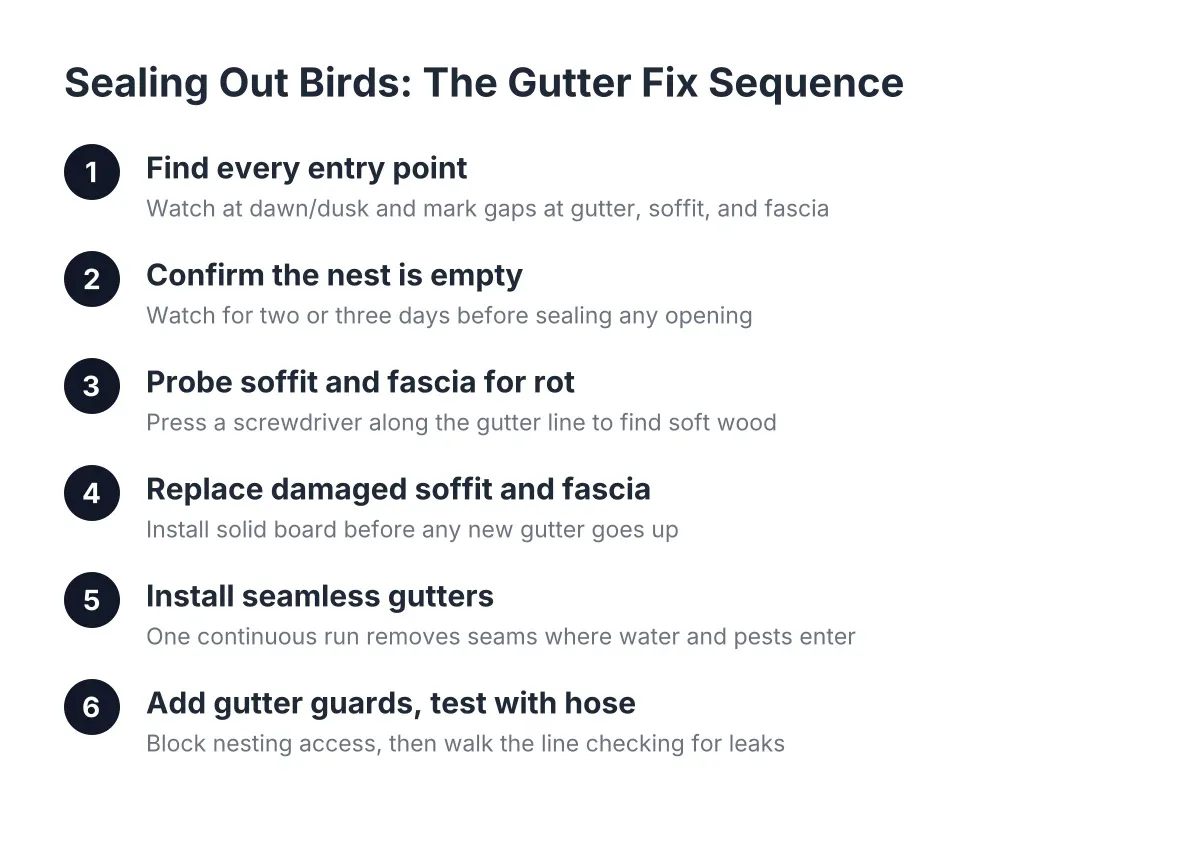
Seamless gutters are gutters formed from a single continuous piece of metal, custom-cut to the exact length of your roofline, with no joints along the run. Fewer joints mean fewer places for leaks to start, which matters in Central Florida where summer thunderstorms dump heavy rain week after week. A crew shapes them on-site from a coil of metal, so each run fits your house instead of coming in standard lengths. Most seamless gutter installers, including us, recommend them over sectional gutters for exactly this reason. They cost more up front than sectional, but they trade that for fewer leak points over time.
Sectional Gutters
Sectional gutters are gutters sold in pre-cut lengths that get snapped or screwed together with connectors at each joint. Every joint is sealed with caulk or gaskets, and every seal is a future leak waiting on Florida sun and rain to break it down. They are the common do-it-yourself option at home improvement stores. If a quote is noticeably cheaper than others, ask whether it is for sectional or seamless gutters; the difference explains a lot of price gaps.
K-Style Gutter
A K-style gutter is a gutter with a flat back and a decorative front edge that looks a little like crown molding. It is the most common profile on American homes, and it holds more water than a half-round gutter of the same width. If your quote just says "5-inch K-style" or "6-inch K-style," this is the shape it means. The number is the width across the top, and wider handles more water.
Half-Round Gutter
A half-round gutter is a gutter shaped like a tube cut in half lengthwise. You see it on older or historic-style homes, and some people choose it for the look. It holds less water than a K-style gutter of the same width and usually costs more to install. In a rainy climate, that is a trade-off worth asking about before you pick it for style alone.
Oversized Gutters
Oversized gutters are gutters wider than the standard residential size, built to carry more water off the roof during heavy rain. In Orlando, a large roof or a steep roof can send more water to the gutter than a standard size can handle, so a contractor may suggest going wider. Upsizing costs more in material but can prevent overflow that soaks your fascia and foundation. If a provider suggests it, ask them to explain which sections of your roof drive the recommendation.
Parts of the System
A gutter system is more than the trough on the edge of the roof. These are the supporting pieces that show up as line items on a quote.
Downspout
A downspout is the vertical pipe that carries water from the gutter down to the ground. Without enough downspouts, even new gutters overflow in a hard rain because the water has nowhere to go fast enough. A good installer places them based on roof size and gutter length, not just at the corners. If your current gutters overflow during storms, too few downspouts is a common cause.
Downspout Extension
A downspout extension is an add-on pipe or channel that carries water from the bottom of the downspout farther away from your house. Water dumped right at the foundation can erode soil, flood flower beds, and work its way toward the slab. Downspout extensions are one of the cheapest fixes in the whole gutter world, and they solve a surprising share of drainage complaints. Ask about them if you see puddles against the house after a storm.
Gutter Guards
Gutter guards are covers installed over the gutter opening to keep leaves, pine needles, and roof grit out while letting water in. They cut down on how often you need gutter cleaning, which matters if your house sits under oaks or pines. No guard eliminates maintenance completely, so be wary of anyone who says otherwise. On a quote, guards are usually a separate line from the gutter installation itself, priced by the foot.
Gutter Screens
Gutter screens are a type of gutter guard made of mesh or perforated metal that sits over the top of the gutter. They are one of the more affordable guard styles and work well against leaves, though fine debris like shingle grit can still get through. If a quote says "screens" instead of "guards," it is naming this specific mesh style. Ask what debris your trees drop; that answer should drive which guard type makes sense.
Fascia
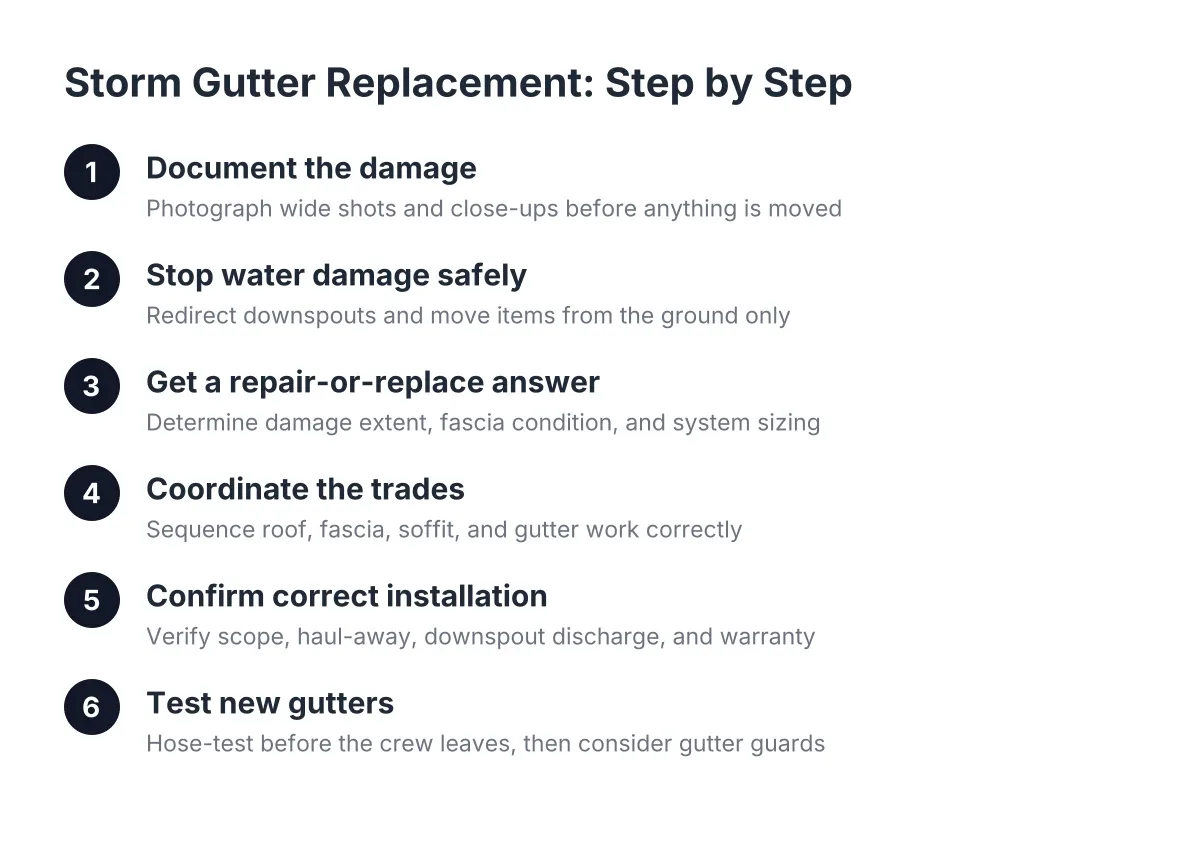
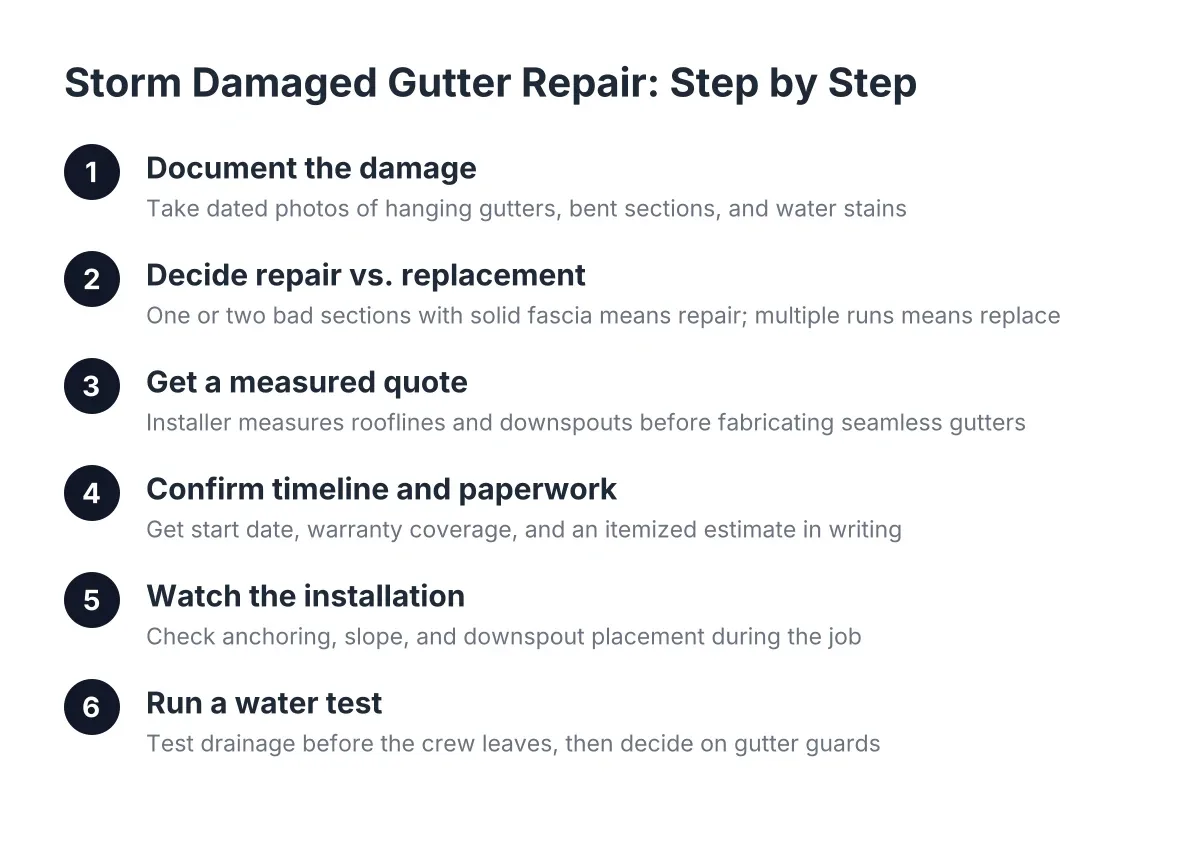
A fascia is the long board that runs along the edge of your roofline, right behind the gutter. The gutter hangers screw into it, so it has to be solid for the gutters to stay put. Clogged or leaking gutters soak the fascia over time, and rotted fascia is a common surprise cost on gutter jobs. If an installer mentions fascia replacement or fascia repair in your quote, it means they found soft or rotted wood that cannot hold new gutters safely.
Soffit
A soffit is the flat surface on the underside of your roof overhang, between the edge of the roof and the wall of the house. It often has small vents that let air flow into the attic, which helps control heat and moisture. Overflowing gutters can rot the soffit from above, so soffit and fascia problems tend to show up together. Soffit replacement on a quote means that underside material needs to come out before or during the gutter work.
Gutter Hangers
Gutter hangers are the brackets or clips that attach the gutter to the fascia board. Hanger spacing matters: hangers placed too far apart let the gutter sag under the weight of water, and a full gutter is heavy. If an old gutter pulls away from the house, failed hangers or rotted fascia behind them is usually why. A quote that mentions hanger spacing is a sign the installer is thinking about Florida rain loads, not just looks.
End Cap
An end cap is the flat piece that seals off the open end of a gutter run. It is a small part, but a poorly sealed end cap drips in every storm, often right over a doorway or walkway. On seamless gutters, the end caps and corners are the only sealed points in the run. That is why installers pay extra attention to sealing them well.
Miter
A miter is the corner piece where two gutter runs meet at an angle, like at the corner of your roof. Corners are the most leak-prone spots in any gutter system because water changes direction there and the joint takes the stress. More corners mean more miters, more labor, and a higher price. That is one reason two houses with the same gutter length can get different quotes.
Splash Block
A splash block is a small angled pad placed on the ground under a downspout to spread water out and push it away from the foundation. It is the simplest form of drainage help, cheaper and less effective than a downspout extension. If water is cutting a trench in your mulch under the downspout, a splash block or extension is the usual fix.
Measuring, Pricing, and Quotes
This part of the gutter installation glossary covers the words that show up on the quote itself. These terms explain why one estimate differs from another.
Linear Foot
A linear foot is a straight-line measurement of length, and it is how gutter work gets measured and priced. An installer measures the total length of gutter your roofline needs, and most of the quote scales from that number. Material choice, guards, and downspouts each add their own per-foot or per-piece cost on top. Our gutter installation cost guide walks through how these factors stack up without quoting numbers that will not match your house.
Pitch (Slope)
Pitch, sometimes called slope, means the slight downward tilt an installer builds into a gutter run so water flows toward the downspout. Gutters are not hung level; they drop a small amount over the length of the run. Wrong pitch leaves standing water that breeds mosquitoes and corrodes the gutter from the inside. If an installer talks about setting the pitch, they are doing the job right, not padding the bill.
Roofline Complexity
Roofline complexity means how many corners, levels, peaks, and angles your roof edge has. A simple rectangular ranch house needs long straight runs and few corners; a two-story home with multiple gables needs more miters, more downspouts, and more ladder time. Complexity drives labor cost even when two houses need the same total footage. It is one of the main reasons an installer wants to see your house, in person or in photos, before giving a firm quote. Homes across the Orlando area vary widely here, from older single-story houses to newer two-story builds in places like Clermont and Oviedo.
Using These Terms
That is the whole gutter installation glossary: the parts, the shapes, and the pricing language you will meet in a quote. You can now read an estimate line by line, ask why a job needs six-inch gutters or extra downspouts, and understand what fascia repair on the quote actually means. When a contractor explains the job and you follow every word, you are in a much better spot to compare offers and choose well.
If you need gutter installation, Orlando Gutter Installers can help.
Prefer to talk it through? Call (689) 399-8982 — a quick call is usually the fastest way to get a straight answer for your situation.