Gutter Material Options: Aluminum, Copper, and Steel for Orlando Homes
If a storm just tore the gutters off your house, you need to pick a replacement material fast and get it right the first time. This guide walks through your gutter material options, aluminum, copper, and steel, step by step, so you can choose with confidence before any new gutter installation starts. For most Orlando homes, the answer lands on seamless aluminum, but the reasons matter. Here is how to work through the decision.
Step 1: Check What Your Old Gutters Were Made Of
Before you shop materials, look at what failed. Walk the house after the storm and note what came down, what bent, and what stayed put.
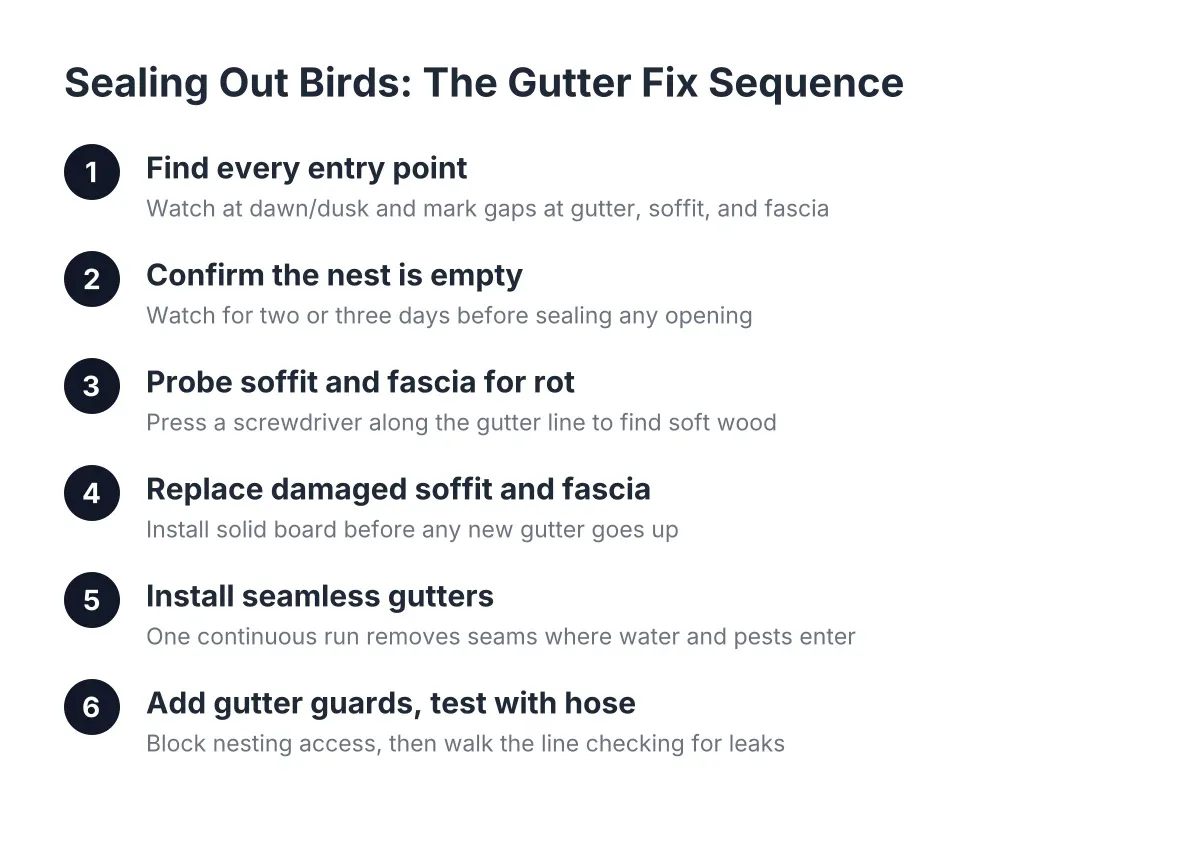
Most Orlando homes built in the last few decades have aluminum gutters. If a section ripped away at the fascia board, the material may not be the problem; the hangers or the wood behind them often are. Rotted fascia will not hold any gutter, aluminum or copper or steel, so plan for soffit and fascia repair as part of the job if the wood is soft.
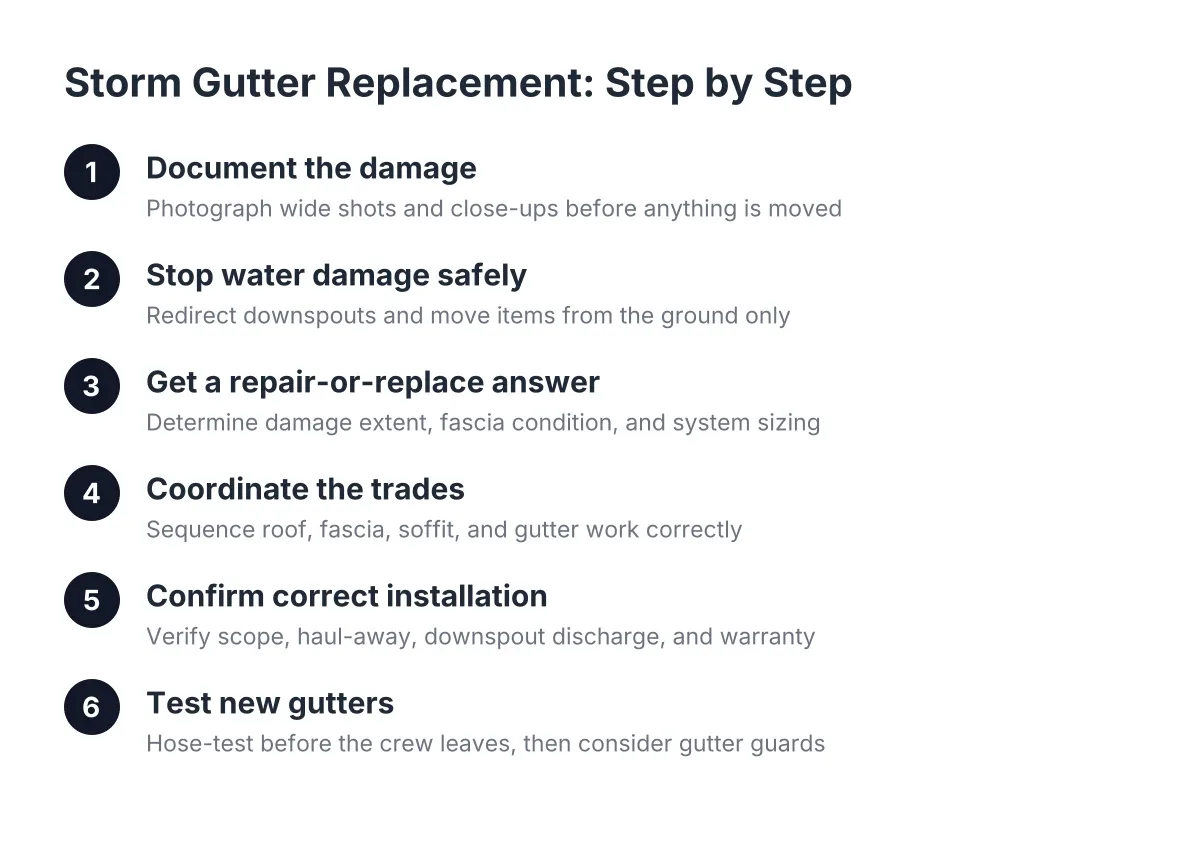
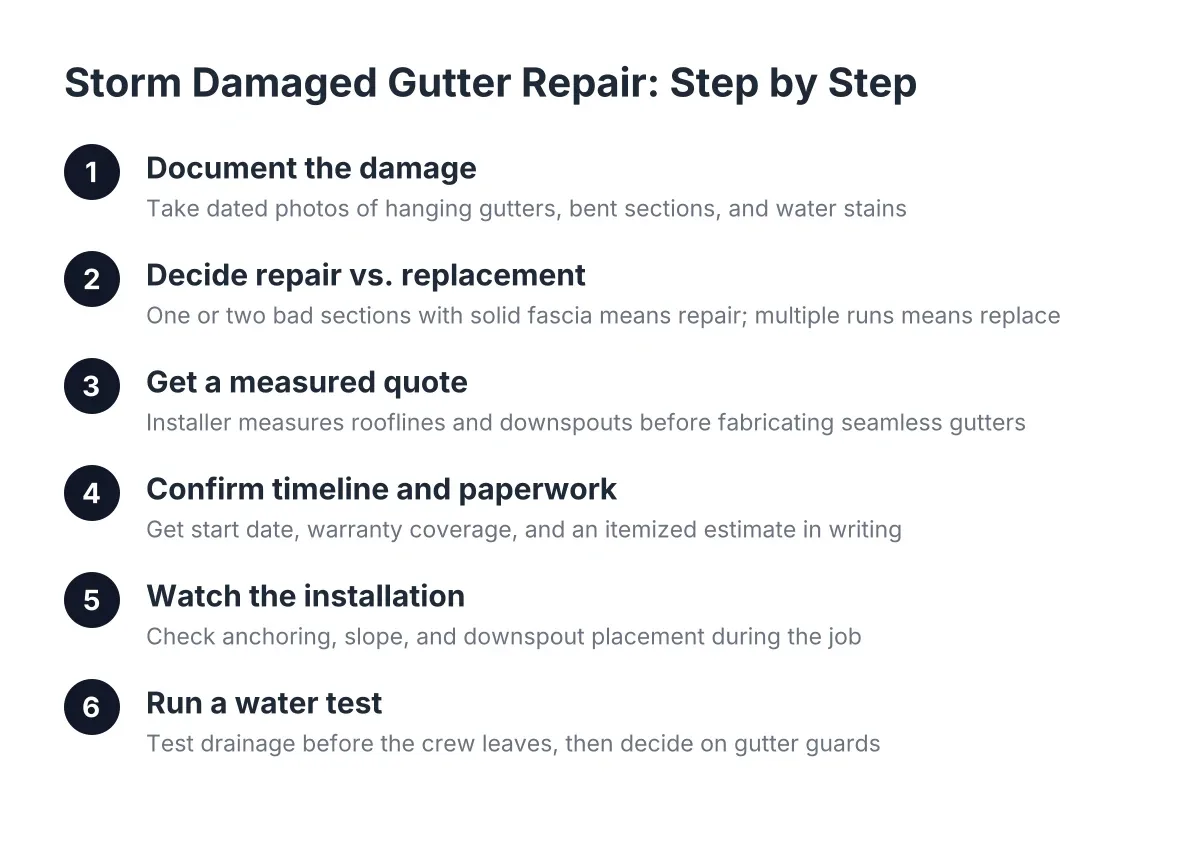
Take photos of everything before anyone touches it. Shoot wide photos of the whole roofline and close shots of torn hangers, bent sections, and water stains on the siding. If you plan to file an insurance claim for gutter damage, those photos are your proof of what the storm did.
Step 2: Aluminum, Copper, and Steel: Comparing Gutter Material Options
Aluminum, copper, and steel are the three materials worth comparing for a Florida home. Each handles rain fine; the real differences are rust resistance, weight, cost, and how they hold up in Central Florida's humid, storm-heavy climate.
Aluminum
Aluminum is the standard for a reason. It does not rust, it is light enough to hang on standard fascia without extra reinforcement, and it comes in dozens of baked-on colors that match soffit and fascia trim. It can be run through a machine on site as one continuous piece, which is what seamless gutters means in the literal sense; fewer joints means fewer leak points when summer thunderstorms dump water fast.
The trade-off is dent resistance. A falling branch can crease aluminum where heavier steel might shrug it off. Thicker-gauge aluminum narrows that gap, which is why gauge is worth asking about in Step 4.
Copper
Copper is the premium pick. It never rusts, it lasts for decades, and it ages to a green patina some homeowners love. Builders sometimes spec it on high-end custom homes where the look is part of the design.
However, copper costs several times what aluminum does, and installation takes longer because joints are soldered. For a storm-damage replacement on a typical Orlando home, copper rarely makes sense unless you are matching existing copper work.
Steel
Galvanized steel is strong and resists dents from branches and ladders. That strength comes with two problems in Florida. Steel is heavy, which puts more load on fascia boards that may already be storm-stressed, and once the zinc coating scratches or wears, steel rusts. In a climate with daily summer rain and high humidity, rust shows up sooner than it would in a dry state.
Step 3: Decide Why Aluminum Wins for Most Orlando Roofs
Weigh the three against Central Florida conditions and aluminum comes out ahead for most homes. Here is the short version of why:
- No rust, ever. Daily summer rain and coastal humidity punish steel. Aluminum does not corrode the way steel does.
- Light weight. Aluminum hangs on existing fascia without reinforcement, which matters if your fascia took storm damage too.
- Seamless fabrication. Aluminum runs as one continuous piece per roofline, cut to measure on site, so heavy rain has fewer joints to exploit.
- Color options. Factory finishes match or contrast with soffit and fascia so the repair does not look like a patch.
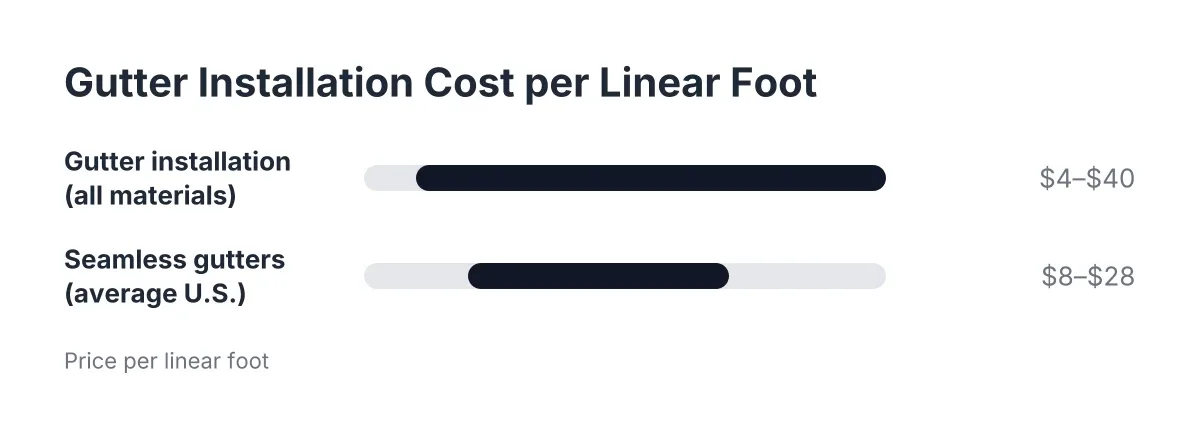
- Cost. According to Angi, gutter installation runs an average of $4 to $40 per linear foot depending on material and gutter type; aluminum sits toward the lower-to-middle part of that spread, while copper drives the top end.
For reference on the seamless side specifically, Modernize puts seamless gutters at $8 to $28 per linear foot on average in the U.S. Your actual quote for gutters depends on gutter length, roofline complexity, and the condition of your soffit and fascia; no honest installer quotes a final number without measuring.
Suppose a homeowner in east Orlando loses 40 feet of gutter and a stretch of fascia to a fallen oak limb. In that scenario, replacing the run with seamless aluminum and repairing the fascia behind it is usually faster and cheaper than sourcing steel or copper, and the new run can be fabricated to the exact measurement the same day the crew arrives. That speed matters when the next thunderstorm is already in the forecast.
Step 4: Ask About Gauge, Hangers, and Fasteners Before You Approve the Job
Choosing aluminum is half the decision. The hardware behind it decides whether the new gutters survive the next storm, and quality varies widely between installers. Ask these questions before work starts:
- What gauge aluminum are you using? Thicker aluminum resists denting and sagging. A thin coil costs the installer less but gives you a weaker gutter.
- What type of hidden hanger will you use, and how far apart? Aluminum systems typically hang on standard brackets, quick-screw hangers, or hangers that double as leaf guards. Closer spacing holds more water weight during a downpour.
- Are the fasteners rated for aluminum? Dissimilar metals touching aluminum cause galvanic corrosion. A standard deck screw will rust until the head pops off and the hanger drops. This is a common shortcut that fails two or three years later.
- Will you measure before fabricating? Accurate roof measurements before cutting ensure the seamless run fits right. Independent gutter installers near me is a common search here in Orlando, and the good local ones measure first every time.
- What does the warranty cover? Reputable work is typically backed by a warranty on labor and materials. Get the terms in writing.
Any installer who gets vague on these answers is telling you something. The storm-chaser crews that roll through after a hurricane rarely talk about gauge or fastener compatibility.
Step 5: Match Guards and Downspouts to Your Aluminum Gutters
New gutters are the moment to fix the drainage problems that existed before the storm. If your old gutters clogged with oak leaves every fall, add gutter guards or gutter screens now instead of climbing a ladder twice a year. There is a reason homeowners make this move; a 2025 survey found 70% of homeowners cited preventing clogs or flooding as their primary motivation for installing gutter guards, according to This Old House.
Be choosy about the product, though. Expanded metal guards have openings large enough for seeds to lodge and sprout; small plants can take root in a neglected gutter. Micro-mesh aluminum guards that tuck under the shingles filter well, but they cost more, and that premium does not always pay off for every home. Only a small share of guard products on the market perform well, so pick from that proven subset rather than by price or marketing.
Downspouts deserve the same attention. Aluminum downspouts should dump water away from the slab, not against it. Downspout extensions are a cheap add-on during gutter installation and a hassle to retrofit later. If water pooled near your foundation before the storm, say so when the installer measures.
Step 6: Document the Material Choice for Your Insurance Claim
If insurance is paying, paperwork protects you. Keep a file with your before photos from Step 1, the written estimate listing material, gauge, and linear footage, and the final invoice. Adjusters want to see that the replacement matches what was damaged; replacing aluminum with aluminum is a straightforward claim, while upgrading to copper usually means you cover the difference.
Ask the installer to note storm damage in writing on the estimate. A line like "gutter and fascia damage consistent with wind event" paired with dated photos keeps the claim clean. One honest caution: whether your policy covers gutter damage depends on your specific coverage, so confirm with your insurance agent before you count on reimbursement.
The Bottom Line on Aluminum, Copper, and Steel Gutter Options
Among the gutter material options, aluminum earns its place as the default for Orlando homes in 2026: rust-proof in humid weather, light enough for storm-worn fascia, seamless when fabricated on site, and priced for a repair you did not plan for. Copper is a looks-driven upgrade; steel trades rust risk for dent resistance that Florida weather does not reward.
When you search gutter done near me after a storm, you are not just hiring a crew; you are picking the material, gauge, hangers, and fasteners that face the next thunderstorm season. Work through these six steps and you will know exactly what you are buying before anyone sets foot on the roof.
If you need gutter installation, Orlando Gutter Installers can help.
Prefer to talk it through? Call (689) 399-8982 — a quick call is usually the fastest way to get a straight answer for your situation.