Why Undersized or Clogged Gutters Fail in Orlando’s Thunderstorm Season: 8 Failure Points
If your gutters pour over the sides every time a summer storm rolls through, the problem is usually not bad luck. It is one of a handful of predictable reasons that undersized clogged gutters fail, and Central Florida's thunderstorm season exposes every one of them. Understanding gutter overflow failure points is essential to solving the problem: Orlando storms dump a lot of water in a short burst, and a gutter system that cannot keep up fails fast and visibly.
You have probably already lived this. The gutters get cleaned, they work for a few weeks, then the next heavy rain sends a waterfall over the edge again. That cycle means something in the system is wrong, not just dirty. Below are the eight most common ways undersized or clogged gutters fail here, how to spot each one, and what the real fix looks like once you have decided to solve it for good.
1. The Gutter Is Too Small for the Roof Draining Into It
A 5-inch gutter under a large or steep roof section simply cannot hold the water an Orlando thunderstorm sends down. The roof sheds water faster than the gutter can carry it to the downspout, so the excess spills over the front edge even when the gutter is spotless. If water pours over a clean gutter during hard rain, size is the prime suspect, not debris.
The fix is matching gutter size to roof area, pitch, and the kind of short, intense rain Central Florida gets. Many homes here do fine with 6-inch seamless gutters on the big roof planes, while smaller runs stay at 5 inches. A good installer measures the roof sections first and sizes each run, rather than quoting one size for the whole house.
2. Too Few Downspouts, or Downspouts in the Wrong Spots
A gutter is only as good as its exits. One downspout trying to drain a 50-foot run will back up in heavy rain no matter how big the gutter is. Water stacks up in the trough, reaches the lip, and overflows at the far end or at inside corners where two roof planes dump into the same spot.
Therefore, part of any honest diagnosis is counting downspouts and checking where the roof concentrates water. Adding a downspout, upsizing to a larger outlet, or moving one away from a valley often solves an overflow that three cleanings never touched. Downspout extensions then carry that water away from the slab instead of dropping it at the foundation.
3. Clogs That Start at the Outlet, Not in the Open Run
Most clogs do not spread evenly along the gutter. Leaves, oak tassels, and shingle grit wash toward the downspout outlet and pack into a plug right where the water needs to exit. The open run can look clear from the ground while the outlet underneath is sealed shut.
This is why cleanings sometimes seem to fail within weeks. If the elbow or the vertical downspout itself is packed, surface cleaning does not reach the real blockage. During a proper service visit, the downspouts get flushed and checked for flow, not just scooped at the top.
4. Gutter Overflow Failure Points in a Downpour
Undersized and clogged gutters create distinct overflow failure points when water has nowhere to go during a storm; it goes over the side. A half-clogged 5-inch gutter might handle a drizzle fine, then dump sheets of water onto your walkway during a July afternoon storm. The debris steals capacity the undersized gutter never had to spare.
As a result, homeowners often chase the wrong fix. Suppose a homeowner in east Orlando pays for cleaning three times in one year and still gets overflow at the same corner. In that scenario, the clogs were only half the story; the gutter was also too small for the roof section feeding it, and no amount of cleaning changes capacity. Fixing one problem without the other just resets the clock.
5. Bad Slope Lets Water Sit, Breed Mosquitoes, and Overflow
Gutters need a slight, steady pitch toward the downspout. When a run is dead level, or worse, pitched away from the outlet, water sits in the trough after every rain. Standing water adds weight, speeds up corrosion in older metal gutters, and gives Florida mosquitoes a nursery along your roofline.
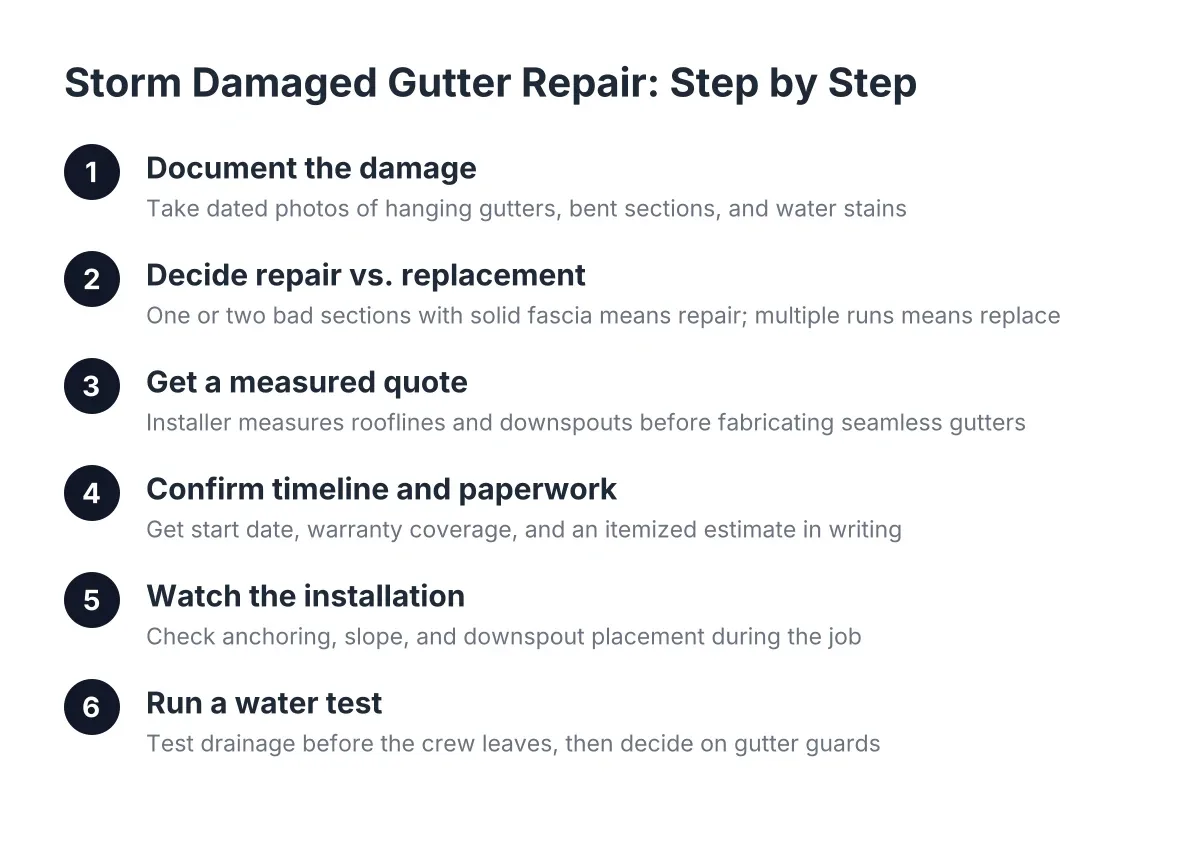
In a storm, that standing water means the gutter starts full before the rain even arrives. A sagging section has the same effect; it creates a low spot where water pools and spills. Correcting slope on seamless gutters usually means rehanging sections with properly spaced hidden hangers, which is a repair, not a full replacement, when the gutter itself is still sound.
6. Loose Hangers and Old Spike-and-Ferrule Systems Pull Away
Older gutters hung with spikes driven through the fascia loosen over time. Each heavy rain adds weight, the spikes work out of their enlarged holes, and the gutter tilts forward. Once the front edge drops below the back, water pours out the front in any decent storm, and the whole run can eventually pull off the house.
Rehammering spikes is a short-term patch at best, since the nail holes only get bigger each time. The lasting fix is hidden hangers screwed into solid fascia at close spacing. However, if the fascia board behind the gutter has rotted from years of overflow, it needs fascia replacement before any gutter can hang securely on it.
7. How Overflow Rots Soffit and Fascia From Behind
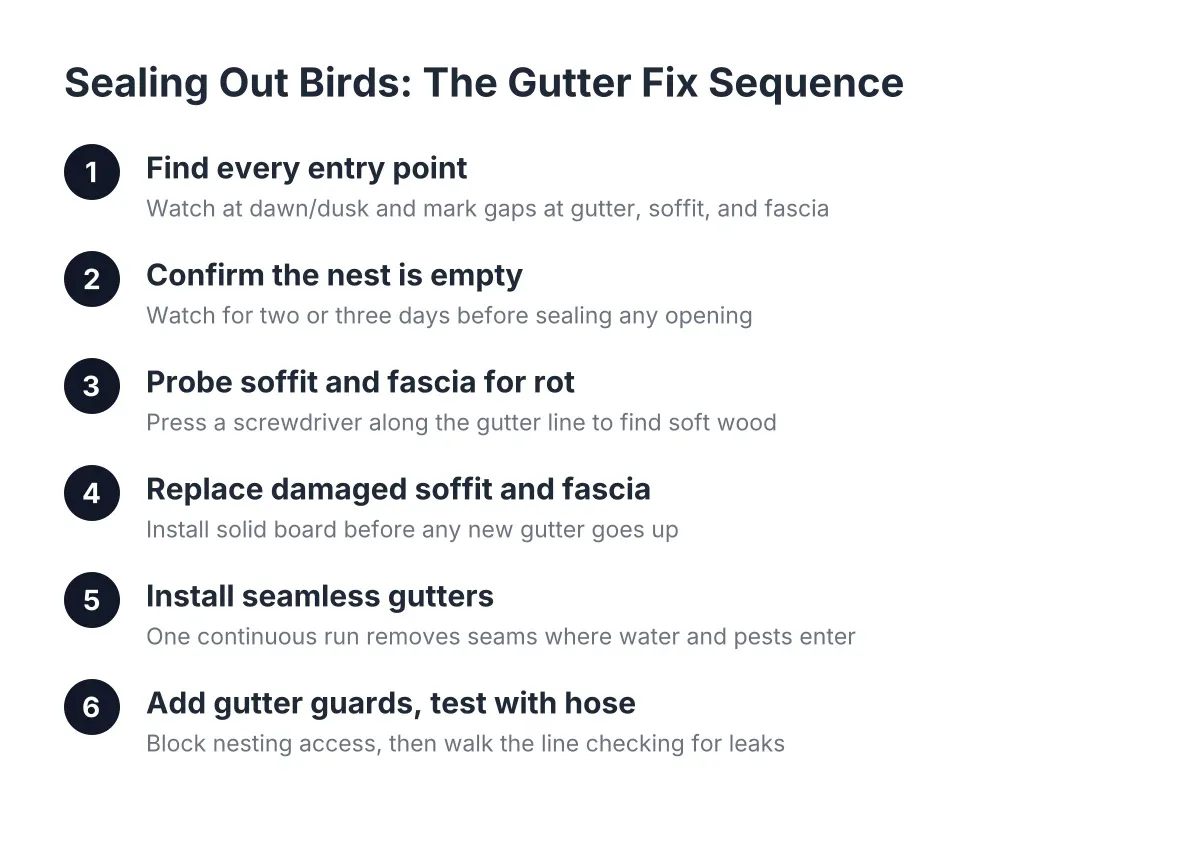
When gutters overflow repeatedly, water does not just fall to the ground. Some of it runs behind the gutter, down the fascia board, and into the soffit. Wood fascia in Orlando's humidity rots quietly, and by the time you see peeling paint or a soft spot, the damage has usually spread along the board.
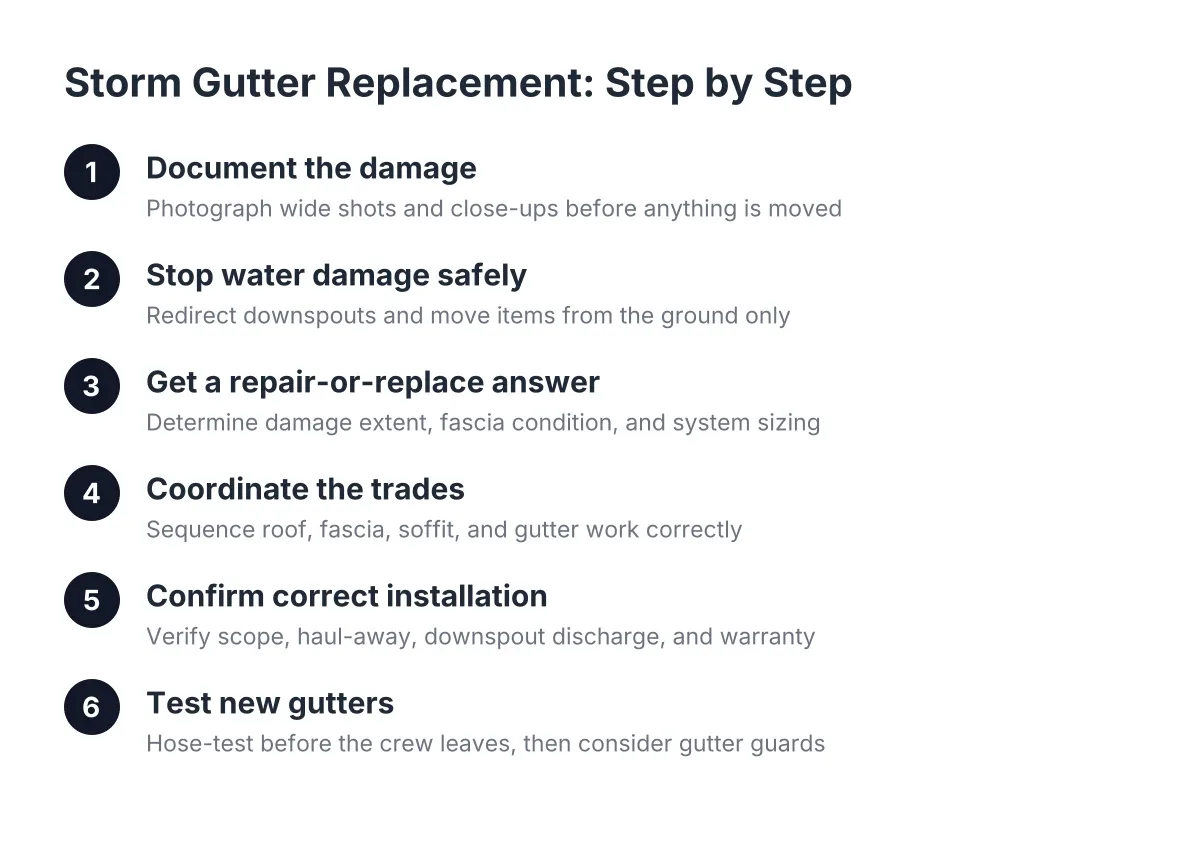
This matters for your fix because new seamless gutters screwed into rotten wood will not hold. A complete job inspects the soffit and fascia first, replaces damaged sections, and then hangs the new gutters. It costs more upfront than gutters alone, but it is the difference between a permanent fix and a system that sags within a couple of seasons. If you see water staining inside your eaves or attic, bring in a professional before deciding anything, since hidden rot can extend into the roof decking.
8. Cheap or Unfastened Gutter Guards That Make Clogs Worse
Gutter guards help when they are the right type and installed correctly. Snap-in and lay-on screens that are not screwed down tend to shift or blow out over time, and once sections go missing, debris pours in through the gaps while the remaining guards make cleaning harder. Plastic guards also turn brittle in Florida sun and crack after a few years or one falling branch.
That said, good gutter screens solve a real problem for homes under oaks and pines. According to This Old House, 70% of homeowners in a 2025 survey said preventing clogs or flooding was their main reason for installing gutter guards, and nearly 43% saved 4 to 8 hours a year on cleaning. The deciding factors are mechanical fastening, metal rather than plastic, and a gutter underneath that is sized and sloped correctly first. Guards on an undersized gutter just give you a cleaner gutter that still overflows.
What a Real Fix Looks Like When Undersized Clogged Gutters Keep Failing
Undersized clogged gutters fail for reasons you can diagnose from the ground up: capacity, exits, slope, attachment, and the wood behind it all. The permanent fix starts with an honest assessment of which of those eight failure points apply to your house, in this order:
- Measure the roof sections and check whether the gutter size matches the water load.
- Count downspouts, check outlet sizes, and confirm water can actually exit fast enough.
- Check slope and hanger condition along every run.
- Inspect soffit and fascia for rot before hanging anything new.
- Only then decide on gutter guards, and insist they be screwed down, not snapped in.
Cost follows the scope. For context in 2026, Angi puts gutter installation at an average of $4 to $40 per linear foot depending on material and type, and Modernize reports seamless gutters typically run $8 to $28 per linear foot nationally. Your actual number depends on gutter length, material, roofline complexity, and whether soffit and fascia work is needed, which is exactly what a written quote for gutters should spell out line by line before anyone climbs a ladder.
One trade-off worth naming: if your existing gutters are correctly sized and well attached, the right answer may be a thorough cleaning, a downspout flush, and quality screens rather than replacement. A straight-talking seamless gutter installer should tell you which situation you are in, because paying for new gutters you did not need is as frustrating as paying for a fourth cleaning that will not hold. Either way, once the system matches your roof and Orlando's storm season, the waterfall over the edge stops, and so do the repeat service calls.
If you need gutter installation, Orlando Gutter Installers can help.
Prefer to talk it through? Call (689) 399-8982 — a quick call is usually the fastest way to get a straight answer for your situation.