How to Spot Soffit Fascia Installation Defects Before They Rot Your Roofline
If water keeps pouring over your gutters or your roofline looks wavy from the street, the problem may have been built in from day one. Installation defects in soffit fascia are more common than most Orlando homeowners realize, and many repair calls trace back to poor original workmanship, not just storm damage. The good news is you can spot most of these defects from the ground with your own eyes. This guide walks you through a step-by-step inspection, so you know whether you are dealing with normal wear or a contractor shortcut that is quietly rotting your roofline.
First, a quick refresher on the parts. The fascia is the vertical board that runs along your roof edge; your gutters hang from it. The soffit is the panel underneath the roof overhang; it vents your attic and keeps pests out. When either one is installed wrong, water gets behind the system, and no amount of gutter cleaning will fix it.
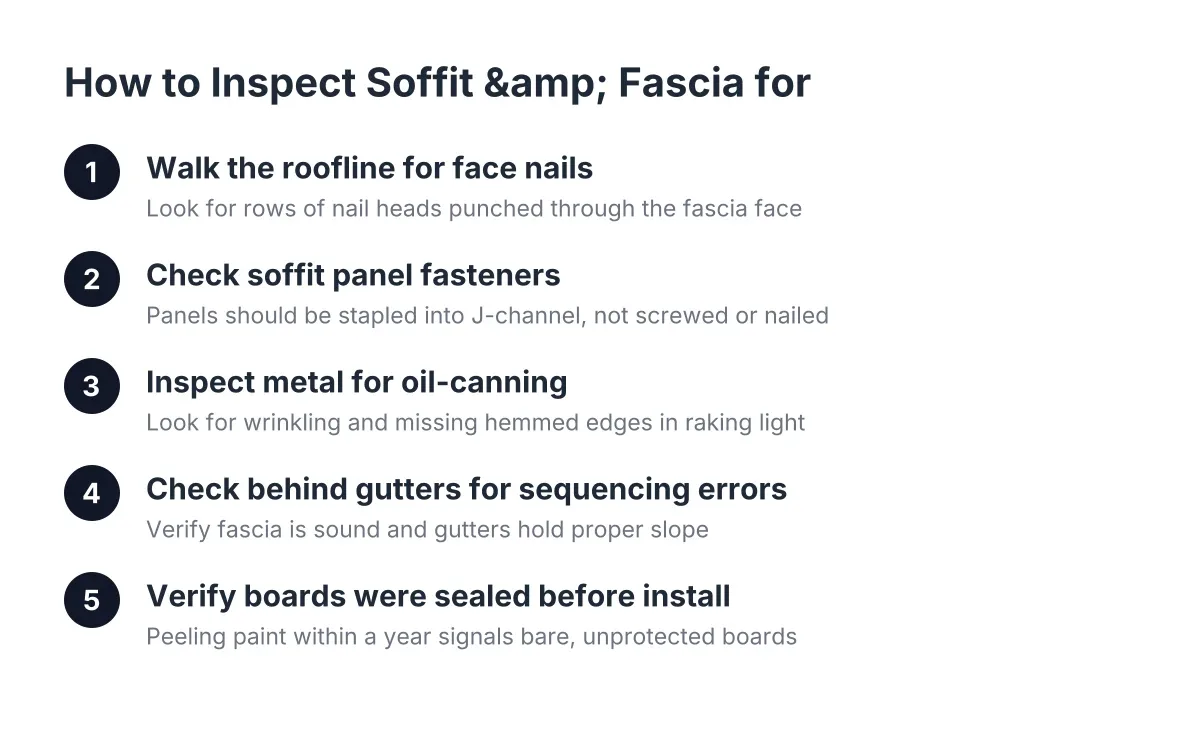
Step 1: Walk the Roofline and Look for Face Nails
Start at the street and scan the fascia for rows of nail heads punched through the front of the metal or board. This is called face nailing, and outside of seam locations it is a defect, not a technique. Every face nail is a hole in the one surface that takes the most rain in a Central Florida summer.
Here is the rule a careful installer follows. Fasteners belong underneath the fascia, driven up through the soffit, where they stay dry and hidden. Face fastening is acceptable only at seams, where overlapping pieces need to be pinned together, and near the top edge of end pieces that get covered later by the soffit channel.
Therefore, if you see a straight line of nail heads every foot or two across the whole run, the installer took a shortcut. Each of those holes can weep water into the wood behind the metal wrap. That hidden board can rot for years before you see a single stain.
Step 2: Check How the Soffit Panels Are Secured
Next, stand under the overhang and look up. Soffit panels should slide into a J-channel at the fascia and sit secured with staples, not screws or nails punched through the visible face of the panel. Face-fastened soffit panels cannot expand and contract with heat, so they buckle, and buckled panels open gaps.
Look for these warning signs while you are under there:
- Panels that sag, wave, or pull away from the channel
- Screws or nails driven through the flat face of the soffit
- Gaps at the wall line where panels were cut short
- Vented panels painted over or blocked, which chokes attic airflow
- Rust streaks or water stains bleeding from the panel edges
In addition, press gently on any stained area with a broom handle. Soft or spongy soffit means the wood or panel behind it is already holding water. In Orlando humidity, that rot does not stop on its own.
Step 3: Inspect the Metal for Oil-Canning and Missing Hems
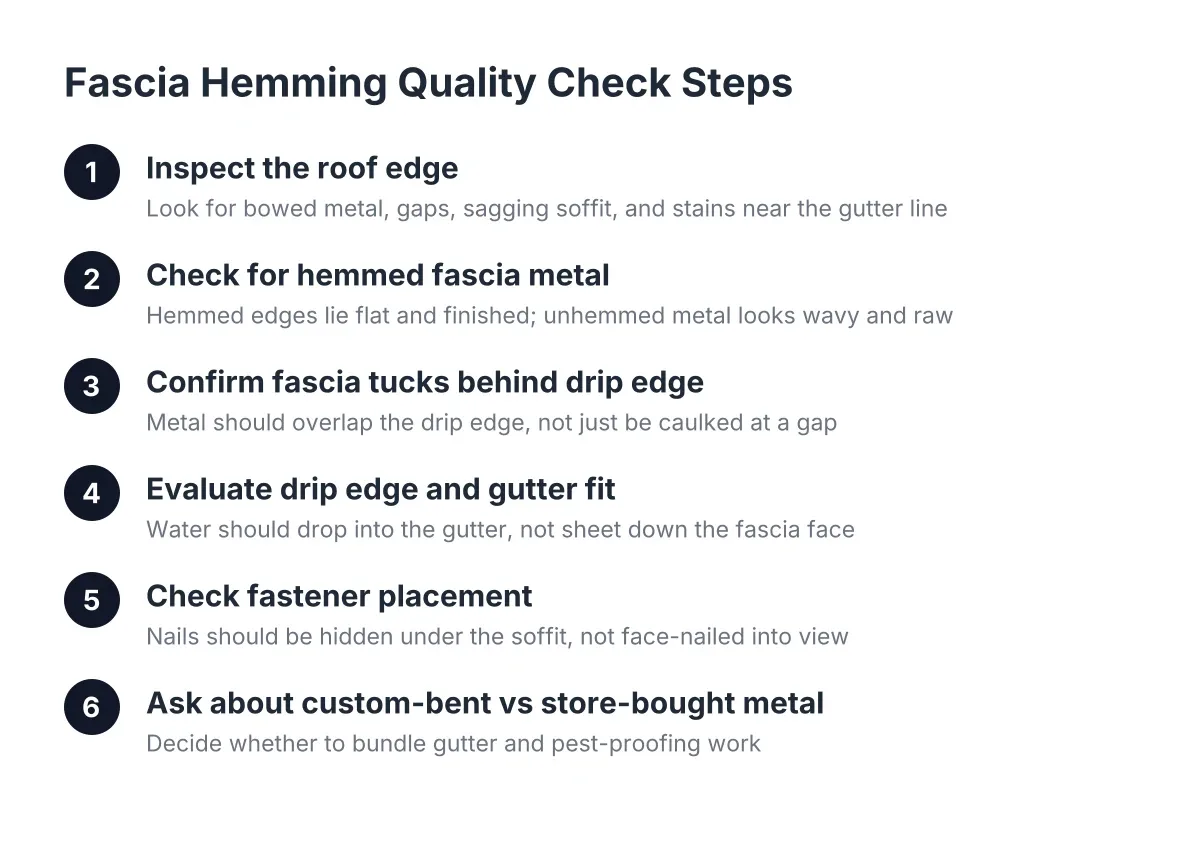
Now look at the fascia metal itself in raking light, early morning or late afternoon works best. Quality fascia metal has hemmed edges, meaning the top and bottom are folded back on themselves. The hem adds rigidity, keeps the edge straight, and gives a clean finished line. Many installers skip hemming to save time, and the result shows.
Unhemmed or thin metal wrinkles and ripples along the run, a defect installers call oil-canning. Pre-bent fascia from a big box store is a frequent culprit; it often does not match the profile or size of the existing fascia and dents or wrinkles during installation. A wavy, wrinkled fascia line is cosmetic at first, but loose edges catch wind, and Central Florida thunderstorms will find every weak point.
Step 4: Look Behind the Gutters for Sequencing Mistakes
This step matters most for the chronic-overflow crowd. If your gutters overflow in every hard rain even after repeated cleanings, pull out a ladder or use binoculars and check where the gutter meets the fascia. The drip edge from the roof should direct water into the gutter, and the fascia should sit tight and plumb behind it.
Common sequencing defects include gutters hung on fascia that was already soft, so the hangers are pulling loose, and fascia wrapped over rotted wood with no replacement underneath. Either one means the gutter can never hold its slope. A gutter that has lost slope overflows at the low spot no matter how clean it is, which is why some homeowners pay for gutter cleaning three times a year and still get a waterfall over the front walk.
For example, suppose a homeowner in a 1990s Orlando block home has gutters that overflow at the same corner every summer. In that scenario, a crew that only cleans the gutters collects an easy fee and solves nothing. The real fix might be fascia replacement at that corner, a re-hung and re-sloped gutter run, and a downspout extension to move the water away from the foundation.
Step 5: Verify the Boards Were Protected Before Installation
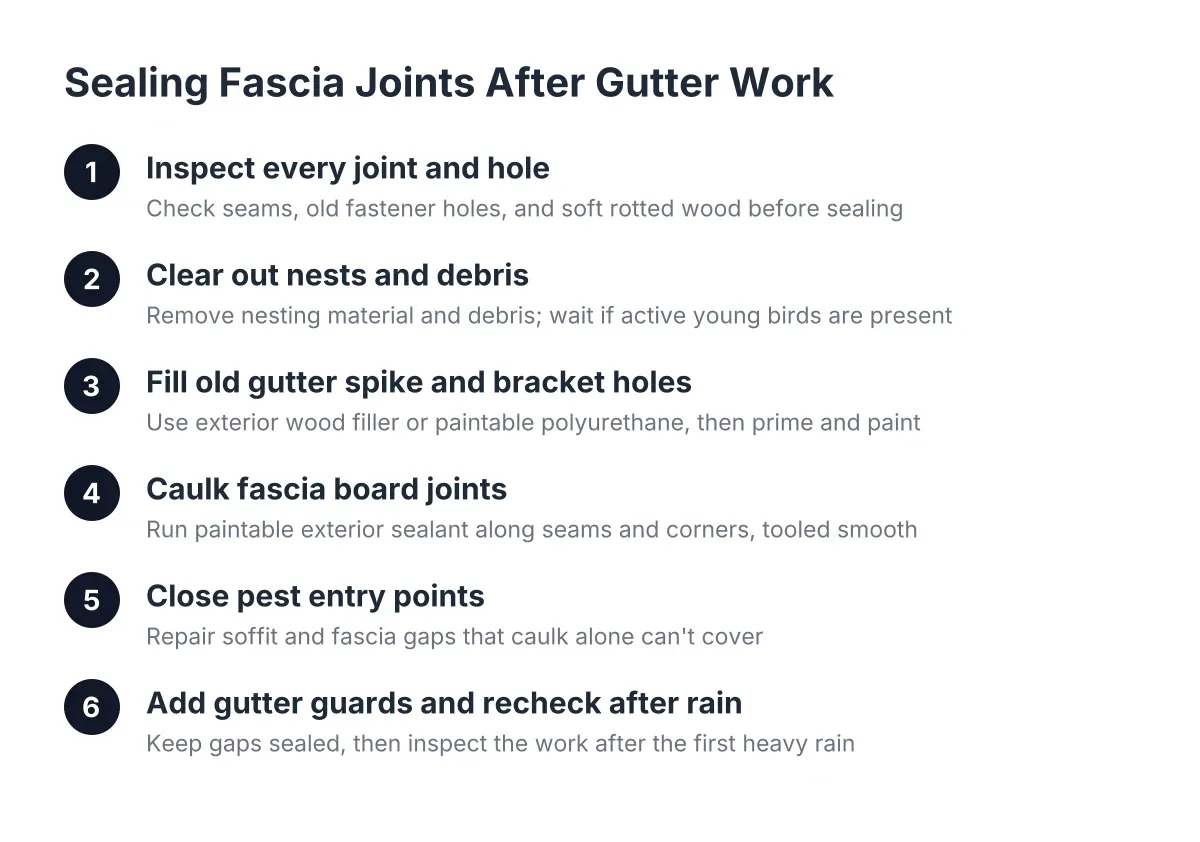
Some defects hide in what was not done. Wood fascia boards should receive paint or sealer before they go up, because coating all six sides protects against moisture far better than brushing the face after mounting. If your fascia shows peeling paint within a year or two, the backs and ends of those boards probably went up bare.
Similarly, careful installers protect the drip edge with painter's tape during fascia work, then the gutter crew peels it off before hanging gutters. It is a small detail, but small details are how you tell a crew that plans the roofline as one system from a crew that slaps up metal and leaves.
Common Soffit and Fascia Installation Defects and Gutter Failures
Soffit and fascia installation defects and gutter failures feed each other in both directions. A face-nailed fascia lets water behind the metal, the wood softens, the gutter hangers lose their grip, the gutter sags, and water starts pouring over the edge in every storm. Meanwhile, overflowing gutters soak the fascia from above and the soffit from below, accelerating the rot that started with the bad installation.
This is why siding, soffit, fascia, and gutters tend to fail together; they all face the same rain, sun, and humidity. It is also why bundling the work into a single roofline fix usually beats patching one piece at a time with separate trades. Hanging new seamless gutters on defective fascia just transfers the old problem to new metal.
Fascia and soffit repair is not cheap, which is one more reason to catch defects early. According to Angi, soffit and fascia repairs run $300 to $7,200 depending on materials and damage level, with dry rot repairs costing $500 to $4,000. HomeAdvisor puts professional fascia and soffit work between $1,050 and $3,300 for a typical home. The spread is wide because rot depth, roofline length, and material choice drive the price, which is exactly why a plain-language breakdown of cost factors matters before anyone climbs a ladder.
What to Do If Your Inspection Turns Up Defects
If you found face nails, buckled panels, or soft wood, document it before the next storm season. Take photos in good light, note which runs of the roofline are affected, and check whether your gutters overflow at those same spots.
Then decide on scope with these questions:
- Is the damage cosmetic (wrinkled metal, peeling paint) or structural (soft wood, sagging panels)?
- Are the gutters on the affected runs holding slope, or do they overflow in heavy rain?
- Is the problem isolated to one section, or does it repeat along the whole roofline?
- Did a recent storm cause new damage on top of the old defects, which may matter for an insurance conversation?
One honest limitation: a ground-level inspection catches most visible defects, but it cannot confirm how far rot has traveled behind wrapped fascia or above a soffit panel. If you find soft wood or active leaks, have a professional open up a section before settling on a repair plan, because the fix for surface defects and the fix for structural rot are different jobs at different costs.
The bottom line is simple. Installation defects in soffit and fascia work are visible if you know where to look, and finding them early turns a full roofline rebuild into a targeted repair. Check for face nails, hemmed edges, secure panels, and solid wood behind the gutters, and you will know more about your roofline than the crew who cut those corners ever wanted you to.
If you need soffit and fascia repair, Orlando Gutter Installers can help.
Prefer to talk it through? Call (689) 399-8982 — a quick call is usually the fastest way to get a straight answer for your situation.