How Damaged Soffit and Fascia Affect Your Gutters and Roof in Orlando, FL
If your inspection report flagged rotted boards along the roofline, you need to know how soffit, fascia, and gutter damage affect your roof before you decide what to fix. The short answer: your gutters hang on the fascia, and your attic breathes through the soffit. When either one rots, the gutters sag, water gets behind the roof edge, and the problem spreads fast in Central Florida's humid, storm-heavy climate.
This guide walks you through the fix step by step. It is written for two kinds of Orlando homeowners: the seller racing a closing date who needs the roofline cleaned up for the re-inspection, and the long-term owner who noticed staining or sagging and wants it handled before the next storm season. Either way, the process is the same, and knowing it helps you judge any quote for gutters and fascia work you receive.
Step 1: How Soffit, Fascia, and Gutter Damage Affect Your Roofline
Damaged soffit and fascia affect your home in three connected ways: gutters lose their anchor, attic ventilation drops, and water finds a path into the roof edge and sometimes the wall itself. The fascia is the vertical board your gutters screw into. The soffit is the panel underneath the roof overhang that lets air flow into the attic.
Here is why the damage spreads:
- Sagging gutters. Gutter hangers screw into the fascia. Rotted wood cannot hold a screw, so gutters pull away, tilt, and dump water right back against the house.
- Water behind the gutter. Once a gutter tilts or overflows, water runs behind it and soaks the fascia further. Depending on how the house is built, that moisture can migrate into the wall assembly.
- Attic moisture and pests. Broken soffit panels block airflow and open a door for squirrels, rats, and wasps. Inspectors look for this, and so do buyers.
This matters whether you are selling or staying. A sagging gutter on an inspection report is rarely just a gutter problem. The fascia behind it usually tells the real story.
Step 2: Walk the Roofline and Map Soffit, Fascia, and Gutter Damage
Before you call anyone, do a slow lap around the house from the ground. You are building a simple damage map so you can describe the job accurately on the phone and compare quotes fairly.
Look for these signs:
- Gutters that dip, lean outward, or have visible gaps between the gutter back and the fascia.
- Peeling paint, dark streaks, or soft-looking spots on the fascia board.
- Soffit panels that sag, show holes, or have water stains near the gutter corners.
- Granules, leaves, or standing water marks below the roof edge where overflow has been hitting the ground.
Count roughly how many linear feet look affected and note which sides of the house. In Orlando, FL, the worst damage often sits at inside corners and below roof valleys, where summer thunderstorms concentrate the heaviest water flow.
Step 3: Find the Cause Before You Approve a Repair
A patch that ignores the cause fails within a year or two, and on a pre-sale job it can fail before the buyer's re-walk. Rotted fascia almost always has an upstream reason, so identify it first.
The common causes break down like this:
- Clogged or undersized gutters. Water overflows the back edge and soaks the fascia on every storm. Gutter cleaning or larger seamless gutters fixes the source.
- Old, failing gutters. Deteriorated gutters let water slip behind them even when clean. That water rots the fascia and soffit and can reach the wall if ignored.
- Missing gutters. Roof runoff sheets straight down the fascia and saturates the wood over time. This is a frequent find on older Orlando homes.
- Poor original installation. Many soffit, fascia, and gutter damage repairs trace back to installation shortcuts, not storms. A common one is gutters hung too high on the fascia; water misses the gutter or pools and leaks at the corners.
Therefore, if a contractor quotes new fascia boards but never asks why the old ones rotted, keep asking questions. You will pay for the same repair twice.
Step 4: Decide Between Spot Repair and Full Replacement
For a pre-listing fix, you do not need copper accents or heavy-duty upgrades. You need sound wood, a clean finish, and gutters that hold their line. The honest decision rule is scope.
If rot is limited to a few feet of fascia on one run, a spot repair with matching material is reasonable. However, if soffit, fascia, and gutters on the same run are all failing, replacing them together usually costs less than patching one piece at a time. These components weather together because they face the same sun, rain, and humidity, so they tend to fail together.
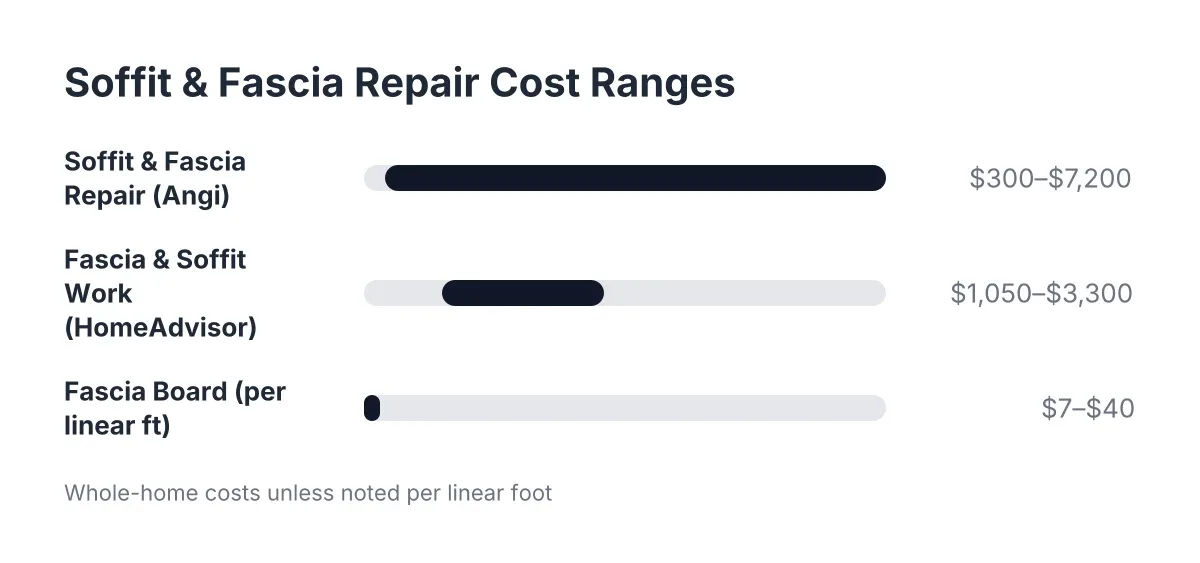
For budgeting, verified national figures give you a sanity check. Soffit and fascia repairs run $300 to $7,200 depending on materials and damage level, according to Angi. HomeAdvisor puts typical professional fascia and soffit work between $1,050 and $3,300 for a home. Per foot, fascia board replacement runs about $7 to $40 per linear foot, and soffit replacement averages about $17 per linear foot, according to This Old House. Your Orlando price depends on linear footage, material, roofline complexity, and how far the rot has spread, so get those factors spelled out in writing before work starts.
Step 5: Bundle the Gutter Work Into the Same Visit
Since the gutters must come down to replace the fascia behind them anyway, handle both in one job. Hiring a carpenter for the boards and a separate gutter company later means two schedules, two invoices, and a second crew screwing into your fresh fascia.
A single roofline fix typically runs in this order:
- Remove the old gutters and any damaged soffit and fascia sections.
- Replace rotted wood and install new fascia and soffit material.
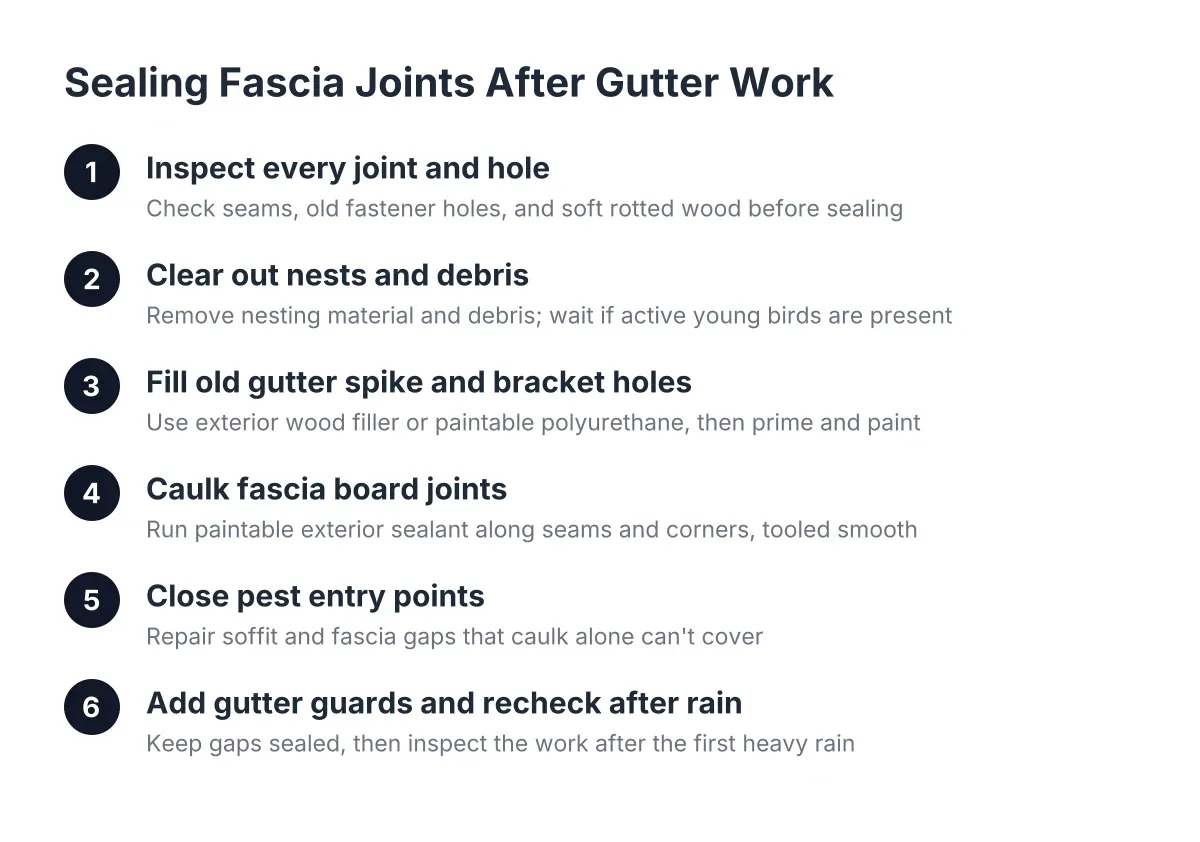
- Fill and seal any old bracket holes in fascia that stays, then repaint, so water cannot creep in behind the board.
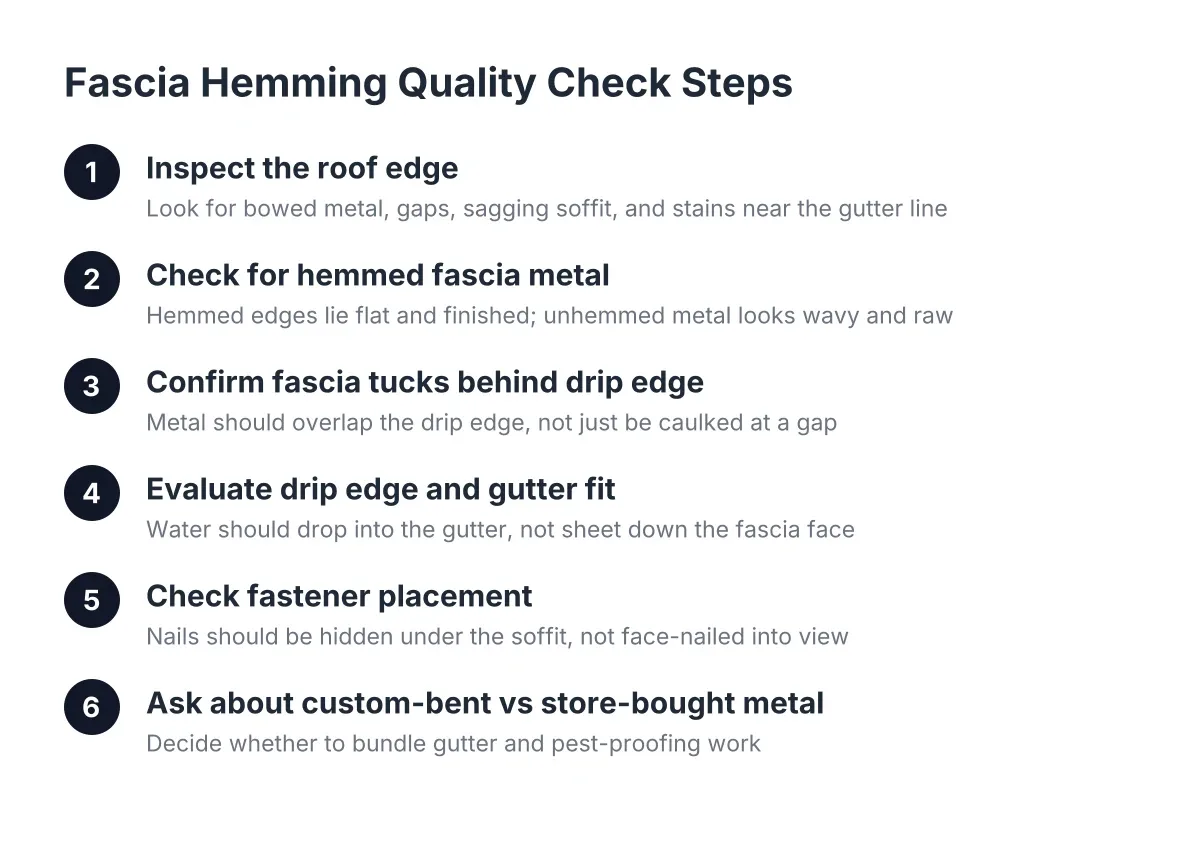
- Confirm the fascia metal tucks up behind the roof drip edge, which shields the board from water and holds it tight to the framing.
- Hang new seamless gutters at the correct height, with the right slope toward the downspouts.
- Add downspout extensions or gutter guards if clogging or pooling caused the original rot.
For example, suppose a seller near Orlando has a buyer's inspection flagging 20 feet of rotted fascia and a sagging gutter run on the back of the house. In that scenario, one crew can pull the gutter, swap the fascia board, repair the adjoining soffit panels, and rehang a new seamless gutter in a single visit, with one itemized invoice for the closing package. That paperwork matters; the buyer's agent wants proof the flagged defect was corrected by a contractor, not caulked over.
Step 6: Verify the Work Before the Re-Inspection or the Next Storm
Do not pay the final balance until you check the details an inspector will check. Fascia and soffit repair is one of those jobs where the finish work decides whether it passes a second look.
Walk the roofline again and confirm:
- Gutters sit level or with a slight, consistent slope, with no gaps behind them.
- No old screw or nail holes are left open in the fascia; filled holes are sealed and painted.
- Soffit panels sit flush with no sags, and vented panels are not painted shut or blocked.
- Water from a hose test flows into the gutter, not behind it, and exits the downspouts away from the foundation.
- You have an itemized invoice naming the materials, the footage replaced, and the date.
In addition, ask how the new fascia meets the drip edge. If the metal does not extend up behind the drip edge, water can still slip behind the board, and you are back where you started after one Central Florida rainy season.
When Rot Along the Roofline Points to a Bigger Problem
One honest limitation: soffit and fascia work cannot fix everything behind it. If the rot has reached the rafter tails, the roof decking, or the wall sheathing, you are into structural repair that a gutter and fascia crew should flag, not hide. A good contractor will tell you when to bring in a roofer or carpenter rather than cover the problem with new material.
That is also the answer to the "who repairs soffit and fascia near me" question many homeowners type into Google. For rot driven by gutter failure, which covers most cases, a company that handles seamless gutters and soffit and fascia together can fix the cause and the symptom in one visit. For structural rot, you need a roofing or framing contractor first, then the gutter and fascia work after.
The Bottom Line for Orlando Homeowners in 2026
How soffit, fascia, and gutter damage affect your gutters and roof comes down to one chain reaction: failing gutters soak the fascia, rotted fascia drops the gutters, and open soffits let moisture and pests into the attic. Break the chain at the cause, bundle the wood repair with the gutter work, and verify the finish details before you sign off.
Whether you are clearing an inspection report before closing or getting ahead of the 2026 storm season, the same six steps apply. Map the damage, find the cause, size the repair honestly, and insist on a written scope that explains what drives the price. That is how you fix the roofline once instead of twice.
If you need soffit and fascia repair, Orlando Gutter Installers can help.
Prefer to talk it through? Call (689) 399-8982 — a quick call is usually the fastest way to get a straight answer for your situation.