How Often Should Soffit and Fascia Be Inspected and Maintained in Orlando?
If you are getting a house ready to sell, or you manage builds where the roofline has to pass inspection the first time, the question matters more than it sounds: how often should soffit and fascia be checked, and what does regular maintenance actually involve? In Central Florida, the honest answer is more often than most people think. Our summer thunderstorm season, year-round humidity, and heavy seasonal rain work on the roofline every single year. A soffit and fascia inspection schedule—tighter than homes up north—is the difference between catching small problems and watching them become rotted wood, sagging gutters, and inspection report line items. Wait too long between checks and a small gap at a fascia seam becomes rotted wood, a sagging gutter, and a line item on a buyer's inspection report.
This guide lays out a realistic inspection and maintenance schedule for soffit and fascia in Orlando, what to look at during each check, and how to time repairs so they do not blow up a closing date or a construction punch list.
What Soffit and Fascia Do, and Why Timing Matters
Quick definitions first, because the two boards get confused constantly. The fascia is the vertical board that runs along the edge of your roof. Your gutters hang from it. The soffit is the horizontal panel underneath the roof overhang, the part you see when you stand against the house and look straight up.
Together they do three jobs. They close off the roof edge so rain, squirrels, and wasps stay out of the attic. They vent the attic so hot, humid air can escape instead of condensing inside. And the fascia carries the weight of the gutters, plus all the water those gutters hold during a July downpour.
That last job is why timing matters. When fascia wood softens, gutter fasteners lose their grip. The gutter pulls away, water runs behind it, and the wet wood rots faster. Soffit panels above the wet zone stain, sag, and open gaps that invite pests. One missed season of maintenance can turn a caulk-and-paint fix into fascia replacement plus new gutter hangers.
How Often Should Soffit and Fascia Be Inspected According to Your Inspection Schedule?
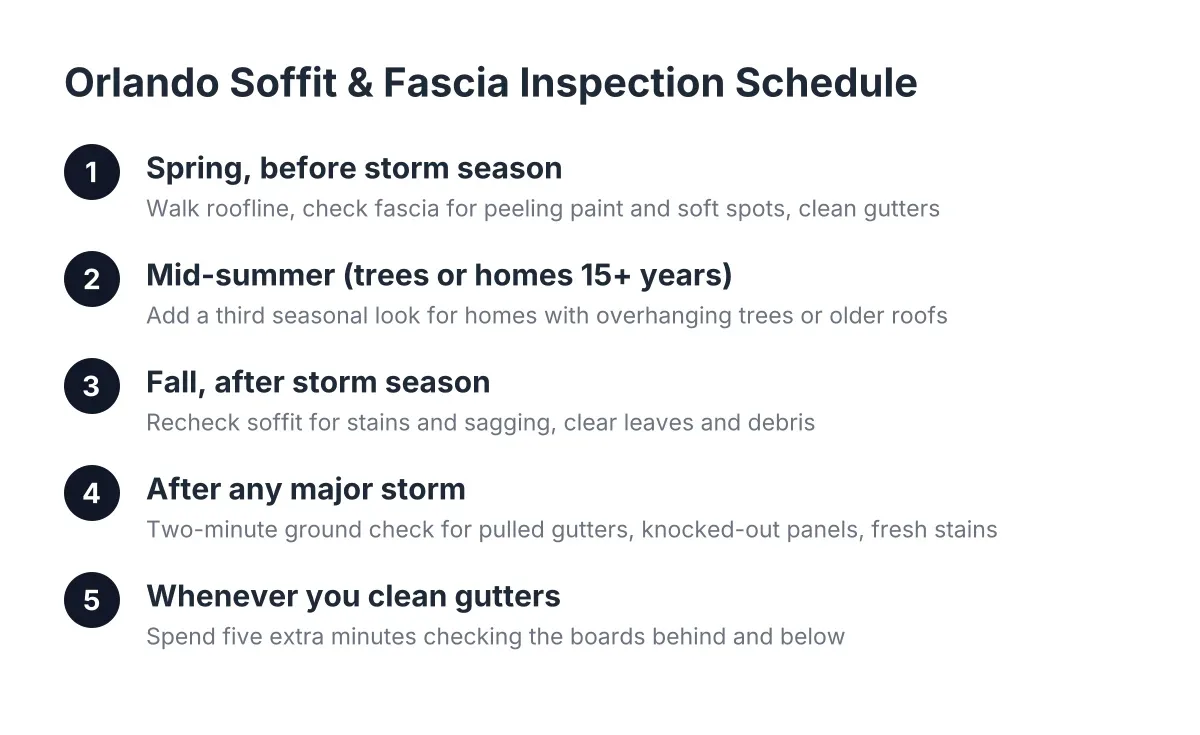
Soffit and fascia in Orlando should get a close visual inspection twice a year, once before the summer storm season starts and once after it ends, plus a quick check after any storm strong enough to drop branches in the yard. Homes with trees over the roofline, or homes more than 15 years old, benefit from a third look mid-summer.
That schedule is tighter than what you might read for homes up north, and there is a reason. Central Florida's rain does not arrive gently. Afternoon thunderstorms dump heavy water in short bursts, which overloads clogged or undersized gutters and sends overflow straight down the fascia board. Humidity then keeps the wood from drying out between storms. Rot that would take years in a dry climate can take hold in a season or two here.
Here is a schedule that works for most Orlando homes:
- Spring, before storm season: Walk the full roofline. Check fascia for peeling paint, dark streaks, and soft spots. Confirm gutters sit tight against the fascia with no pulled fasteners. Clean the gutters so the first big storm does not overflow.
- Fall, after storm season: Repeat the walk. Look for new stains on soffit panels, sagging sections, and gaps at fascia seams. Clear leaves and debris before the drier months bake them into a mat.
- After any major storm: A two-minute check from the ground. Look for gutters pulled loose, soffit panels knocked out of their channel, and fresh water stains.
- Any time you clean the gutters: You are already looking at the roofline, so take the extra five minutes to check the boards behind and below.
Gutter cleaning habits matter here too. According to a This Old House survey, 41% of homeowners cleaned their gutters at least once a year and 34% cleaned them twice annually before installing gutter guards. Twice a year is the right rhythm in Orlando, and it pairs naturally with your soffit and fascia checks. If you have gutter guards or gutter screens, you can clean less often, but you should still do the visual inspection on the same schedule.
What to Look For During Each Inspection
You do not need a ladder for most of this. Stand back from the house and work your way around the roofline with your eyes. Then move close and check the details. Here is what deserves attention.
Fascia Warning Signs
Look for paint that bubbles, peels, or flakes along the board. Paint failure is usually the first visible sign that moisture is getting into the wood. Dark vertical streaks below the gutter line mean water is running over or behind the gutter instead of through it. Press a screwdriver handle gently against any suspect spot; solid wood resists, rotted wood gives.
Also check the gutter attachment points. If a gutter sags or a hanger has pulled out, the fascia behind it has likely softened. A gutter that held fine for ten years does not let go on its own. The board let go of the fastener.
Soffit Warning Signs
Scan the underside of the overhang for stains, which almost always trace back to water getting past the fascia or the roof edge above. Look for panels that sag, bow, or have slipped out of their channel at the fascia board. Check vent openings for nests; wasps, squirrels, and rats all treat a gapped soffit as an open door.
In addition, look at the corners and the spots where two rooflines meet. Complex rooflines concentrate water, and that is where soffit damage shows up first on most Orlando homes.
Signs the Problem Has Spread
Granule piles below the roof edge, water stains on interior ceilings near exterior walls, or a musty attic smell suggest the damage has moved past the trim boards. At that point, bring in a professional before anyone quotes you a simple board swap. Hidden rot in the sub-fascia or roof decking changes the scope, and it is better to know before the work starts than during it.
Soffit and Fascia Inspection Schedule for Replacement Timing
Soffit and fascia on a well-maintained Orlando home typically last 20 to 30 years for wood with consistent paint upkeep, and longer for aluminum or vinyl. Replacement timing depends less on age than on condition: once rot, sagging, or repeated repairs show up along multiple sections, full replacement of the affected runs beats patching.
The maintenance schedule above is what pushes you toward the long end of that range. A fascia board that gets repainted when the paint first fails, behind a gutter that gets cleaned twice a year, can outlast the same board on a neglected house by a decade. The reverse is also true. A house without gutters at all is the worst case, because roof runoff pours directly down the fascia edge with every storm, and the wood never gets a break.
Materials matter too. Wood fascia needs paint or sealant maintenance every few years. Aluminum fascia wrap and vinyl soffit shrug off moisture but can be bent or cracked by impact, so storm checks matter more than paint checks. If you are weighing materials for a replacement, that trade-off between moisture resistance and impact durability is the core decision.
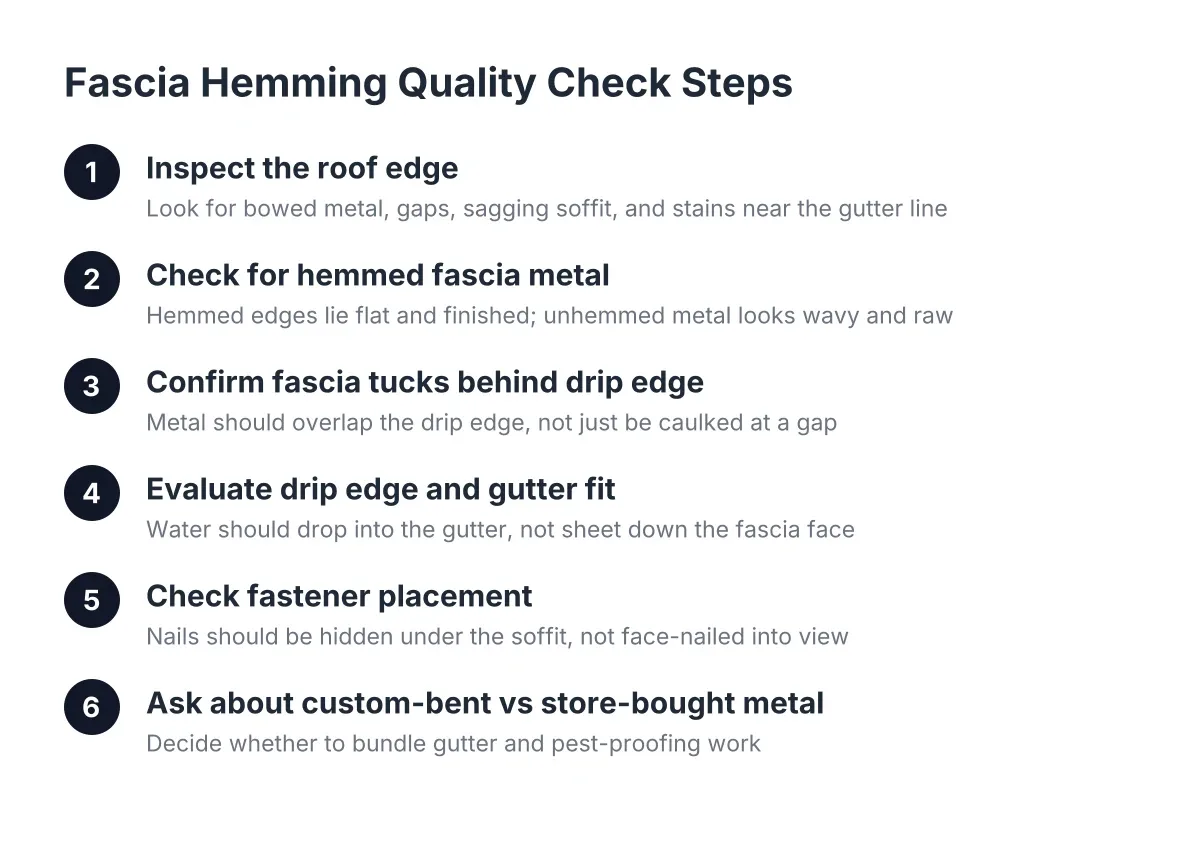
One honest caveat: there is no single interval that fits every house. Tree cover, roofline complexity, gutter condition, and original installation quality all shift the timeline. A fair number of soffit and fascia problems trace back to how the boards were installed in the first place, not to storms at all. Face-nailed fascia in the field, unsealed joints, and boards painted only after mounting all fail early no matter how often you inspect them.
A Maintenance Routine That Protects the Roofline Year-Round
Inspection finds problems. Maintenance prevents them. The routine below keeps most Orlando rooflines out of trouble, and none of it is complicated.
- Clean gutters twice a year, minimum. Overflowing gutters are the single biggest cause of fascia rot. Water that spills over the back edge of a clogged gutter runs straight down the board it hangs from.
- Keep gutter screens or gutter guards maintained. Guards cut cleaning frequency, but debris still mats on top. Brush them off during your spring and fall checks.
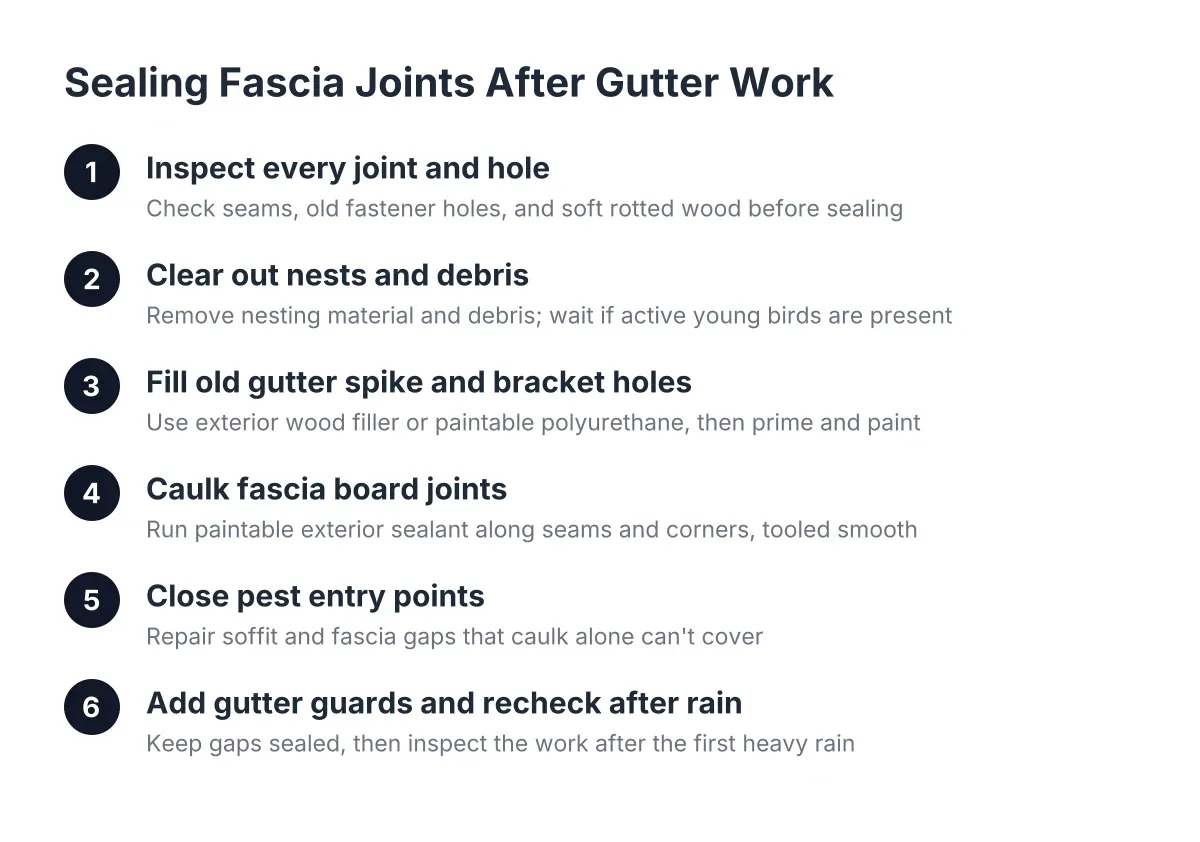
- Touch up paint and caulk promptly. Sealed joints and intact paint are the fascia's only moisture defense. A tube of exterior caulk and a quart of paint in March can prevent a board replacement in October.
- Extend downspouts away from the house. Downspout extensions keep splash-back off lower fascia runs and protect the foundation at the same time.
- Trim branches off the roofline. Branches drop debris into gutters, scrape soffit panels in wind, and give squirrels a highway to any gap they find.
- Fix small problems the season you find them. A soft spot the size of your palm is a repair. The same spot after one more storm season is a replacement, often with gutter rehanging added.
Therefore, the real answer to how often soffit and fascia should be maintained is: on the same calendar as your gutters. The two systems share a fate. Gutters protect the fascia from runoff, and the fascia holds the gutters up. Maintain them together and both last longer.
On a Deadline? Inspection and Repair Timing Before a Sale
For sellers, the inspection schedule compresses into one critical check: before you list, not after the buyer's inspector shows up. Walk the roofline yourself using the checklist above, or have a contractor do it, in the same week you order pre-listing photos. Finding rotted fascia yourself costs you a repair. Letting the buyer's inspector find it costs you a repair plus negotiating leverage.
Suppose a flipper in Orlando gets an inspection report back flagging "sagging gutters, rotted fascia, section of damaged soffit at rear elevation," with closing in three weeks. In that scenario, the smart move is a single scoped repair: replace the rotted fascia runs, swap the damaged soffit panels, and rehang or replace the affected gutter sections in one visit. One trade, one invoice for the closing package, one re-walk that passes. Splitting the work between a handyman for the boards and a separate gutter company for the rehang doubles the scheduling risk on a tight timeline, and it often costs more in total.
Keep the scope honest, though. An inspection flag does not automatically mean the whole roofline needs replacement. If rot is limited to two runs of fascia under a failed gutter, repair those runs and leave the sound sections alone. You do not need copper, heavy-duty screens, or whole-house upgrades to pass a re-walk. You need the flagged defects fixed correctly and documented. Ask for the invoice to describe exactly what was replaced and where, so the buyer's agent has nothing left to argue about.
Builders and remodelers face the same timing logic from the other direction. On a new build or whole-home renovation, soffit and fascia install before the seamless gutters go up, because the gutters fasten to the finished fascia. Sequencing the soffit, fascia, inspection, and schedule for trim and gutter work with one sub keeps the schedule tight across multiple job sites and keeps the roofline consistent from house to house.
What Fascia and Soffit Repair Costs When Maintenance Slips
Regular inspection is cheap insurance, and the numbers show what you are insuring against. According to HomeAdvisor, professional fascia and soffit repair or replacement work costs between $1,050 and $3,300 for a home, averaging near $2,500. Angi puts the range at $300 to $7,200 depending on materials and damage level, with dry rot repairs running $500 to $4,000. The spread between those low and high ends is largely a maintenance story. Caught early, you are at the bottom of the range. Caught by a buyer's inspector after years of overflow, you are climbing toward the top.
Per-foot figures tell the same story. This Old House reports soffit replacement ranges from $6 to $30 per linear foot, averaging about $17, while fascia board replacement typically runs $7 to $40 per linear foot depending on materials, length, and local labor rates. Every foot of rot you prevent with a twice-a-year check is a foot you do not pay for later.
For an Orlando home specifically, the price drivers are the length of roofline affected, the material you choose, how complex the roofline is, and whether the gutters need rehanging or replacing at the same time. A straight single-story run is the easy end. A two-story home with multiple roof planes and hidden rot behind existing gutters is the hard end. Additionally, a straight answer on those factors before work starts is a reasonable thing to expect from any contractor you call, whether you are fixing one flagged section before closing or speccing trim across a dozen builds.
The Short Version
How often should soffit and fascia be inspected in Orlando? Twice a year on the calendar, once after every serious storm, and once before you list a house for sale. Maintain them on the same schedule as your gutters, because the two systems fail together and get fixed together. Catch paint failure and soft spots the season they appear, keep water moving through clean gutters and extended downspouts, and the roofline stays off the inspection report. Let the schedule slip, and Central Florida's storms will set the timeline for you.
If you need soffit and fascia repair, Orlando Gutter Installers can help.
Prefer to talk it through? Call (689) 399-8982 — a quick call is usually the fastest way to get a straight answer for your situation.