Common Soffit and Fascia Mistakes Orlando Homeowners Should Avoid in 2026
After a storm rips through Central Florida, or after years of summer rain do their slow work, a lot of homeowners end up staring at the same trouble spots: sagging gutters, stained soffit panels, and fascia boards going soft at the corners. The frustrating part is that many of these problems trace back to common soffit fascia installation errors made during the original installation or a rushed repair, not just bad weather. If you are about to hire someone to fix your roofline in Orlando, FL, knowing these mistakes will help you spot a bad bid, ask sharper questions, and pay for the job once instead of twice.
This guide walks through the mistakes that cause the most damage, how to recognize them on your own house, what a proper repair looks like, and what the work tends to cost. By the end, you should be able to tell the difference between a contractor who does this right and one who is just moving fast.
Why Soffit and Fascia Fail in Orlando, FL
First, a quick refresher on what these parts do. The fascia is the vertical board that runs along your roof edge; your gutters hang from it. The soffit is the panel underneath the roof overhang; it vents your attic and keeps pests and rain out. Together they seal the edge of your roof.
Orlando puts these two components through more than most places. Summer thunderstorm season dumps heavy rain in short bursts, week after week. Humidity stays high. Wind-driven rain pushes water into gaps that would stay dry in a calmer climate. When gutters overflow or pull loose, the fascia takes the water first, and the soffit is next.
Here is the part most homeowners do not hear: many soffit and fascia repair calls trace back to how the materials were installed in the first place, not to a single storm. A storm often just exposes a weak point that was built in years earlier. That is why the mistakes below matter so much when you are choosing who does the repair.
Common Soffit and Fascia Installation Errors on Orlando Rooflines
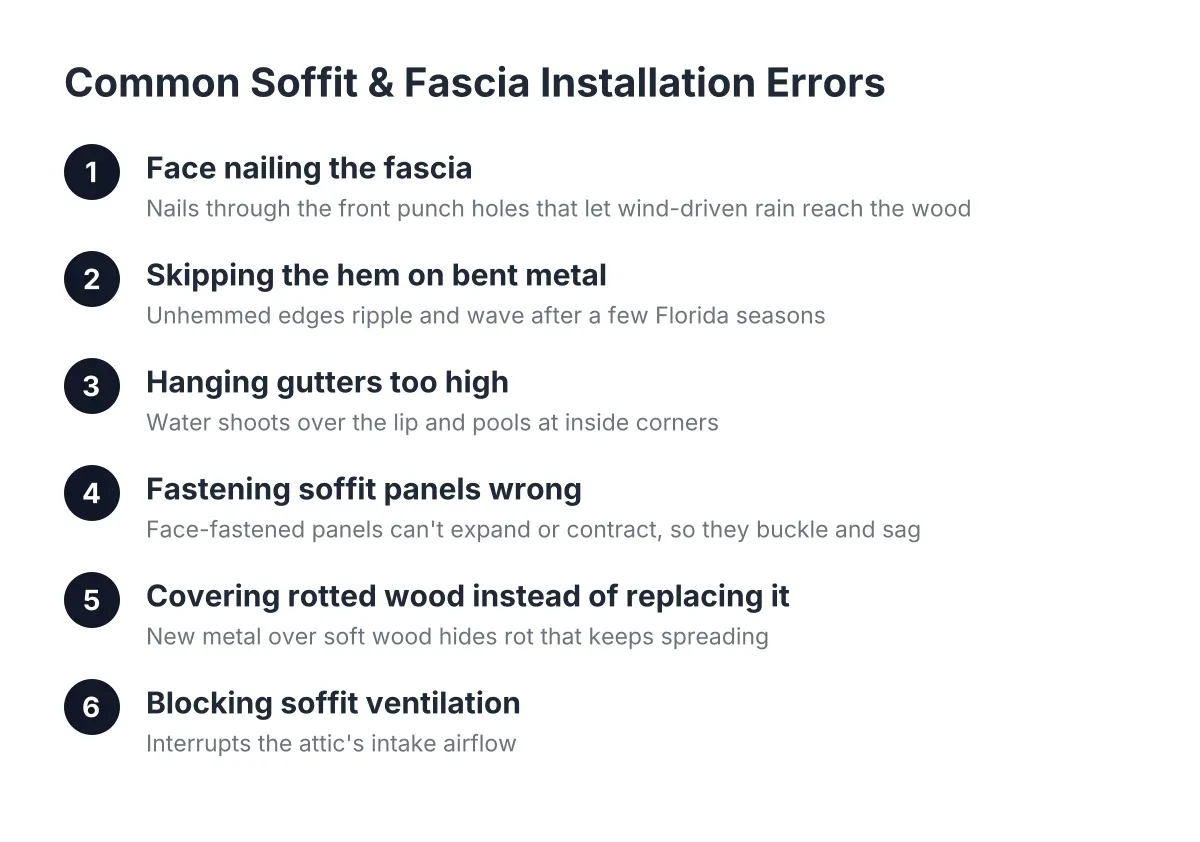
These are the errors that show up again and again on Central Florida homes. Some come from DIY work, and some come from crews cutting corners to finish faster. Either way, they shorten the life of your roofline and your gutters.
Common Soffit and Fascia Installation Errors: Face Nailing Problems
This is the big one. Face nailing means driving nails straight through the front of the fascia metal where everyone can see them. It feels sturdy, but it is wrong almost everywhere on the run.
Nails through the face of the fascia punch holes in the weather surface. Every hole is a path for wind-driven rain, and in Orlando that rain comes sideways several months a year. Over time, water tracks behind the metal and rots the wood fascia board underneath, even though the outside still looks fine.
The correct method fastens the fascia from underneath, up through the soffit, where the fasteners stay hidden and protected. Face fastening belongs only at seam locations, where overlapping pieces of fascia metal join and need to be locked together. End pieces can also be secured near the top edge, because that area gets covered later by the soffit channel. If you see a row of nail heads marching down the front of a fascia run, the installer took a shortcut.
Skipping the Hem on Bent Fascia Metal
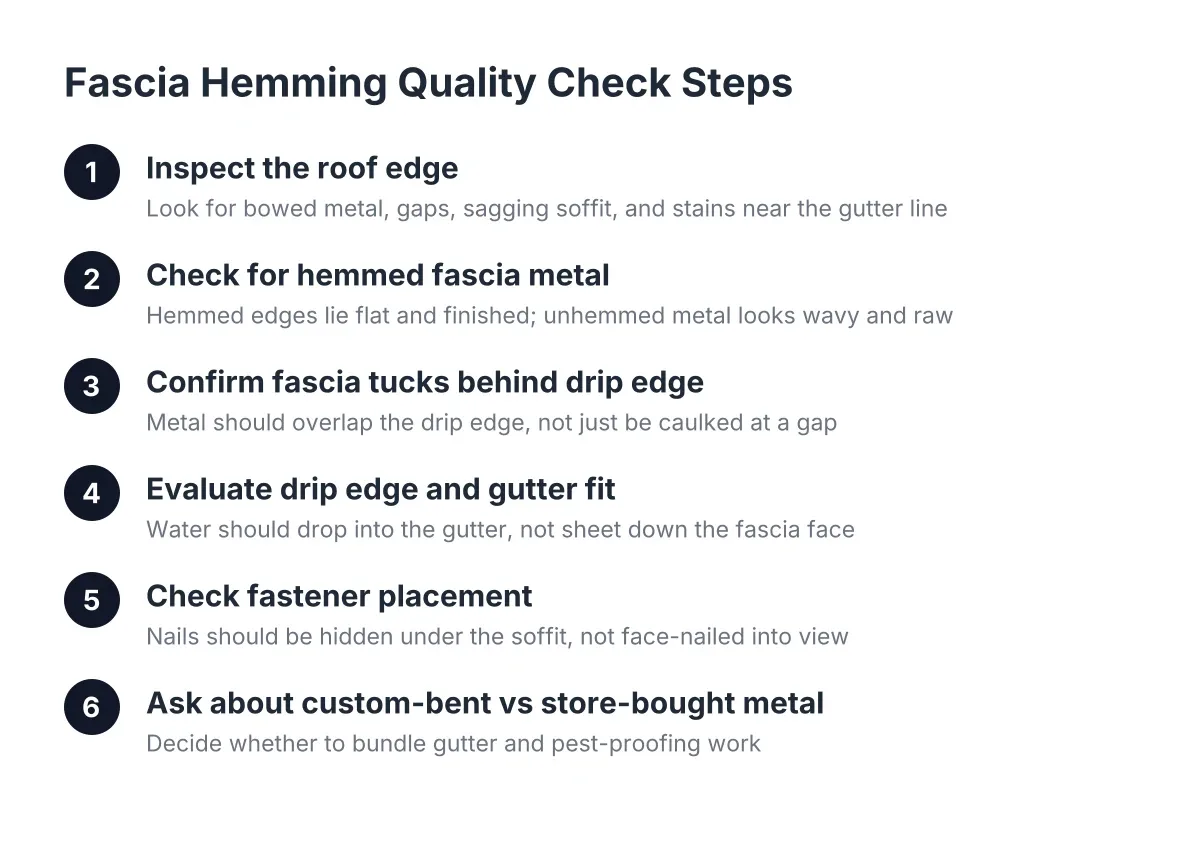
When fascia metal is bent on site, a careful installer folds a small hem along the top and bottom edges. That fold stiffens the metal, keeps the edges straight, and gives the finished run a clean, crisp line.
However, hemming takes extra time at the brake, so plenty of crews skip it. Unhemmed fascia looks fine on day one. A few seasons of Florida heat and wind later, the raw edges start to ripple and wave, and the whole roofline looks tired. Avoiding these common soffit and fascia installation errors means asking any bidder whether they hem their fascia edges. The answer tells you a lot about how they handle the steps you cannot see.
Hanging Gutters Too High on the Fascia
Many homeowners assume gutters should sit as high as possible to catch every drop coming off the shingles. The opposite is true. Gutters hung too high let fast-moving roof water shoot right over the lip, and they trap water at inside corners where it pools and leaks behind the fascia.
A correct gutter installation sets the gutter so the roof edge drains into it at the right angle, with a steady slope toward the downspouts. This is one reason it pays to have the same company handle both the fascia work and the gutters. A gutter crew that shows up after a fascia-only repair has to work with whatever height and condition they find.
Fastening Soffit Panels Wrong
Soffit panels are designed to slide into a J-channel at the fascia board and get secured with staples, not nailed through the face. Face-fastened soffit cannot expand and contract with temperature swings, so it buckles and oil-cans. It also opens up the same water paths as face-nailed fascia.
In addition, panels forced into place without proper channel support sag over time. Sagging soffit in Orlando is more than a cosmetic issue. Gaps at the edges invite squirrels, rats, and wasps into the attic, and they let wind-driven rain reach the wood framing.
Covering Rotted Wood Instead of Replacing It
This mistake hides in plain sight. A crew wraps new aluminum fascia over a rotted wood fascia board, or snaps fresh soffit panels under framing that is already soft. The house looks new. Underneath, the rot keeps spreading, and now it is spreading where no one can see it.
New metal needs solid wood behind it to hold fasteners and carry the weight of gutters full of rainwater. Any honest repair starts by probing the wood and replacing what is soft. If a bidder quotes your job without checking the condition of the wood behind the existing fascia, that quote is a guess.
Blocking Soffit Ventilation
Your soffit is part of your attic's breathing system. Vented soffit panels pull cooler outside air into the attic so hot, moist air can escape at the ridge. A repair that replaces vented panels with solid ones, or paints and seals over the vent perforations, chokes that airflow.
In Central Florida, a poorly vented attic bakes. Shingles age faster, cooling bills climb, and trapped humidity feeds mold on the underside of the roof deck. Matching the original ventilation layout is not optional; it is part of doing the job right.
Running Gutterless Rooflines Over Doors and Walkways
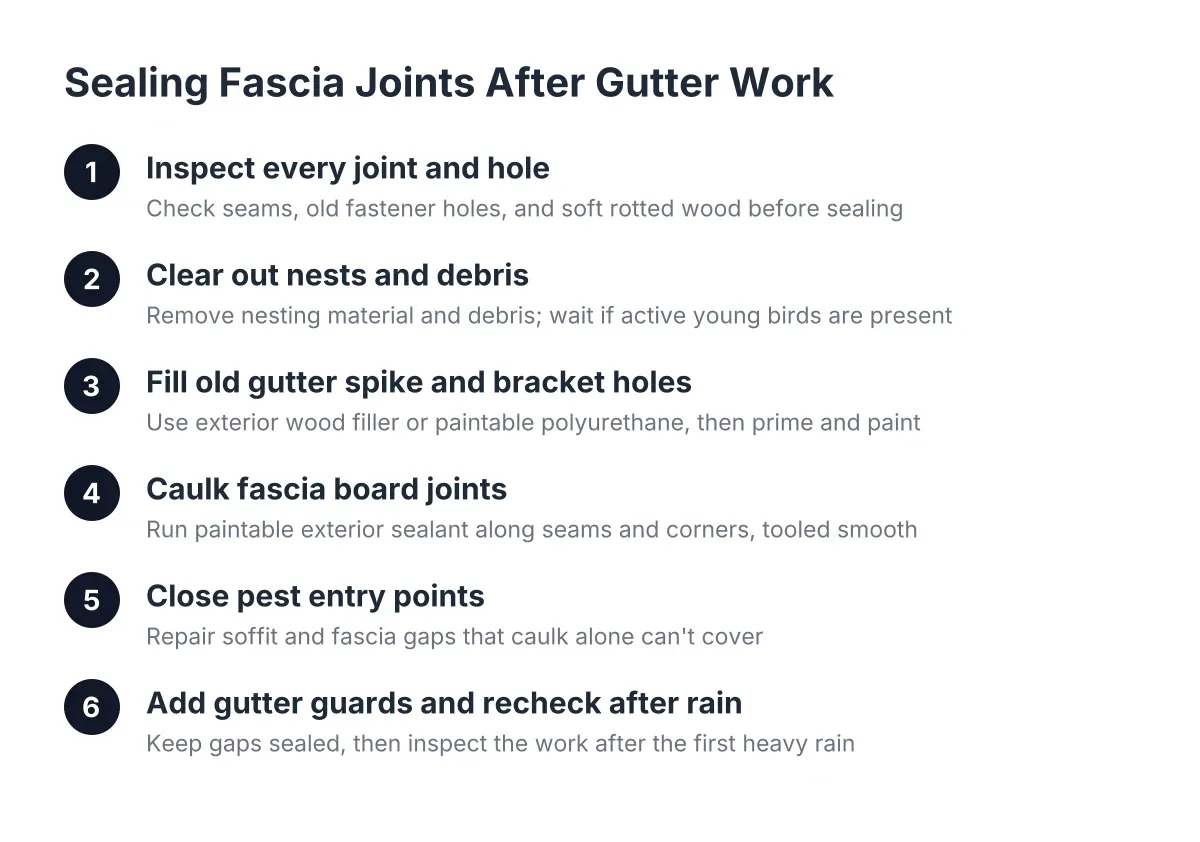
Fascia rot is often caused by something simple: no gutter at all. Without gutters and downspouts, every rainfall runs off the roof edge, sheets down the fascia, and soaks the wood over and over. The board never fully dries between Orlando's summer storms, and rot sets in. When soffit and fascia installation errors like this go uncorrected, the consequences accumulate.
If part of your roofline has no gutter and the fascia there keeps failing, the fix is not just new wood. It is new wood plus a seamless gutter run and a downspout that moves water away from the house.
How to Spot These Mistakes on Your Own House
You do not need a ladder to catch most of this. Walk the perimeter of your house on a dry day and look for these signs:
- Rows of visible nail heads across the face of the fascia metal, away from seams
- Wavy or rippled fascia edges that no longer run in a straight line
- Soffit panels that sag, buckle, or have gaps at the edges
- Dark streaks or peeling paint on the fascia below the gutter line
- Water stains or soft spots on the soffit, especially near corners and valleys
- Gutters that overflow at inside corners during heavy rain
- Sections of roof edge with no gutter and discolored fascia below them
Next, watch your roofline during a hard rain from inside or under cover. Water sheeting over the gutter, pouring behind it, or dripping from the soffit all point to problems worth addressing before the next storm season.
One caution: soffit and fascia damage often hides structural issues at the rafter tails and roof decking. If a soffit section has collapsed, if you see daylight where you should not, or if a tree limb hit the roofline, have a professional open it up and inspect before anyone quotes a repair. That is not a job to diagnose from the ground.
What Fascia and Soffit Repair Costs in 2026
Soffit and fascia work covers a wide range because damage varies so much from house to house. According to Angi, soffit and fascia repairs run $300 to $7,200 depending on materials and damage level, with dry rot repairs costing $500 to $4,000. HomeAdvisor puts professional fascia and soffit work between $1,050 and $3,300 for a home, averaging near $2,500.
Per-foot numbers help when you are comparing bids. This Old House reports fascia board replacement typically costs $7 to $40 per linear foot, and soffit replacement ranges from $6 to $30 per linear foot with an average near $17. Those are national figures, so treat them as a reference point rather than a promise.
What moves your price up or down in Orlando, FL:
- How many linear feet of fascia and soffit need work, and whether it is one section or the whole perimeter
- How much wood rot sits behind the existing material, which no one knows for certain until it comes off
- Material choice, such as aluminum versus vinyl versus wood
- Roofline complexity, including second stories, steep pitches, and lots of corners
- Whether gutters need to come down and go back up, or get replaced at the same time
A straight-talking contractor will walk you through these factors before quoting, explain what they can see versus what they will confirm during tear-off, and put the repair-versus-replace decision in plain language. Be wary of anyone who quotes a whole-house fascia and soffit repair sight unseen, and equally wary of anyone who refuses to explain what drives the number.
Why Bundling Soffit, Fascia, and Gutter Work Makes Sense
Siding, soffit, fascia, and gutters all face the same sun, rain, and humidity, so they tend to wear out together. Patching one piece at a time usually means paying mobilization and labor setup several times for work that could have happened in one visit. It also means the new piece gets attached to old, tired material.
There is a practical sequencing reason too. Gutters hang on the fascia. If the fascia is rotten, new seamless gutters will pull loose the first time they fill with a summer downpour. The right order is: open the roofline, replace rotted wood, install new fascia and soffit correctly, then hang the gutters at the correct height with proper slope. One crew doing all of it means nobody blames the previous trade when something leaks.
Suppose a homeowner in Orlando notices after a June thunderstorm that a 20-foot gutter run on the back of the house is sagging away from the wall. A gutter-only repair crew could rehang it in an hour. But if the fascia behind that run is soft from years of overflow, the rehung gutter fails again by August. In that scenario, the lasting fix is replacing the rotted fascia board, wrapping it correctly with hemmed metal fastened from below, and then installing a new seamless gutter run with a downspout extension that carries water away from the slab. One visit, one invoice, one fix that holds.
Small details matter in that handoff too. For example, a careful fascia installer protects the drip edge with painter's tape during installation, so the finish stays clean and the gutter crew can peel the tape off when they hang the gutters. Little steps like that only happen when the crews are coordinated, or better, when they are the same crew.
Gutter guards or gutter screens are worth discussing at the same time. According to This Old House's 2025 gutters survey, 44% of homeowners never clean their gutters, and nearly 43% of guard owners save 4 to 8 hours a year on the chore. Clogged gutters overflow, and overflowing gutters are one of the main reasons fascia rots in the first place. Adding guards while the crew is already on the roofline is cheaper than a separate trip later.
Questions That Separate Careful Crews from Fast Ones
When you are down to two or three bids for soffit and fascia repair near you, ask each company these questions and listen for specifics:
- How do you fasten the fascia, and where do you face fasten? The right answer: from underneath through the soffit, with face fastening only at seams.
- Do you hem the edges of bent fascia metal? A yes means they care about rigidity and appearance, not just speed.
- What happens if you find more rot than expected behind the old material? You want a clear process for documenting it, showing you photos, and pricing the added wood before continuing.
- Will you match my existing soffit ventilation? Vented sections should stay vented.
- At what height will the gutters be rehung, and who sets the slope? The company should explain how roof pitch and downspout placement drive this.
- Can you photograph the damage before and after? If a storm caused the damage, dated photos help with an insurance claim, though your insurer and adjuster make the coverage call, not the contractor.
You do not need to become an expert. You just need enough knowledge to notice when an answer is vague. A crew that fastens correctly, hems its metal, replaces rot instead of hiding it, and hangs gutters at the right height is doing the same job for roughly the same material cost as a crew that does none of that. The difference is whether you are back on the phone in two years.
The Bottom Line for Orlando Homeowners
Most roofline failures are preventable. Avoiding common soffit and fascia installation errors comes down to three things: fasten the materials the way they were designed to be fastened, never cover rot, and treat the fascia, soffit, and gutters as one system instead of three separate jobs. Whether you are scrambling after a storm tore your gutters off or planning ahead of the 2026 storm season, the homeowners who get the best results are the ones who ask how the work will be done, not just what it will cost.
Get the wood sound, the metal hemmed and fastened from below, the vents open, and the seamless gutters hung at the right height with downspouts that move water away from the house. Do that once, correctly, and your roofline is ready for whatever a Central Florida summer brings.
If you need soffit and fascia repair, Orlando Gutter Installers can help.
Prefer to talk it through? Call (689) 399-8982 — a quick call is usually the fastest way to get a straight answer for your situation.