Soffit and Fascia Warranty and Maintenance After Repair: An Orlando Guide
The repair crew just left, the new boards look clean, and the roofline finally looks right again after the storm. Now comes the part most Orlando homeowners skip: understanding your soffit fascia warranty maintenance obligations so the work stays covered and the boards last. Most warranties on soffit and fascia work come with conditions. Miss them, and a claim that should be simple can get denied. This guide walks you through what to do, step by step, from the day the crew leaves to years down the road.
If your soffit and fascia were torn up in a storm and you just paid to have them repaired or replaced, this matters even more. You already lived through water pouring down your siding once. A little paperwork and a short maintenance routine is how you avoid paying for the same repair twice.
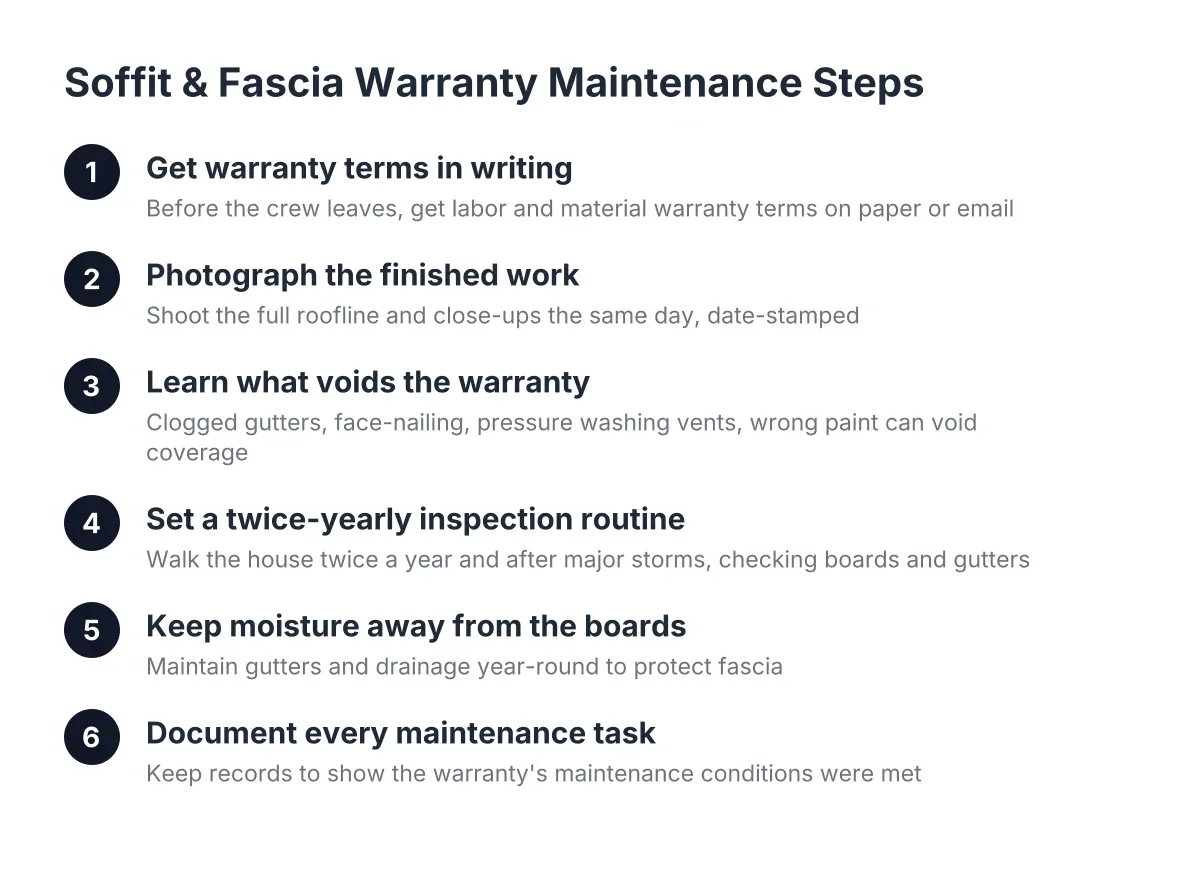
Step 1: Get the Warranty Terms in Writing Before the Crew Leaves
Ask for the warranty in writing, on paper or by email, before you make the final payment. A verbal "we stand behind our work" is worth nothing when a fascia board separates two summers from now and you need someone to come back out.
Reputable soffit and fascia contractors typically back their work with a warranty covering labor and materials for problems that show up after installation. However, the details vary a lot between companies, so read the actual document.
Look for these specific items in the paperwork:
- How long the labor warranty lasts, and how long the material warranty lasts, since they are often different lengths
- What counts as a defect versus normal wear or new storm damage
- Whether the warranty transfers if you sell the house
- What maintenance you are required to do to keep coverage active
- How to file a claim, including who you call and what proof they need
For example, aluminum soffit panels may carry a long manufacturer warranty against fading or cracking, while the labor that installed them carries a shorter contractor warranty. Those are two separate promises from two separate parties. Know which one covers what.
Step 2: Photograph the Finished Work the Same Day
Take photos of every repaired section while the work is fresh. Shoot the full roofline from the ground, then closer shots of each corner, seam, and gutter connection. Date-stamp them or email them to yourself so the date is recorded.
This matters twice over for storm-prone Orlando homes. First, if a warranty dispute ever comes up, you have proof of the condition the work was in when the crew finished. Second, if another storm hits next summer, these photos become your before pictures for an insurance claim. Adjusters move faster when you can show the roofline was in documented good shape before the storm.
Suppose a homeowner near Lake Eola has fascia replaced in May, and an August thunderstorm rips a gutter loose and cracks the new board behind it. In that scenario, the May photos separate the contractor's responsibility from the storm's. Without them, everyone points at everyone else, and the homeowner waits.
Step 3: Learn What Voids a Soffit and Fascia Warranty
Most soffit and fascia warranties die from homeowner actions, not contractor failures. Knowing the common triggers protects your coverage better than anything else on this list.
The usual warranty killers include:
- Letting gutters clog and overflow, which soaks the fascia board behind them
- Attaching things to the fascia, like holiday light hooks screwed through the face of the board
- Pressure washing soffit vents at close range, which forces water up into the attic edge
- Hiring a different trade, say a cable installer, who face-nails through the fascia
- Painting over vinyl or aluminum soffit with the wrong paint, trapping moisture
That face-nailing point deserves a note. Proper fascia installation keeps fasteners hidden underneath, driven up through the soffit, with face nails used only at seam locations where boards overlap. If someone later drives nails or screws through the face of the board anywhere else, they create entry points for Florida rain. Many warranties treat that as modification and deny coverage for anything near it.
How Gutter Care Ties Into Soffit, Fascia, Warranty, and Maintenance
Your gutters and your fascia share a fate, because the fascia is the board your gutters hang from. When gutters clog and overflow, water runs behind them and sits against the fascia, and rot starts there. Therefore, most of your soffit and fascia warranty maintenance is actually gutter maintenance.
Keep gutters flowing and you protect the boards behind them. According to a This Old House survey, 41 percent of homeowners cleaned their gutters at least once a year before installing gutter guards, and 34 percent cleaned them twice annually. In Central Florida, with oak pollen in spring and heavy thunderstorm debris all summer, twice a year is the sensible floor. Gutter guards or gutter screens reduce how often you climb a ladder, though they still need an occasional check.
Step 4: Set a Simple Inspection Routine for the Repaired Sections
Walk the house twice a year and after any major storm. You do not need a ladder for most of this; a slow lap around the house with your eyes on the roofline catches the early signs.
Check for these from the ground:
- Fascia boards that look wavy, bowed, or pulling away from the roof edge
- Paint peeling or dark staining on fascia, which signals moisture behind the surface
- Soffit panels sagging, gapping at the J-channel, or showing daylight from below
- Gutters pulling away from the fascia, a sign the fasteners or the board are failing
- Water stains on siding directly below the roofline after rain
In addition, press a screwdriver handle gently against any fascia you can reach. Solid wood sounds and feels firm. Soft or spongy spots mean moisture got in, and catching that early usually means a small fix instead of a full fascia replacement. According to Angi, soffit and fascia repairs run $300 to $7,200 depending on materials and how far the damage has spread, with dry rot repairs alone running $500 to $4,000. Early catches live at the bottom of that range.
Step 5: Keep Moisture Away From the Boards Year-Round
Central Florida humidity and summer thunderstorms work on your roofline constantly, so moisture control is the maintenance that matters most. A few habits keep the repaired sections dry.
First, make sure downspouts carry water away from the house. Downspout extensions that move runoff several feet from the foundation also keep splash-back off lower soffit sections on one-story homes. Next, trim back tree branches that overhang the roofline; they drop debris into gutters and hold moisture against the fascia after rain. Finally, confirm soffit vents stay clear, since blocked vents trap humid attic air against the wood framing behind your new panels.
Caulked joints are worth a glance too. Quality fascia work seals the joints between boards, and that caulk ages in Florida sun. If a joint line opens up, a bead of exterior caulk is a ten-minute fix that stops water from wicking into the end grain, which is where rot starts fastest.
Step 6: Document Every Maintenance Task You Do
Keep a simple log: date, what you did, and a photo or two. A note on your phone works fine. "March 14, cleaned gutters, checked fascia at back corner, all solid" is enough.
This log does two jobs. It proves you met the maintenance conditions in your warranty if a claim ever gets questioned. It also builds a paper trail for insurance, which matters for any Orlando homeowner who has already been through one storm claim. When an adjuster asks whether the damage was sudden storm damage or long-term neglect, your dated log answers the question in your favor.
Step 7: Call the Right Party When Something Fails
Match the problem to the responsible party before you pick up the phone. Calling the wrong one wastes days, and after a storm you do not have days to waste.
Here is the general sorting logic:
- A new board rots, warps, or a seam separates with no storm involved: call the contractor who did the work, this is a workmanship warranty question
- A panel cracks, fades badly, or delaminates on its own: this points to the material, so the contractor pursues the manufacturer warranty, usually with your purchase records
- A storm tears off soffit or cracks fascia: this is an insurance question first, so photograph everything before any cleanup and call your insurer
- Gutters overflowed and rotted the fascia behind them: this is usually maintenance, not warranty, and you will likely pay for the fix
One honest trade-off to know: bundling fascia and soffit repair with gutter work under one contractor keeps warranty responsibility in one place, since nobody can blame the other trade when something fails at the gutter-to-fascia connection. The trade-off is you depend on that one company being around to honor it, so pick an established local outfit. Siding, soffit, fascia, and gutters all weather the same sun and rain, so they tend to fail on similar timelines, and handling them together often costs less than patching one piece at a time.
For reference on what failures cost when they are not covered, HomeAdvisor puts professional fascia and soffit work between $1,050 and $3,300 for a home, averaging near $2,500. That number is the reason the maintenance steps above are worth an hour or two a year.
A Quick Soffit and Fascia Warranty Maintenance Calendar for Orlando Homes
Put these on your calendar now, while the repair is fresh:
- Twice a year: clean gutters, or inspect gutter guards, and walk the roofline
- Each May, before thunderstorm season: check fascia caulk joints, gutter fasteners, and soffit panels
- After any major storm: photograph the roofline and compare against your post-repair photos
- Once a year: update your maintenance log and confirm your warranty paperwork is where you can find it
If you spot sagging panels, soft wood, or gutters pulling loose during any of these checks, bring in a professional rather than climbing up yourself. Roofline work involves ladder heights and hidden rot that can give way underfoot, and a contractor can also tell you whether the fix falls under warranty before you spend anything. Handled this way, the soffit and fascia you just paid to repair should outlast the next several storm seasons, and your warranty will still be standing behind it.
If you need soffit and fascia repair, Orlando Gutter Installers can help.
Prefer to talk it through? Call (689) 399-8982 — a quick call is usually the fastest way to get a straight answer for your situation.